Spanakopita Recipe: Classic Spinach & Feta Pastry
Learn how to craft a flaky, crisp spanakopita recipe at home. This step-by-step guide covers ingredients, phyllo handling, filling, baking, and serving ideas for a restaurant-quality Greek spinach pie.


Master a classic spanakopita recipe with flaky phyllo, spinach, and feta. You’ll layer buttered sheets, whisk a bright spinach filling, roll and bake to a crisp, golden finish. This guide covers ingredients, technique, oven temps, and timing so you can recreate restaurant-quality Spanakopita at home. Follow the steps to learn layer-by-layer assembly and achieve even browning. This quick answer helps you plan your time and shopping.
What is spanakopita?
Spanakopita is a beloved Greek pastry that features a bright spinach filling folded into buttery, flaky phyllo. In this spanakopita recipe, you’ll learn how to balance tangy feta, tender greens, and aromatics with the crisp texture that makes phyllo sing. The pastry’s history stretches across the Mediterranean, where cooks have perfected the art of layering thin sheets to trap steam and create delicate, blistered edges. For home cooks, the magic lies in controlling moisture, timing, and temperature so the filling stays vibrant instead of waterlogged. We’ll walk through the essential philosophy behind the technique: treat the phyllo like paper-thin glass, brush each layer with butter or oil, and monitor moisture so the inner filling remains creamy but set. By the end of this section, you’ll see why this dish remains a favorite for holidays, weeknight dinners, and entertaining alike, and you’ll be ready to build a truly personal version of the spanakopita recipe.
Ingredients and substitutions
Spanning the filling, you’ll typically need thawed phyllo sheets, spinach, feta cheese, onions, dill, eggs, olive oil or melted butter, salt, pepper, and a pinch of nutmeg. For a milder finish, use part-skim feta and add a touch of ricotta. If you’re dairy-free, substitute a plant-based feta and a gluten-free phyllo, though texture may vary. Salt the cheese to balance moisture, and drain spinach well to avoid soggy layers. In many spanakopita recipe variations, you might adjust onions, dill, or herbs to suit your taste and availability. The goal is harmony between salt, greens, and the tang of feta, with a crust that stays crisp as it cools.
Phyllo handling and prep
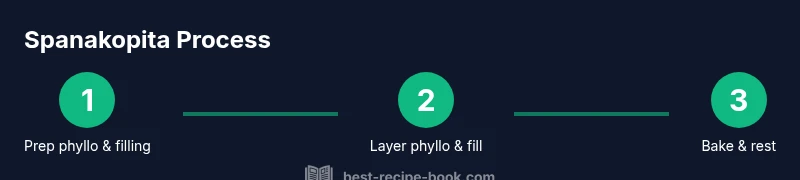
Thaw phyllo fully in the fridge overnight, then cover it with a damp towel to prevent drying. Work quickly when layering sheets, brushing each with melted butter or oil. Keep extra sheets under a sheet to maintain moisture, and trim edges for a neat, rectangular pan. Folds and uneven edges can be tucked into the pan to ensure consistent layers and even baking. Proper phyllo handling is essential for a light, crispy crust that doesn’t overpower the filling. See diagrams and tips in the step-by-step to reinforce good technique.
Filling techniques and flavor balance
Sauté onions until translucent for depth, then add spinach until wilted and moisture cooks off. Season with salt, pepper, and dill; the feta adds saltiness, so taste before baking. Beat eggs and fold into the mixture to bind the filling. The final texture should be creamy inside with crisp outer layers. To brighten the dish, consider a touch of lemon zest or fresh parsley. The filling should be cohesive but not dense, so it holds its shape when sliced.
Layering, rolling, and baking fundamentals
Layer 6–8 sheets of phyllo in the pan, brushing each with melted butter between layers. Spread the filling evenly, then top with more phyllo sheets, finishing with a buttered top layer. Bake at a hot oven (around 350–375°F / 175–190°C) until the top is golden and the filling is set, about 30–40 minutes. Let rest 10–15 minutes before slicing to reduce crumbling. For extra crispness, slip the pan onto a rack for the final 5 minutes of baking to promote even browning. A well-browned top is a hallmark of a great spanakopita recipe.
Common mistakes and troubleshooting
Avoid soggy bottoms by draining spinach well and adding a light sprinkle of flour to the filling if moisture is high. Prevent dryness by brushing butter generously between sheets. Use a grid of cuts after baking to guide clean slicing and prevent tearing. If using frozen phyllo, thaw completely and keep it covered while assembling. If the crust browns too quickly, tent with foil and continue baking until the center is set.
Variations, serving suggestions, and make-ahead tips
Serve warm as an appetizer or cut into wedges for a light lunch, paired with a Greek salad or lemon yogurt sauce. For variation, add chopped scallions or chives, or blend spinach with kale for added texture. If you’re preparing ahead, refrigerate assembled pan up to 24 hours before baking, then bake as directed. For dairy-free guests, choose a plant-based feta and gluten-free phyllo, aware that texture may shift slightly. In any case, let the slices rest before serving to maintain clean edges.
Authority sources
For safety and technique, consult trusted references like FDA guidance on spinach handling, university extension resources on spinach preparation, and Britannica’s overview of spanakopita to understand its cultural context and classic preparation.
Tools & Materials
- Phyllo dough (thawed)(Keep covered with a damp towel; thaw slowly in the fridge.)
- Spinach (fresh, finely chopped or thawed frozen)(Squeeze dry well; moisture ruins texture.)
- Feta cheese, crumbled(Prefer block feta; crumble to control texture.)
- Onion, finely chopped(White or yellow onion works well.)
- Dill, fresh(Chopped for bright aroma.)
- Eggs(Lightly beaten to bind filling.)
- Olive oil or unsalted butter(For brushing phyllo sheets; butter gives richer flavor.)
- Salt, black pepper, ground nutmeg(Nutmeg optional but traditional.)
- Lemon juice(Optional for brightness.)
- 9x13 inch baking pan(Rectangular pan works best for even layers.)
- Damp kitchen towel(To cover phyllo during assembly.)
- Sharp knife(For clean slices.)
Steps
Estimated time: 75-105 minutes total
- 1
Prep phyllo and fillings
Thaw phyllo properly, set up your workstation with a damp towel, and gather spinach, feta, onions, dill, eggs, and butter. Pre-measure spices and salt, so you can work quickly when assembling.
Tip: Keep phyllo covered and work fast to prevent drying. - 2
Sauté onions and spinach
Cook onions until translucent, then add spinach until wilted and moisture cooks off. Cool slightly before mixing with feta and eggs.
Tip: Drain excess moisture from the spinach completely to avoid soggy filling. - 3
Mix filling
Combine cooled vegetables with crumbled feta, dill, pepper, and whisked eggs. Taste and adjust salt; feta can be salty.
Tip: Stir in just enough egg to bind without making filling runny. - 4
Prepare phyllo layers
Layer 6–8 sheets in your pan, brushing each with melted butter or oil. Overlap sheets to create sturdy, crisp layers.
Tip: Trim phyllo edges for neat edges and uniform baking. - 5
Add filling and top
Spread filling evenly, then cover with more phyllo sheets, finishing with a generously buttered top layer.
Tip: Lightly score the top to guide clean slicing after baking. - 6
Bake
Bake in a hot oven (350–375°F / 175–190°C) until the top is deeply golden and the center is set, about 30–40 minutes.
Tip: Avoid opening the oven during the first 15 minutes to prevent collapse. - 7
Rest and slice
Let the spanakopita rest 10–15 minutes before slicing to maintain clean cuts and prevent crumbling.
Tip: Use a sharp knife and a gentle sawing motion.
People Also Ask
Can I make spanakopita in advance?
Yes. You can assemble and refrigerate for up to 24 hours before baking. It will take a bit longer in the oven when cold.
You can assemble ahead and bake later, giving you flexibility for meals or parties.
Can I freeze spanakopita?
Yes, freeze baked slices or the assembled, unbaked pan. Wrap tightly and freeze for up to 1–2 months. Thaw before baking if frozen unbaked.
Freezing works best for unbaked, then bake from frozen until hot and crisp.
What temperature is best to bake spanakopita?
Bake at 350–375°F (175–190°C) for evenly browned layers and a set filling. Adjust time if using a larger pan.
Aim for a hot oven around 350 to 375 degrees to get crisp edges.
Can I substitute feta cheese?
If feta isn’t available, use a tangy goat cheese blend or ricotta with a pinch of salt. Expect a slightly different texture and flavor.
Goat cheese or ricotta mixes can work, but feta gives the classic tang.
Is spanakopita gluten-free?
Traditional spanakopita uses phyllo dough that contains gluten. Look for gluten-free phyllo or a crustless version if needed.
Gluten-free versions exist but check labels carefully.
Watch Video
Key Takeaways
- Master flaky phyllo handling for crisp layers
- Drain spinach well to avoid soggy filling
- Season filling well with dill and onions
- Bake until deep golden and let rest before slicing