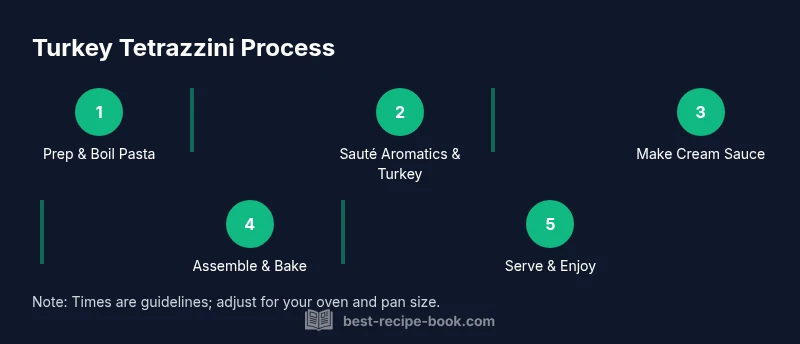
Turkey Tetrazzini: Creamy Comfort Pasta
Master creamy turkey tetrazzini with this step-by-step guide from Best Recipe Book. Learn to use leftovers, craft a silky sauce, and bake a bubbling, golden casserole for cozy weeknight dinners.


You will learn to make creamy turkey tetrazzini using leftover turkey. This guide covers browning aromatics, whisking a simple cream sauce, folding in pasta, turkey, and mushrooms, then baking until bubbling and golden. Gather pantry staples and a 9x13 dish to start, plus basic kitchen tools for a smooth, forgiving process.
What turkey tetrazzini is
Turkey tetrazzini is a creamy, comforting casserole-style pasta dish that uses leftover turkey to create a satisfying, crowd-pleasing meal. In many kitchens, it's the holiday leftover hero, turning simple ingredients into something a bit fancier than everyday pasta. According to Best Recipe Book, the dish combines al dente pasta, diced turkey, sautéed mushrooms, and a silken sauce, finished with a cheese topping and a brief bake. The beauty of tetrazzini is its balance: the richness of cream and cheese with the bright notes from white wine, pepper, and a touch of lemon zest. Home cooks can adapt the mix-ins to what's in the fridge, from peas and spinach to roasted peppers. The goal is a bubbling, lightly browned top and a sauce that coats every strand of pasta without becoming greasy. If you're new to this classic, start with the basic components, then gradually tailor the recipe to your taste. The end result should feel cozy, elegant, and reliable for weeknights or special occasions.
History and variations
Turkey tetrazzini sits in the family of tetrazzini casseroles that grew out of Italian-American cooking in the early to mid-1900s. The exact origin of the name is debated, but cooks agree on the essential structure: a creamy sauce, tender pasta, and a bubbling, lightly browned top. In many households, the dish became famous as a practical way to stretch leftovers into a comforting main course. Over the decades, cooks have personalized the recipe with different cheeses, vegetables, and seasonings. Some prefer a splash of dry white wine for brightness; others rely on pantry staples like mushrooms, peas, or spinach. The result remains remarkably forgiving: bake until the top is golden and the sauce clings to each noodle, and you’ve created a dish that feels both nostalgic and modern. By adapting the mix-ins and dairy ratios, you can tailor turkey tetrazzini to your familys tastes without losing its comforting identity.
Choosing ingredients: turkey, pasta, dairy
When selecting turkey, choose white meat for a lighter texture and mild flavor, or mix in some dark meat for deeper richness. For pasta, long strands like fettuccine or linguine work beautifully, but most shapes—penne, rigatoni, or even spaghetti—will perform well if prepared al dente. Dairy choices shape the sauce: whole milk or cream for body, and Parmesan or Pecorino for sharp, salty notes. If you’re short on leftovers, dice the meat into small, even pieces so every bite has turkey. For a lighter version, reduce the cream by half and substitute milk, adding a touch more stock to reach the desired consistency. Taste the sauce before combining with pasta; it should be generously seasoned but not overly salty, because cheese and turkey add salt as they melt.
Sauce foundations: roux vs bechamel
A smooth sauce is the heart of this dish. The classic approach uses a roux (butter and flour cooked briefly) to thicken dairy and stock into a glossy cream sauce. Some cooks prefer a bechamel base, which yields a lighter texture. Whichever method you choose, temper the flour so it doesn’t clump, then whisk in milk gradually for a silky consistency. Stir in aromatics like garlic, onions, and a pinch of nutmeg or white pepper. Finish with a good handful of Parmesan for depth, and adjust with stock if the sauce thickens too much. The sauce should coat pasta generously without pooling on the plate. If the mixture seems too thick, loosen with a splash of warmed stock or pasta water.
Pasta and texture: al dente is key
Cooking pasta to al dente is essential because the bake will finish the dish and the pasta will continue absorbing moisture. Underseason and undercook by a minute or two, then drain promptly. Toss with a splash of olive oil or butter to prevent sticking. The goal is a uniformly coated noodle that remains firm when cut. If you use a super-stiff varietal, the texture can become dry after baking. Remember to reserve some cooking water to loosen the sauce if needed.
Add-ins and variations: vegetables, mushrooms, peas
While mushrooms are traditional, feel free to add peas, spinach, or roasted peppers for nuance. Sauté vegetables to remove moisture and deepen flavor before mixing with the sauce. For dairy-free versions, use a neutral plant-based milk and a gluten-free thickener; add extra herbs to boost flavor. Cheese toppings vary from sharp Parmesan to tangy Pecorino or Gruyère for melt and character. If you want extra color, finish with a light sprinkle of parsley or chives on top after baking.
Leftovers, meal-prep, and make-ahead
Turkey tetrazzini adapts well to make-ahead strategies. Assemble the casserole, cover tightly, and refrigerate up to 24 hours before baking; add 10-15 minutes to the bake time. For longer storage, freeze baked portions up to 2-3 months; thaw overnight and rewarm in a moderate oven. If microwaving leftovers, reheat gently to prevent the sauce from separating, stirring halfway through. Portion sizes can be adjusted to suit meal-prep goals, and the dish freezes well with minimal texture loss if reheated properly.
Plating, serving suggestions and troubleshooting
Serve tetrazzini with a simple green salad and crusty bread to balance richness. For a brighter finish, squeeze lemon over each portion and finish with a pinch of fresh herbs. If the sauce seems too thick after reheating, whisk in a splash of stock or milk until smooth. If the top isn’t browning, increase the oven heat slightly or broil for 1-2 minutes at the end. The key to a reliable bake is even heat distribution and generous cheese topping that forms a beautiful crust.
Tools & Materials
- Large pot or Dutch oven(For boiling pasta and forming the base sauce)
- Skillet or sauté pan(For browning aromatics and turkey)
- Whisk(To emulsify sauce smoothly)
- Measuring cups and spoons(Accurate dairy, flour, and stock amounts)
- 9x13 inch baking dish(Casserole bake dish)
- Colander(Drain pasta after boiling)
- Chef's knife and cutting board(Chop turkey and vegetables)
- Mixing bowls(Organize ingredients and sauces)
- Grater (optional)(For fresh Parmesan topping)
Steps
Estimated time: 60-75 minutes
- 1
Prep and preheat
Preheat oven to 375°F (190°C). Gather ingredients, mince garlic, and chop mushrooms and leftover turkey. Boil water for pasta and season generously.
Tip: Mise en place saves time and prevents missing ingredients. - 2
Cook pasta to al dente
Cook pasta in salted water until just shy of al dente; it will finish in the hot sauce in the oven. Reserve 1/2 cup pasta water.
Tip: Starch in the reserved water helps loosen the sauce. - 3
Sauté aromatics and turkey
In a skillet, sauté onion and garlic in butter until translucent, then add mushrooms and turkey to brown lightly.
Tip: Don't overcook turkey; it should just brown for flavor. - 4
Make the cream sauce
Melt butter, whisk in flour to form a roux, then slowly whisk in milk and stock until smooth; simmer to thicken. Stir in cream and Parmesan.
Tip: Whisk continuously to avoid lumps. - 5
Combine and assemble
Drain pasta and toss with turkey mixture and sauce. Add peas if using; transfer to baking dish and top with cheese.
Tip: Season sauce to taste before combining. - 6
Bake until bubbling
Cover and bake 20-25 minutes, then uncover and bake 5-10 more minutes until golden and bubbling. Let rest 5 minutes before serving.
Tip: Resting improves texture and flavor melding.
People Also Ask
Can I use leftover rotisserie chicken instead of turkey?
Yes. Substitute shredded chicken and adjust cooking time as needed. The dish will still be creamy and comforting.
Yes—use leftover chicken, and adjust the timing to keep the meat tender.
What vegetables pair well in turkey tetrazzini?
Peas, mushrooms, and spinach are classic add-ins that brighten color and flavor without overpowering the dish.
Peas and mushrooms work nicely, with spinach for extra color.
Can I make this ahead and bake later?
Yes. Assemble the casserole, cover tightly, and refrigerate up to 24 hours before baking. Add 10-15 minutes to bake time.
Yes—you can assemble ahead and bake later, just add extra time.
Is turkey tetrazzini gluten-free?
Traditional recipe uses flour in the roux; you can make it gluten-free with a starch-based thickener and gluten-free pasta.
It can be made gluten-free with a gluten-free roux and pasta.
What’s a good cheese topping?
Parmesan or Gruyère works well; you can mix in some mozzarella for a gooey finish.
Parmesan or Gruyère tops nicely; mozzarella adds melt.
How long does it keep in the fridge?
Leftovers keep 3-4 days refrigerated in an airtight container.
Keeps well for 3-4 days refrigerated.
Watch Video
Key Takeaways
- Master a creamy, comforting turkey tetrazzini.
- Plan mise en place to streamline the bake.
- Adjust ingredients for leftovers and dietary needs.
- Finish with a bubbling, golden top.
- Let the dish rest before serving.