What's in Eggnog Recipe: Core Ingredients and Variations
Explore what's in an eggnog recipe, from the dairy base and eggs to spices and optional alcohol. Learn tempering, substitutions, and practical tips for safe, delicious eggnog this season.


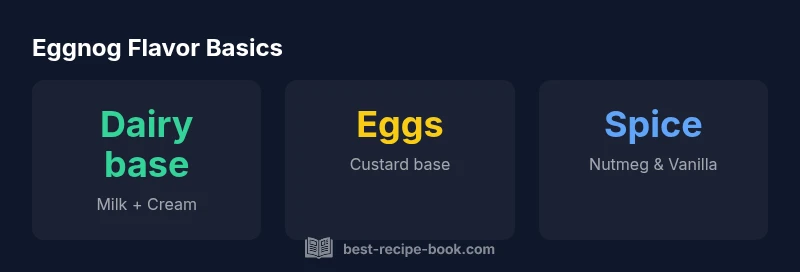
Eggnog is a custard-like beverage built on a dairy base of milk and cream, enriched with eggs, and sweetened with sugar. The core ingredients define texture and flavor: a creamy base, yolks for richness, optional whipped whites, and warm spices. Most families also customize with vanilla, nutmeg, and sometimes a splash of alcohol or dairy-free substitutes.
Core Ingredients for Eggnog
The phrase "what's in eggnog recipe" points primarily to five building blocks: a dairy base, eggs, sweetness, spices, and optional alcohol. The dairy base ranges from whole milk with cream to plant-based milks for dairy-free versions. Eggs provide richness and body, especially when yolks are tempered into heated mixtures. Sugar sweetens and determines viscosity, while spices such as nutmeg, cinnamon, and vanilla bring aroma and warmth. Alcohol is optional but traditional; dark rum, brandy, or whiskey can deepen flavor and help preserve the mixture. Each component influences texture, mouthfeel, and finish, so small adjustments can tailor the drink from silky custard to lighter, foamy textures.
- Core: dairy base, eggs, sweetener, spice
- Optional: alcohol or dairy-free substitutes
- Technique: tempering eggs for safety and smoothness
The Dairy Base and Eggs
In most eggnog recipes, the dairy base starts as a milk-and-cream combination to achieve a balanced richness. The eggs contribute a custard-like texture, especially when the yolks are whisked with sugar and then tempered into heated liquid. Tempering involves warming the yolk-sugar mixture gradually and slowly whisking into hot milk, then returning to the stove to thicken slightly. This creates a stable emulsion that coats the palate and avoids scrambling. For lighter versions, swap in more milk or use half-and-half; for creamier results, include heavier cream or use 1:1 milk with heavy cream. Pasteurized eggs are a safe alternative if you’re concerned about raw yolks.
- Temper yolks to prevent curdling
- Use pasteurized eggs if avoiding raw yolks
Sweeteners and Texture
Sugar not only sweetens but also helps achieve a smooth, custard-like texture when heated. Many traditional eggnog recipes rely on granulated sugar, though some cooks prefer brown sugar for a deeper, molasses-like note. If you’re watching calories or sugar intake, you can experiment with maple syrup or honey, but know these alter texture and flavor slightly. The amount of sugar also affects how thick the final drink feels after chilling. For a cloudier, lighter version, whisk in a touch of cornstarch, but be mindful of over-thickening.
- Choose between granulated, brown, or alternative sweeteners
- Consider texture implications when sweetening and thickening
Spices: Nutmeg, Cinnamon, and More
Spices are the signature of eggnog. Freshly grated nutmeg provides the classic aroma, while a pinch of cinnamon adds warmth. Vanilla extract amplifies sweetness and rounds out the flavor, and a tiny pinch of salt can heighten all the other flavors. For a more complex profile, some recipes introduce a hint of cloves or cardamom. The spice balance is personal; start with small amounts and adjust after the first taste. Freshly grated spice offers a brighter, more vibrant aroma than pre-ground options.
- Nutmeg for aroma
- Vanilla for sweetness and depth
- Optional cinnamon or other warm spices
Alcoholic vs Non-Alcoholic Eggnog
Alcohol is optional in most eggnog recipes, and choices range from dark rum, brandy, or whiskey to lighter spirits like bourbon. Alcohol can enhance the depth of flavor and help stabilize the mixture when chilled. If you prefer non-alcoholic eggnog, omit the spirits or substitute with extra vanilla and a splash of vanilla extract to maintain sweetness and aroma. Dairy-free versions can keep the same flavor profile by using plant milks and light dairy alternatives. Label portions clearly if serving both versions to guests.
- Alcohol adds depth; omit for non-alcoholic versions
Safety, Tempering, and Food Handling
Food safety matters when working with eggs. Temper yolks with a warm liquid to 160°F (71°C) to ensure the custard thickens without scrambling. If you’re unsure about raw eggs, use pasteurized eggs or heat-treat the mixture until it coats the back of a spoon. Chill eggnog promptly after preparation to preserve texture and flavor. When making ahead, hold off on adding alcohol until serving if you’re planning a kids’ version; otherwise, you can stir in spirits at the time of service. Always store in a clean, airtight container in the fridge.
- Temper to 160°F (71°C)
- Use pasteurized eggs if avoiding raw yolks
Dietary Variations and Substitutions
Dairy-free and vegan adaptations are popular. Plant milks (almond, cashew, soy) combined with a creamy element like coconut cream can approximate traditional richness. Omit eggs or replace with silken tofu for custard-like texture in extreme cases, though flavor may shift. For those avoiding sugar, explore sugar alternatives and adjust spices to maintain flavor balance. Keep in mind that substitutions may alter mouthfeel and stability, so test in small batches before scaling up.
- Dairy-free options with plant milks
- Eggless or minimal-egg approaches
- Sugar alternatives and texture considerations
How to Batch and Scale for Gatherings
Batching eggnog for a crowd means keeping proportions consistent while accommodating variations in guests’ dietary needs. Prepare the base mixture, then portion into serving containers and chill. If alcohol is involved, consider keeping a separate adult version and offering a non-alcoholic base for others. When scaling, maintain the egg-to-dairy ratio carefully to preserve custard texture. For a make-ahead approach, gently re-whisk before serving to re-incorporate any separation that occurred during chilling.
- Maintain ratios when scaling
- Separate versions for alcohol-free vs adult servings
- Re-whisk before serving if needed
Equipment and Practical Tips for Home Cooks
You don’t need fancy equipment to make a good eggnog; a sturdy whisk, a medium saucepan, and a thermometer are enough to control the custard. A fine mesh strainer helps catch any cooked curds, ensuring smooth texture. Chill thoroughly and serve chilled or slightly warm depending on your preference. For presentation, grate a little nutmeg on top and offer cinnamon sticks for aroma. Finally, label any dairy-free or kid-friendly portions to avoid cross-contamination of dietary choices.
Key ingredients and their roles in traditional eggnog
| Ingredient | Role | Notes/Variations |
|---|---|---|
| Egg yolks | Custard base | Temper to prevent scrambling; pasteurized eggs optional |
| Milk (whole) | Creamy body | Adjust with cream; dairy-free alternatives available |
| Heavy cream | Richer texture | Use sparingly for lighter versions |
| Sugar | Sweetness and viscosity | Granulated sugar; alternatives may alter texture |
| Egg whites | Light texture | Whipped and folded or omitted |
| Nutmeg | Aromatics | Freshly grated preferred |
People Also Ask
Can I make eggnog without eggs?
Yes, you can thicken dairy with cornstarch or use an egg substitute. Expect a slightly different texture, but the result can still be creamy and satisfying.
Yes—you can skip eggs by using a thickener or substitutes.
Is eggnog safe to drink with raw eggs?
Traditional eggnog temperatures and tempering reduce risk. Use pasteurized eggs if you’re wary of raw yolks.
Temper the yolks or use pasteurized eggs for safety.
How long will eggnog last in the fridge?
Store in a sealed container for 2-4 days; check aroma and texture before serving.
Keep it cold and use within a few days.
What dairy-free options work in eggnog?
Use plant milks (almond, soy) with coconut or cashew cream to mimic richness; adjust with vanilla and salt.
Go dairy-free with plant milks and a cream substitute.
Can kids enjoy eggnog?
Make a non-alcoholic version for kids or serve adults-only portions separately. No-booze versions are common.
Make a kid-friendly, booze-free version.
“The best eggnog starts with a well-balanced custard and finishes with careful tempering and mindful spice.”
Key Takeaways
- Identify core ingredients and their roles.
- Temper eggs to prevent curdling.
- Choose dairy and sweeteners to tailor richness.
- Select alcohol or keep it non-alcoholic.
- Apply safe substitutions for dietary needs.