Is It OK to Double Banana Bread Recipe? A Practical Guide
Learn how to safely double a banana bread recipe with accurate scaling, pan choices, bake times, and storage tips. A full, step-by-step approach from Best Recipe Book.


Is it ok to double a banana bread recipe? Yes, you can scale ingredients and bake in a larger pan or two loaf pans, but you must maintain batter moisture and adjust bake time. Start by doubling wet ingredients and bananas, then double dry components only after ensuring the flavor balance stays right. Choose a larger pan, verify batter depth, and test doneness with a toothpick.
Is it ok to double a banana bread recipe? Why this works
Doubling a banana bread recipe is a common request among home bakers who want more loaves for gifts or for meal prep. The banana fruit itself contributes natural moisture and sweetness, which helps the batter scale without losing moisture if you keep the ratios balanced. According to Best Recipe Book, doubling is feasible when you adjust pan size and bake time carefully, and you avoid overmixing the batter. The key is preserving flavor, texture, and the crumb structure so the final loaf remains moist yet crumbly in all the right places. You’ll notice that the core chemistry — leavening, moisture, and gluten development — behaves predictably when ingredients are scaled proportionally and you manage batter depth in the pan.
When done correctly, a doubled batch yields two loafs or a larger loaf with consistent density. This is especially true when your bananas are very ripe, which adds more natural sugar and moisture, helping the batter stay moist even after scaling. The Best Recipe Book team recommends planning your bake around pan size first and then aligning ingredient weights to ensure accuracy. If you only double wet ingredients without adjusting dry components, you risk a wetter batter and uneven crumb. Plan ahead and measure precisely to achieve reliable results.
How to scale ingredients accurately
Scaling ingredients accurately is the backbone of a successful doubled recipe. Start with a shared baseline: you should be doubling both the wet and dry components, but you’ll adjust quantities based on flavor balance and moisture needs. A practical approach is to convert everything to weight when possible, which minimizes measurement variance that comes with volume measures. For dry ingredients, multiply by two and then adjust sugar to taste based on banana sweetness. For wet ingredients, multiply bananas, eggs, oil or melted butter, and any dairy by two. If you’re using large eggs, you may want to whisk them first and measure by weight to keep the crumb even. In practice, measure flour by weight (grams) rather than cups to preserve leavening ratios. Banana puree and mashed bananas contribute moisture; monitor your batter thickness and be prepared to adjust slightly with a tablespoon or two of flour if it’s too wet. According to Best Recipe Book analysis, careful scaling preserves texture far better than guesswork. Always mix dry ingredients separately from wet ingredients to prevent clumping and ensure even distribution of leaveners, then combine just until the mixture comes together.
A great rule of thumb is to keep the ratio of banana puree to flour stable while doubling, then adjust sugar and fat to taste. If your bananas are extra sweet, you can reduce sugar slightly in the doubled batch. If your batter seems too stiff, a tablespoon of milk or yogurt can loosen it without weakening the crumb. The goal is to maintain the dish’s characteristic moisture without creating a greasy or dense loaf. Planning ahead helps you avoid last-minute substitutions that could alter texture.
Pan size and batter depth: choosing the right vessel
Selecting the right pan is crucial when doubling a banana bread recipe. Two standard loaf pans (8.5 x 4.5 inches) are often ideal for a doubled batch, yielding two evenly baked loaves with manageable batter depth. If you only have a single larger loaf pan (9 x 5 inches or similar), you’ll want to ensure the batter depth remains around two-thirds full to prevent overflow. The depth of batter directly affects how heat distributes during baking, which in turn influences crust formation and crumb structure. If you’re aiming for one big loaf, consider dividing your batter into thirds and staggering the bake time to prevent overbrowning on the corners. For best results, line pans with parchment or grease thoroughly and give the pan a light dusting of flour to minimize sticking. The pan choice also affects bake time: deeper batter needs longer in the oven, while shallower batter bakes faster.
Always check for doneness with a toothpick in the center; it should come out with a few moist crumbs when done. This ensures the interior is fully cooked without drying the crust. Pan selection is a practical, hands-on decision that can materially impact the final texture and crumb chew of your doubled banana bread.
Wet vs dry ingredients: adjusting moisture and flavor
Bananas contribute significant moisture and sweetness to banana bread, so doubling wet components requires careful balance with dry ingredients. Double the mashed banana (or banana puree), eggs, oil (or butter), and vanilla. Then double dry ingredients like flour, baking soda or baking powder, and salt. If your bananas are very ripe, you may find the batter more forgiving, but too much moisture can lead to a gummy crumb. In practice, keep a close eye on texture after mixing; the batter should be thick but spoonable, not runny. If the mixture seems overly wet after combining, add a little extra flour (a tablespoon at a time) until the batter holds its shape. Flavor balance is also important: bananas bring sweetness on their own, so you might reduce sugar slightly if the fruit sweetness is high. Best Recipe Book recommends tasting a small spoonful of the batter before baking to gauge sweetness and moisture, and then adjusting accordingly. You should also consider cinnamon or spice blends that complement banana without overpowering it.
Eggs contribute binding; doubling them can lead to a similar crumb if tempered with fat and dry ingredients. If you’re swapping in applesauce or yogurt, adjust moisture in the batter accordingly. Keeping these relationships in balance ensures the final loaf remains moist but not heavy, and it preserves the characteristic tenderness banana bread is known for.
Ballpark guidance: doubles of wet ingredients require corresponding doubles of dry ingredients, but feel free to calibrate with the batter’s texture as you mix. The goal is a batter that holds its shape and bakes evenly across the pan(s).
Baking time and temperature when doubling
Most banana bread recipes bake at a moderate temperature, often around 350°F (175°C). When you double the recipe, you can generally keep the same temperature, but you must watch bake time more closely as the larger batter mass takes longer to heat through. Expect an increase in total bake time, but don’t rely on exact timers; start checking doneness at the 60-minute mark in two-loaf setups and push toward 75-95 minutes for larger, deeper batters. Use the toothpick test: insert into the center; if it comes out with a few moist crumbs, it’s done. If the toothpick is wet, reinsert for 5–10 minute intervals, rotating the pans if necessary for even baking.
An oven thermometer can help you maintain accurate temperature, since oven thermostats can be off by 25–50°F. If you notice rapid crust formation but a soggy center, you may have too much moisture or a pan that’s too shallow for the doubled batter. In that case, tent with foil to prevent overbrowning while the interior continues to bake.
From a quality perspective, Best Recipe Book confirms that even browning depends on consistent batter depth and even heat distribution, which is easier to achieve with two pans rather than one tall loaf. It also notes that slightly longer bake times can help prevent underdone centers in larger loaves.
Banana ripeness, mix-ins, and texture considerations
Very ripe bananas (brown speckled skins) contribute more natural sugars and moisture, which can help a doubled batch bake evenly. If your bananas aren’t quite ripe, the crumb may be drier and crumblier. You can compensate by slightly increasing moisture or using an additional tablespoon of oil. Mix-ins like chocolate chips, walnuts, or chopped pecans should be added after the wet and dry ingredients come together to distribute them evenly without weighing the batter down.
Texture is important: banana bread should be moist yet with a tender crumb. If you notice a denser center after doubling, check that you aren’t overmixing the batter and that the pan isn’t overfilled. The Best Recipe Book team recommends performing a quick crumb test before baking the full batch to ensure your batter’s viscosity is appropriate for the chosen pan size.
Common mistakes to avoid
When doubling, several mistakes can derail your results. One common error is failing to adjust pan size, which leads to batter overflow or a thin crust with undercooked centers. Another pitfall is overmixing after adding dry ingredients, which tightens gluten and results in a tough crumb. Skipping the toothpick check can leave you with an underbaked middle, especially in deeper pans. Ingredient mis-scaling is also a risk: inconsistent scaling between wet and dry components leads to flavor imbalances. Finally, neglecting to consider banana ripeness can affect sweetness and moisture balance; overly green bananas may yield a drier loaf. The Best Recipe Book editorial team emphasizes planning ahead, using weight-based measurements when possible, and performing a controlled bake with regular checks to prevent surprises.
Make-ahead and storage tips for doubled batches
Doubled banana bread pairs well with make-ahead planning. Bake the loaves, cool completely, and wrap tightly in plastic wrap or foil before refrigerating for up to 4 days. For longer storage, slice and freeze individual portions in airtight containers or freezer bags. Thaw at room temperature or reheat gently in the microwave or toaster oven. When freezing, label with date and batch size to avoid confusion later. If you intend to freeze a double batch for later, consider freezing one loaf while keeping the other fresh; this helps maintain texture and moisture for both servings. For best results, reheat slightly wrapped in foil to preserve crust and crumb, and enjoy within 2–3 months for optimal quality.
Troubleshooting: quick fixes if something goes wrong
If your doubled loaf looks wet in the center after the initial bake, it may need additional time; continue baking in 5–10 minute increments while shielding the crust with foil to prevent over-browning. If the crust forms too early and the inside remains underdone, consider tenting with foil sooner next time and checking the internal temperature with a quick thermometer; aim for about 200-205°F (93-96°C) in the center for thorough doneness. For very dense crumb, check your scale accuracy and ensure you didn’t reduce the leavener too much; you may need to add a touch more baking soda or powder in future batches. Lastly, if the batter seems dry, add a splash of milk or yogurt to the batter and re-balance with a little more mashed banana; this helps restore moisture without compromising structure.
Final note on doubling banana bread
Doubling a banana bread recipe is a practical skill for home bakers who want more bread, more quickly. The secret is careful scaling, proper pan selection, mindful bake times, and attentive doneness checks. By following a structured approach, you’ll get moist, flavorful loaves with a consistent crumb. As you gain experience, you’ll learn to tweak sugar, spice, and mix-ins to suit your taste preferences, while maintaining the signature banana bread texture. The Best Recipe Book team suggests keeping a simple doubling checklist so you can reproduce reliable results across bake sessions.
Tools & Materials
- Digital kitchen scale(For precise scaling of all ingredients)
- Measuring cups/spoons(Prefer weight-based where possible; keep separate cups for wet/dry)
- Two loaf pans (8.5 x 4.5 in) or one larger pan (9 x 5 in)(Choose based on batter depth; line with parchment)
- Mixing bowls (2+)(For separating wet and dry ingredients)
- Whisk and spatula(For smooth mixing and folding without splashing)
- Parchment paper or nonstick spray(Prevents sticking and helps removal)
- Toothpick or cake tester(Check doneness in the center)
- Oven thermometer(Helps ensure accurate baking temperature)
- Cooling rack(Cool loaves completely after baking)
Steps
Estimated time: 90-120 minutes
- 1
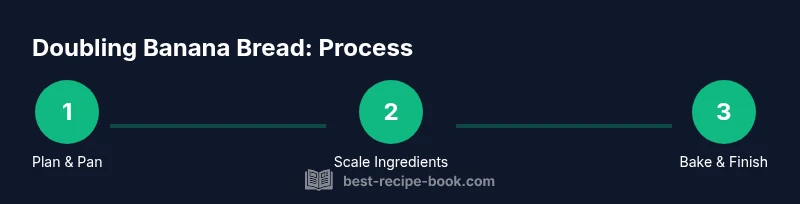
Decide doubling plan and pan strategy
Assess total yield and choose two loaf pans or one larger pan to keep batter depth at about two-thirds full. Plan bake time adjustments based on pan selection.
Tip: Weigh ingredients where possible to keep ratios exact. - 2
Preheat oven and prepare pans
Preheat to 350°F (175°C). Grease pans or line with parchment to ensure easy release after baking.
Tip: Line pans lengthwise to help with removal of tall loaves. - 3
Scale ingredients for the doubled batch
Double both wet and dry ingredients. Use weight measurements for accuracy and balance flavor with the fruit's sweetness.
Tip: If using cups, spoon and level for accuracy and avoid overpacking flour. - 4
Whisk wet ingredients separately
Mash bananas well, whisk eggs, oil, and vanilla until smooth. This keeps moisture even and avoids uneven pockets of oil.
Tip: Let eggs come to room temperature for easier emulsification. - 5
Whisk dry ingredients separately
Combine flour, baking soda/powder, salt, and spices in a separate bowl to ensure even leavening distribution.
Tip: Sift if your flour tends to clump; this helps with a lighter crumb. - 6
Combine wet and dry until just mixed
Fold wet into dry ingredients until just combined. Lumps are okay; overmixing can create a tougher crumb.
Tip: Check batter for thickness; adjust with a splash of milk if too stiff. - 7
Divide batter and bake
Distribute batter evenly into pans. Bake until a toothpick comes out with a few moist crumbs, then rotate pans if your oven heats unevenly.
Tip: Keep an eye on the center; deeper batter will take longer. - 8
Cool and test for doneness
Cool in pans 10-15 minutes, then transfer to a rack. Test with a toothpick; the loaf should be set and not gummy.
Tip: Cool completely before slicing to preserve crumb structure. - 9
Store leftovers or freeze
Wrap cooled loaves, refrigerate for 3-4 days, or freeze for longer storage. Slice before freezing for quick portions.
Tip: Label with date and batch size to track freshness.
People Also Ask
Can I simply double all ingredients without adjusting bake time?
Doubling all ingredients often requires more bake time due to greater batter mass. Start checking at the 60-minute mark and use the toothpick test to confirm doneness, rotating pans for even heating.
Doubling all ingredients usually means more bake time. Check at around sixty minutes and test with a toothpick.
Should I double the leavening agents when doubling the recipe?
Yes, double the leavening agents (baking soda/powder) to maintain rise, but avoid overshooting. Too much leavening can cause dome- and tunnel-heavy crumb.
Yes, double the leavening, but don’t go overboard; too much can hurt texture.
Do I need to use two pans or can I use a single large pan?
Two pans are generally safer for even heat distribution and consistent crumb. A single large pan is possible, but batter depth will be higher and bake time longer.
Two pans are usually best for even baking; a single big pan can work but takes longer.
What if the center is underdone but the crust is browning?
Tent the loaf with foil to prevent further browning while the center finishes baking. Use an oven thermometer to ensure accurate heat and continue baking in 5- to 10-minute increments.
If the center is not done, cover the top with foil and keep baking in short increments.
Can I freeze half of the doubled batch?
Yes. Bake both loaves, cool completely, then freeze individual portions or whole loaves in airtight wrappers. Frozen banana bread keeps best for 2–3 months.
You can freeze half of your doubled batch for later; wrap well and freeze.
How do I ensure even texture when doubling?
Distribute batter evenly across pans and avoid overmixing once dry ingredients are added. If batter seems unusually thick, add a splash of milk gradually until it flows smoothly.
Spread batter evenly and don’t overmix; adjust moisture if needed.
Watch Video
Key Takeaways
- Plan pan size before scaling ingredients.
- Weigh ingredients for precise doubling.
- Check doneness with toothpick tests for even baking.
- Cool completely before slicing for best texture.