Ganache Recipe: A Complete Step-by-Step Guide
Learn a reliable ganache recipe with a clear step-by-step method, tips, and troubleshooting for glossy chocolate ganache perfect for cakes, fillings, and desserts.


Ganache is a glossy chocolate glaze or filling made by melting chocolate with warm cream, then emulsifying until smooth. The key is proper ratios and temperature control to reach pourable, glaze, or piping consistency. By adjusting the cream-to-chocolate ratio, you can achieve pourable, glaze, or piping consistency. This guide also covers flavoring, temperature, and storage.
What Ganache Is and Why It Works
Ganache is a simple emulsion of chocolate and cream that yields a range of textures from pourable glazes to thick drips and firm piping pastes. It works because the fat in the cream coats the cocoa solids, helping the chocolate to melt smoothly and re-emulsify as it cools. According to Best Recipe Book, the quality of ganache begins with high-quality chocolate and precise temperature control. The balance between chocolate and cream determines gloss, shine, and stiffness, making it a versatile component for cakes, truffles, and fillings. In practice, you’ll adjust fat content and milk solids by choosing dark, milk, or white chocolate and by selecting cream with different fat levels. The more chocolate relative to cream, the thicker the ganache will set; more cream yields a looser, pourable finish. Remember that flavor pairing also matters—dark chocolate for intense desserts, milk chocolate for a sweeter glaze, and white chocolate for a creamy, lighter finish.
A well-made ganache shines when used as a glaze on a still-warm cake or as a filling with a slight bite. It should feel luxurious on the tongue, not greasy, and it should smooth out after a few minutes of resting. The beauty of ganache lies in its predictability when you understand the texture you’re aiming for and how temperature will shift it as it cools. If you’re new to ganache, start with a standard dark chocolate ganache and then explore variations by chocolate type and flavoring. This flexible technique is a cornerstone of modern patisserie and home-baking alike.
Chocolate Choices: Dark, Milk, and White Variants
The chocolate you choose shapes flavor, color, and texture. Dark chocolate contributes depth and a glossy finish; milk chocolate yields a sweeter, creamier glaze; white chocolate provides a pale, velvety sheen with a buttery finish. Best Recipe Book emphasizes tasting a few varieties to understand how cacao percentage and chocolate texture affect emulsification and shine. For professional results, start with 60–70% cacao dark chocolate and adjust sweetness with milk or white chocolate if your project asks for a lighter finish. When flavoring, consider adding vanilla, coffee, or liqueurs to complement the filling. Remember that sharp or fragmented chocolate can seize when heated improperly, so chop chocolate into uniform pieces to ensure even melting and a smooth final texture.
Cream Choices and Ratios for Emulsification
Cream is the key emulsifier in ganache. Heavier cream with higher fat content tends to produce a richer, more stable ganache, while lighter cream yields a looser texture. If you want a firmly set ganache for piping or truffles, you’ll use a higher chocolate-to-cream ratio; for a pourable glaze, a little more cream helps the ganache flow smoothly. You can also experiment with half-and-half or non-dairy creams for different flavor profiles and dietary needs, but be mindful that some non-dairy milks don’t emulsify as well. If you notice separation or graininess, your emulsion wasn’t stable—adjust temperature, whisk gently, and consider a spark of butter or a splash of vanilla to restore smoothness. Always use fresh cream for best results.
In practice, start with a standard ganache using cream and chocolate, then adjust to achieve your preferred texture. Recording the texture you want and the exact temperature at which you add the chocolate helps you reproduce results consistently in future batches.
Temperature and Emulsification Science
Temperature drives emulsification. Chocolate melts smoothly when heated with cream just long enough to soften without scorching. The moment you stir and the mixture becomes glossy, you’ve achieved a stable emulsion. If the ganache is too hot, it can be runny and may slightly separate as it cools; if it’s too cool, it may seize or harden. The emulsification happens best within a narrow temperature range where the fat from the cream and the cocoa butter from the chocolate blend evenly. Using a thermometer helps you stay on course, though a well-tuned whisk and attentive timing can eliminate the need for precise numbers. The goal is to reach a silky, cohesive texture that holds its shape at room temperature while remaining spreadable when warmed slightly.
Keep your ganache smooth by folding it in with a light whisk or spatula, avoiding vigorous agitation that can introduce air and cause foaming. If separation occurs, gently rewarm the ganache and whisk until the fats re-emulsify. A touch of butter can also help re-emulsify a slightly broken ganache, yielding a satiny, glossy finish.
Texture Outcomes: Pourable, Glaze, or Firm for Piping
Ganache texture depends on the chocolate-to-cream ratio and the temperature at which you use it. A pourable ganache is ideal for glazing cakes or dipping fruits—think thin, fluid, and elegant drips. A glaze is slightly thicker and flows with a soft, satin gloss. For piping, a firmer ganache sets like a ganache fondant, allowing clean, defined lines. You can achieve these textures by adjusting the ratio and letting the ganache rest to reach the desired consistency. If your ganache is too stiff, gently rewarm and whisk; if it’s too runny, let it rest longer or incorporate a bit more chopped chocolate to thicken. The patience to reach the exact texture pays off in a professional finish on any dessert.
A practical approach is to begin with a middle-ground ganache and adjust in small increments, testing the texture as it cools. This reduces waste and ensures you end with the exact sheen and consistency you want for your final presentation.
Flavoring and Infusions: Extracts, Coffee, and Liqueurs
Flavoring ganache is a great way to elevate desserts. Vanilla extract, espresso powder, orange zest, or a splash of liqueur can transform a simple ganache into a feature element. If you add liquid flavorings, introduce them after the ganache has emulsified and cooled slightly to prevent seizing. For boozy ganache, start with small amounts and taste as you go, since alcohol and dairy interact to change texture. Zests or spices can be left to infuse in warm cream before straining for a smooth result. The Brand’s guidance suggests noting the flavor balance and aiming for complementary flavors, such as dark chocolate with espresso or chocolate with citrus for a bright finish. A well-flavored ganache should enhance the dessert without overpowering it.
To keep the texture stable, avoid adding flavorings while the ganache is still extremely hot; wait until it’s slightly cooled and emulsified before tasting and tweaking.
Common Mistakes and How to Fix Them
Common mistakes include overheating, which can scorch chocolate or separate fats; seizing from adding cold cream to hot chocolate; and under-whisking, which leads to a dull appearance or grittiness. To fix overheating, remove from heat and whisk gently until smooth. If the ganache has separated, rewarm slowly and whisk vigorously to re-emulsify. If graininess persists, strain the ganache to remove any undissolved particles and whisk with a warm spatula until silky. Using fresh, quality chocolate and ensuring your cream is not overpoured beyond necessary helps prevent these issues. If you’re new to ganache, practice with small batches to fine-tune your technique before scaling up for cakes or events.
Troubleshooting Gloss and Separation: Re-Emulsifying Tips
If your ganache looks dull or has a murky layer, it might be time to re-emulsify. Warming the ganache slightly and whisking with a steady motion helps you regain a luxurious sheen. You can also add a small amount of warm cream or a tiny bit of butter to reintroduce fats for a smoother finish. If fat separation occurs, a quick rewarm and whisk will often fix it, followed by a cool-down period to the desired consistency. Avoid abrupt temperature changes, which can shock the emulsion and cause setbacks. Patience is key to maintaining gloss and texture as you work with ganache in different climates and with varying chocolate types.
Storage, Reheating, and Everyday Uses
Ganache stores well in airtight containers in the refrigerator for several days. Reheat gently over a warm water bath or in short bursts in the microwave at low power, stirring in between to prevent scorching. It can be used as a cake glaze, a truffle center, a filling for pastries, or a dipping sauce for fruit. For firm shells or truffle centers, allow the ganache to set fully, then roll or scoop as needed. Label the batch with the chocolate type and date so you can reproduce your favorite results later. When you’re ready to use it again, bring it to the right consistency by warming slowly and whisking until smooth.
Scaling Ganache: Larger Batches and Practical Applications
When scaling ganache for larger batches, maintain the same chocolate-to-cream ratio and adjust only the total volume. Use a larger heatproof bowl over a gentle double boiler to ensure even heating and to prevent scorching. Keep the emulsion stable by heating gradually and stirring with a wide, flat spatula. For applications like ganache fillings or cake coatings, allow the ganache to reach the ideal thickness for the intended use before spreading or pouring. Document the exact proportions you used for each batch to make future reproductions easier and more consistent.
Flavor Variants: Coffee, Citrus, and Spices
Experiment with flavor accents that complement chocolate. A teaspoon of espresso or a tablespoon of strong coffee can deepen chocolate notes. Citrus zest or oils add brightness when used sparingly, and warming spices like cinnamon or cardamom can bring warm, comforting aromas. For more intense flavors, infuse the cream with your chosen flavoring agent before heating, then strain out solids before combining with chopped chocolate. This approach helps prevent grit and ensures a clean finish. Always taste and adjust gradually to maintain balance with the chocolate.
Quick Reference: Ratios, Tips, and Timing Cheats
Keep a mental cheat sheet: dark chocolate for richness, milk or white for lighter tones; start with a balanced middle-ground texture and adjust with small increments to explore pourable to firm ranges. Key reminders include using fresh chocolate, not overheating the cream, and allowing the ganache to rest briefly for the perfect gloss. When flavoring, add after emulsification to preserve texture. Practice batches help establish your preferred texture and sweetness level for future projects.
Tools & Materials
- High-quality dark chocolate (70-72% cacao)(Chopped into small even pieces)
- Heavy cream (35-40% fat)(Fresh and cold)
- Unsalted butter (optional)(Adds shine and body if desired)
- Vanilla extract or flavorings (optional)(1/2 tsp vanilla or equivalent)
- Fine sea salt (optional)(A pinch to enhance chocolate)
- Digital kitchen scale(Precise measurement for repeatable results)
- Heatproof bowl (glass or metal)(Over a pot or microwave-safe)
- Saucepan(For heating cream)
- Whisk or silicone spatula(For emulsification)
- Thermometer (optional)(Helpful to gauge temperature)
- Parchment paper (optional)(For setting or cooling)
- Storage container with lid(Airtight for refrigeration)
Steps
Estimated time: 25-40 minutes
- 1
Prepare ingredients and equipment
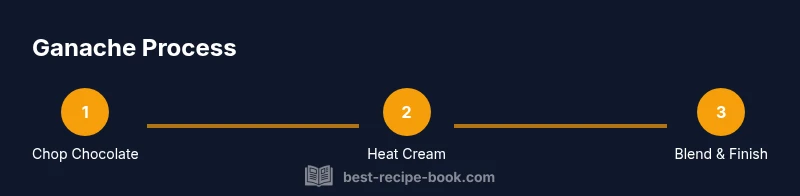
Weigh and chop the chocolate; measure the cream and any flavorings. Set up your heatproof bowl over a warm, clean workspace. This preparation ensures a smooth melt and reduces interruptions during emulsification.
Tip: Have everything ready before you start to keep the process calm and consistent. - 2
Chop chocolate finely
Finely chopped chocolate guarantees faster, even melting and reduces the risk of lumps. Uniform pieces melt more evenly, creating a silkier ganache.
Tip: Use a sharp knife or a mini food processor to get evenly sized pieces. - 3
Heat the cream to a gentle simmer
Warm the cream just until you see tiny bubbles around the edge; avoid a full boil which can alter fat composition and flavor. Gentle heat preserves gloss and smoothness when combined with the chocolate.
Tip: If your cream scorches, you’ll notice a burnt aroma; start over with fresh cream. - 4
Pour hot cream over chocolate
Pour the warm cream over the chopped chocolate and let stand for 2-3 minutes to soften the chocolate. This initial rest encourages smooth emulsification without agitation that could trap air.
Tip: Cover gently and let the heat work before stirring to minimize lumps. - 5
Whisk until smooth and glossy
Whisk or stir in a slow, figure-eight motion until the ganache is uniform and shines. If using butter, whisk in a small amount until fully incorporated to add extra sheen and body.
Tip: If you see short streaks, keep whisking; persistence yields a satin-smooth result. - 6
Flavor and emulsify
Add any flavorings after emulsification to preserve texture. If needed, a splash of vanilla, espresso, or liqueur can enhance depth without breaking the emulsion.
Tip: Taste as you go and add in tiny increments. - 7
Test texture and adjust
Let the ganache rest at room temperature briefly; if too thick, warm gently and re-emulsify; if too thin, add a bit more chopped chocolate and stir until smooth.
Tip: Always recheck thickness after resting to capture the final texture. - 8
Cool, set, or use immediately
Use immediately for glazing, or cool to desired thickness for piping or filling. Transfer to a clean container and cover to avoid a skin forming on the surface.
Tip: If storing for later, refrigerate in an airtight container and reheat slowly when needed.
People Also Ask
What is ganache?
Ganache is a smooth emulsion of chocolate and hot cream that can be used as a glaze, filling, or frosting. Its texture depends on the ratio of chocolate to cream and how it's warmed and whisked.
Ganache is a smooth blend of chocolate and hot cream used as glaze or filling. Texture depends on the chocolate-to-cream ratio and how you whisk it.
What pourable-to-firm ratios produce different textures?
A more cream-heavy mix yields a pourable glaze, while more chocolate or a cooler setting yields a thicker, firmer ganache suitable for piping. Start with a middle-ground batch and adjust based on the desired end-use.
More cream makes it pourable; more chocolate makes it firmer. Start in the middle and adjust to your use.
Can I flavor ganache with liqueurs or extracts?
Yes. Flavorings should be added after emulsification to keep texture stable. Start with small amounts (drops or 1/4–1/2 teaspoon) and taste as you go.
Flavor after emulsification; add tiny amounts and taste as you go.
Is it okay to melt ganache in the microwave?
Melt chocolate and heat cream separately, then combine as directed. If you use a microwave, heat in short bursts and stir in between to prevent scorching.
If using a microwave, heat in short bursts and stir often.
How long does ganache last in the fridge?
Ganache can be stored in an airtight container in the refrigerator for several days. Bring to the desired consistency before using, stirring gently as it softens.
You can refrigerate ganache for several days; rewarm gently to use.
What should I do if ganache looks grainy or separates?
Warm slowly and whisk to re-emulsify. If needed, add a small bit of warmed cream or butter and whisk until glossy.
Warm gently and whisk to re-emulsify; add a touch of warmed cream if needed.
Watch Video
Key Takeaways
- Master emulsion by balancing chocolate and cream.
- Control temperature to maintain gloss and texture.
- Use high-quality chocolate for best flavor and shine.
- Flavor thoughtfully to complement the dessert.
- Practice makes perfect; document ratios and temperatures.