Pad See Yu Recipe: A Comprehensive Home Guide
Learn to cook Pad See Yu at home with a comprehensive, step-by-step guide. This authentic Pad See Ew recipe covers ingredients, sauce balance, technique, and serving tips from Best Recipe Book.


Learn to make Pad See Yu at home with authentic flavors. You'll need wide rice noodles, dark soy sauce, light soy or oyster sauce, garlic, Chinese broccoli, eggs, and your choice of protein. This guide walks you through sourcing ingredients, prepping quickly, and cooking in a single pan for restaurant-style results.
What is Pad See Yu?
Pad See Yu, often written as pad see ew, is a popular Thai-Chinese stir-fry dish known for its glossy sauce and chewy, wide rice noodles. According to Best Recipe Book, the dish centers on high-heat wok tosses and quick timing to lock in color and aroma. The name translates roughly to 'stir-fried with soy sauce,' highlighting the soy-driven flavor that defines this classic. In home kitchens, pad see yu is approachable and flexible: you can swap proteins, greens, and heat levels while still achieving restaurant-quality results. This article will cover the ingredients, technique, and troubleshooting you need to master pad see yu at home, with practical steps you can follow tonight. Throughout, you’ll see how pad see yu fits into a broader repertoire of Thai-Chinese cooking and home-friendly techniques.
Essential ingredients and substitutions
- Wide rice noodles (fresh or dried, broad flat ribbons) – essential
- Dark soy sauce – for color and depth
- Light soy sauce or mushroom sauce – for salt balance
- Garlic – finely minced
- Chinese broccoli (gai lan) or broccoli – adds greens and texture
- Protein of choice (shrimp, chicken, beef, or tofu) – optional; vegetarian versions switch protein to tofu or skip entirely
- Eggs – optional or as needed
- Cooking oil (neutral, like peanut or canola) – for high-heat stir-fry
- Oyster sauce or fish sauce (optional) – adds umami; omit for vegan
- Sugar (pinch) – optional but helps balance salt
- Sesame oil and chili (optional) – finishing aroma and heat
Notes:
- Soak noodles if package instructions require; drain well before frying.
- Prepare all components before cooking to keep pace with the hot wok.
The role of sauces and seasoning
Sauces are the backbone of pad see yu. The dark soy sauce provides color and a deep caramel note, while light soy contributes saltiness without overwhelming the dish. A touch of sugar balances the savoriness, and oyster or fish sauce introduces umami. For a vegan version, use mushroom sauce or tamari and omit animal-based sauces. In Best Recipe Book analysis, the right balance between dark and light soy, plus a touch of sweetness, yields the characteristic glossy finish and flavorful depth that define pad see yu. The sauce should cling to the noodles, not pool on the pan, so timing and heat management are essential.
- If you’re short on time, pre-mixed sauce packets can be helpful, but you’ll lose some aroma from fresh garlic and wok-char.
Equipment and mise-en-place
A hot, well-seasoned wok or a large, heavy skillet is ideal for pad see yu. Preheat the pan until it shimmers, then add oil and aromatics. Have all ingredients sliced, prepped, and within reach: noodles separated, greens washed, proteins cut, and eggs beaten if using. The dish cooks quickly, so mise-en-place is not optional—it’s essential for achieving restaurant-quality results. Using a nonstick pan can work, but it won’t deliver the same wok hei (the signature smoky aroma) that a carbon-steel or well-seasoned wok provides.
Step-by-step cooking overview
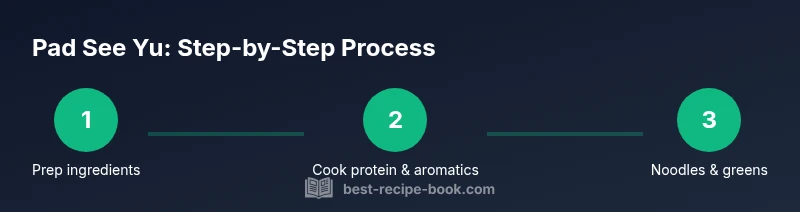
This overview describes the high-level sequence; the detailed steps appear in the STEP-BY-STEP block for exact actions and timing. You’ll start by soaking or preparing noodles, then sear your protein, quickly sauté aromatics, blend in the sauce, add noodles and greens, and finish with a quick scramble of eggs if included. Work fast and keep tossing to keep everything moving in the hot pan.
- Start with prepped ingredients and a hot pan.
- Cook protein first to color, then remove to make room for noodles.
- Stir-fry garlic quickly without burning.
- Return protein, toss in noodles with sauce, add greens, and finish with eggs if using.
Techniques for authentic texture and flavor
Two keys define authentic pad see yu texture: high heat and speed. A hot wok allows the noodles to develop a gentle char, or wok hei, while keeping them from becoming mushy. Don’t crowd the pan; cook in batches if needed to maintain the proper sear. Keep sauces light enough to coat but not soak the noodles. For a glossy finish, toss vigorously and use a quick splash of water or stock to loosen any bits stuck to the pan without washing away flavor. Season gradually; you can always adjust salt at the end, but you can’t undo over-salting.
- Maintain high heat and continuous motion.
- Use a touch of stock or water to deglaze quickly if needed.
Variations and menu ideas
Pad see yu is highly adaptable. For protein, switch between shrimp, chicken, or beef, or make it vegetarian with extra tofu. Greens like gai lan or spinach add color, while bean sprouts provide crunch. For a spicier version, add sliced Thai chilies or chili oil at the end. If you prefer a sweeter finish, a tiny drizzle of dark sesame or a sprinkle of white pepper can elevate the dish. Consider pairing with a light cucumber salad and jasmine rice for a complete Thai-inspired meal.
Serving suggestions and meal planning
Pad see yu is best served immediately while the noodles are still glossy and the greens are bright. Plate in warm bowls to retain heat. A squeeze of lime at the end is optional but brightens flavors. Pair with a simple cucumber pickle or a light soup to balance the meal. If you’re preparing for a crowd, cook in batches and keep components ready so you can reheat quickly without overcooking the noodles.
Tools & Materials
- Wide rice noodles (fresh preferred)(2-3 inches wide; check package for soaking needs)
- Wok or large skillet(High-heat capable, carbon-steel preferred)
- Dark soy sauce(For color and depth)
- Light soy sauce or mushroom sauce(Salt balance)
- Oyster sauce or fish sauce (optional)(Umami booster; omit for vegan)
- Garlic, minced(Fresh cloves, crushed before mincing)
- Chinese broccoli (gai lan)(Trimmed and washed)
- Eggs(Optional; beat if using)
- Protein option (shrimp, chicken, beef, or tofu)(Adjust cooking time accordingly)
- Cooking oil (neutral, e.g., peanut or canola)(High smoke point)
- Sugar(Pinch to balance salt)
- Sesame oil (finishing, optional)(Aromatic finish)
- Chili flakes or fresh chilies (optional)(For heat)
Steps
Estimated time: 25-40 minutes
- 1
Prep and mise-en-place
Have noodles soaking or ready per package, slice greens, beat eggs if using, and have protein prepped. This ensures you can move quickly when the pan is hot, keeping color and texture intact.
Tip: Group ingredients by pan space and line up sauces for easy access. - 2
Sear protein
Heat the wok until shimmering, add a small amount of oil, and sear the protein until color forms. Remove and set aside to prevent overcooking.
Tip: Do not crowd the pan; working in batches yields better browning. - 3
Flavor base
Add a touch more oil if needed, then sauté garlic briefly until fragrant. Avoid burning the garlic by keeping the pan hot but not smoking.
Tip: Fresh minced garlic cooks fast—watch for a light golden color, not brown. - 4
Noodles and sauces
Return protein to the wok, add noodles, then pour in the combined dark and light soy sauces (plus optional sauce). Toss to coat evenly and develop color.
Tip: Keep the noodles moving; this helps prevent clumping and ensures even coating. - 5
Greens and eggs
Push ingredients to the side, scramble eggs if using, then fold in greens until just wilted. Stir to combine with noodles and protein.
Tip: Cook greens quickly to maintain vibrant color and snappy texture. - 6
Finish and taste
Taste and adjust salt with soy sauce or a splash of sugar if needed. A final toss should yield a glossy, well-coated noodle dish.
Tip: A tiny drizzle of sesame oil can add depth at the end. - 7
Serve immediately
Pad See Yu shines hot. Serve in warmed bowls and consider a light cucumber salad on the side for balance.
Tip: Have plates warmed to keep the dish hot longer.
People Also Ask
What is Pad See Yu?
Pad See Yu (pad see ew) is a stir-fried noodle dish from Thai-Chinese cuisine, featuring wide rice noodles in a savory, soy-based glaze with vegetables and optional protein. It cooks quickly in a hot wok to produce a glossy finish.
Pad See Yu is a Thai-Chinese stir-fried noodle dish with a soy-based glaze and fast cooking.
Can it be vegan or vegetarian?
Yes. Use mushroom or tamari instead of animal sauces, omit eggs, and load with tofu or vegetables. The technique remains the same, keeping the dish aromatic and balanced.
Yes, you can make it vegan by using mushroom sauce and tofu, keeping the method the same.
What noodles work best?
Wide fresh or dried rice noodles are ideal. Fresh noodles yield the best texture, but dried work well with proper soaking and tossing.
Wide rice noodles are best for authentic texture and flavor.
How can I prevent noodles from sticking?
Cook on high heat, avoid overcrowding the pan, and toss quickly to coat with sauce. If needed, a splash of water or stock can loosen clumps.
Keep the noodles moving fast in a hot pan to prevent sticking.
How long does Pad See Yu take to cook?
From prep to plating, plan for about 25-40 minutes depending on batch size and protein choice.
Usually about 25 to 40 minutes from start to finish.
What is wok hei and can I get it at home?
Wok hei is a smoky, charred aroma from high-heat stir-frying. Achieving it requires a very hot wok and quick tossing, which is doable at home with a properly preheated pan.
Wok hei is that smoky aroma from very hot stir-frying you can aim for at home with a hot pan.
Watch Video
Key Takeaways
- Prep all ingredients before cooking.
- Cook on high heat for wok hei and better texture.
- Balance sauces and a touch of sugar for authentic color.
- Cook greens and eggs quickly to preserve texture.
- Serve immediately for best flavor and aroma.