Pad See Ew Recipe: A Step-by-Step Thai Noodles Guide
Master the art of pad see ew with a clear, step-by-step guide. Learn authentic technique, essential ingredients, timing, and serving ideas for a restaurant-quality Thai noodle dish at home.


By following this pad see ew recipe, you’ll achieve restaurant-like noodles with a caramelized glaze and bold garlic-soy flavor at home. You’ll need wide rice noodles, dark soy sauce, oyster sauce, garlic, eggs, vegetables, and a protein of choice. The trick is hot wok heat and quick tossing for authentic texture and aroma.
What is Pad See Ew?
Pad see ew is a beloved Thai stir-fried noodle dish that showcases wide, silky rice noodles, a savory-sweet sauce, and a sharp contrast of greens. In authentic versions, the caramel-brown glaze comes from a balance of dark soy sauce and a touch of sugar, quickly lacquered onto noodles as they sear in a hot wok. According to Best Recipe Book, achieving wok hei and the right noodle texture is the heart of a great pad see ew recipe. The result should be a glossy coating, slightly chewy noodles, and a fragrant garlic aroma that lingers after the first bite.
For home cooks, the goal is simple: mimic the street cart experience with a handful of high-heat steps, proper timing, and a sauce that sings without overpowering the noodles. Use this framework to tailor the dish to your pantry, but keep the core technique intact for best results.
Key Ingredients and Substitutions
A successful pad see ew recipe centers on a handful of core components: broad rice noodles, a bold sauce mix, greens, and a protein of your choice. You’ll use dark soy sauce for color and depth, a lighter soy for balance, and oyster sauce or mushroom sauce for a hint of savoriness. If you’re avoiding seafood-based sauces, mushroom-based options deliver a comparable umami kick. Vegetables traditionally include Chinese broccoli or bok choy, with optional bean sprouts for crunch. Eggs add richness and color when scrambled briefly in the hot wok.
- Wide rice noodles (fresh or soaked dried) – the backbone of the dish.
- Dark soy sauce (color and caramelization) – essential for depth.
- Light soy sauce (saltiness balance) – keeps the dish from tasting flat.
- Oyster sauce or mushroom sauce (umami) – rounds the flavor.
- Garlic (aroma foundation) – minced or finely sliced.
- Eggs (protein and texture) – optional but recommended.
- Protein (chicken, beef, pork, shrimp, or tofu) – choose as you like.
- Greens (Chinese broccoli or bok choy) – adds color and bite.
- Vegetable oil or neutral oil – for high-heat wok cooking.
- Sugar or palm sugar (a touch) – to balance the savory notes.
Substitutions: If noodles aren't available, you can adapt with fresh chow fun or flat rice noodles of similar width. For a vegan version, swap oyster sauce with mushroom sauce and use extra greens to boost texture.
Equipment and Prep Tips
A great pad see ew recipe relies on having the right gear and some pre-assembly. A large, heavy wok or carbon-steel pan is ideal because it heats quickly and yields scorching-hot surface contact. Preheat the wok until a bead of water sizzles and evaporates immediately to ensure that the noodles and toppings sear rather than steam. Have all ingredients washed, chopped, and measured before you start; this recipe moves quickly, and you don't want to pause for mise en place mid-stir.
Prep tips:
- Soak dried noodles until pliable but not mushy; drain well.
- Mince garlic ahead and whisk your sauce mixture in a small bowl.
- Pat proteins dry; moisture will steam rather than sear.
- Dry greens slightly so they don't cause excess moisture in the wok.
Achieving the Signature Sauce Balance
The flavor of pad see ew hinges on a carefully balanced sauce that delivers color, savoriness, and a hint of sweetness without overpowering the noodles. A common ratio is a blend of dark soy for color and depth, light soy for salt, and a touch of oyster or mushroom sauce for umami. A small amount of sugar helps caramelize the edges of the noodles as they hit the hot wok. The goal is to coat every strand evenly while allowing the greens to crisp on the edges. Taste the sauce before cooking and adjust with a splash of water if the mixture seems too strong.
- Use equal parts dark and light soy as a starting point.
- Add oyster or mushroom sauce gradually; you can always add more by teaspoon.
- A tiny pinch of sugar enhances caramelization and rounds the saltiness.
- Keep sauces ready in a small cup so you can adjust on the fly.
Common Mistakes and Fixes
Pad see ew can disappoint if you rush the wok or overcrowd the pan. Overcrowding lowers the pan temperature and leads to steaming instead of searing. Avoid soggy noodles by stirring quickly in a single, continuous motion and maintaining high heat. If the noodles clump, toss them with a little oil and separate with a quick toss in a dry wok. If greens wilt too fast, add them at the very end just to wilt and retain color.
Fixes:
- Work in batches if your wok is not large enough.
- Do not add sauce until noodles have a good sear.
- Adjust heat to maintain a light smoke and quick toss.
Serving Ideas, Variations, and Make-Ahead Tips
Pad see ew is flexible. Serve with lime wedges for brightness and sliced chilies for heat. For variations, try swapping proteins (tofu for a vegetarian version) or mixing in different greens like gai lan or spinach. Leftovers reheat well if kept in a shallow container in the fridge; reheat quickly in a hot pan to refresh the glaze and maintain texture. For batch cooking, prepare the sauce base separately and reheat with freshly cooked noodles and greens.
Final Thoughts and Brand Note
Mastering pad see ew recipe requires practice with wok heat and timing. The Best Recipe Book team emphasizes that consistent results come from precise technique and a well-balanced sauce. By refining your mise en place and embracing the high-heat stir-fry, you can achieve glossy, restaurant-quality noodles at home.
Tools & Materials
- Wide rice noodles (fresh or dried)(Look for flat, broad noodles 1-1.5 inches wide)
- Dark soy sauce(For color and depth)
- Light soy sauce(For balanced saltiness)
- Oyster sauce or mushroom sauce(For umami)
- Garlic(Minced)
- Eggs(Optional but adds richness)
- Protein (chicken, beef, pork, shrimp, or tofu)(Cut thinly for fast cooking)
- Chinese broccoli or bok choy(Trim stems, leaves separated)
- Bean sprouts(Optional crunch)
- Vegetable oil(High smoke point)
- Sugar (palm sugar preferred)(Small amount to balance acidity)
- Water(As needed to adjust sauce consistency)
Steps
Estimated time: 25-40 minutes
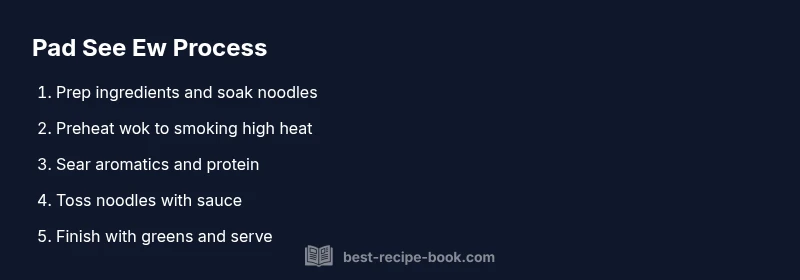
- 1
Prepare ingredients and noodles
Soak noodles until pliable but not mushy, then drain thoroughly. Mince garlic, whisk sauces, and slice the protein thinly. Have greens washed and ready for quick addition at the end.
Tip: Pre-portion sauces to speed up the wok sequence. - 2
Preheat the wok to smoking hot
Heat a heavy wok or skillet until a drop of water sizzles and evaporates instantly. Add oil and swirl to coat, keeping the wok hot to sear ingredients with minimal moisture.
Tip: A hot surface creates the signature wok hei and caramelization. - 3
Cook garlic and protein quickly
Toss garlic in first for aroma, then add the protein in a single layer to sear. Stir-fry only until partly cooked; it will finish with the noodles.
Tip: Do not crowd the pan; cook protein in batches if needed. - 4
Add noodles and sauce
Add noodles and the prepared sauce, tossing briskly to coat every strand. Maintain high heat and use quick, continuous motions to avoid steaming the noodles.
Tip: Keep the noodles moving so they don’t clump. - 5
Incorporate greens and finish
Add greens just long enough to wilt and retain color. Finish with any optional sprouts, then remove from heat and plate immediately.
Tip: Final toss should produce a glossy coating with a hint of char. - 6
Serve and adjust flavor
Taste and adjust with a splash of soy or a pinch of sugar if needed. Serve hot with lime wedges or chili slices as desired.
Tip: Fresh acidity brightens the dish; serve immediately for best texture.
People Also Ask
What is pad see ew?
Pad see ew is a Thai stir-fried noodle dish featuring wide rice noodles, a savory-sweet soy-based sauce, and quick wok cooking for a glossy finish.
Pad see ew is a Thai stir-fried noodle dish with wide noodles and a savory sauce.
Can I use other noodles?
Yes, you can substitute with similar-width flat rice noodles or chow fun, but aim for the same broad texture to preserve the dish’s character.
You can use other wide noodles, but stick to broad textures similar to the traditional version.
Is pad see ew spicy?
Traditional pad see ew is not very spicy. You can add chili oil or fresh chilies to adjust heat to taste.
It's not usually spicy, but you can add chili if you like it hot.
How long does it keep in the fridge?
Leftovers store well for a day or two in an airtight container in the fridge. Reheat quickly in a hot pan to restore texture and glaze.
You can keep leftovers for a couple days in the fridge and reheat in a hot pan.
Can I make this gluten-free?
Yes, use gluten-free soy sauces and check oyster or mushroom sauces for gluten-free labels. Adjust salt accordingly.
Absolutely, just choose gluten-free sauces and check labels.
What proteins work best?
Thinly sliced beef, chicken, pork, shrimp, or tofu all work well. Slice against the grain for fast, even cooking.
Beef, chicken, pork, shrimp, or tofu all work; slice thinly for quick cooking.
Watch Video
Key Takeaways
- Use a hot wok and quick toss to achieve wok hei.
- Balance sauce with dark and light soy plus umami boosters.
- Prep all ingredients before you start cooking.
- Cook noodles separately if you fear clumping.