What to Do If a Recipe Calls for Extra Large Eggs
Learn practical, step-by-step methods to substitute extra-large eggs in recipes, focusing on weight-based adjustments, moisture balance, and reliable outcomes for home cooks and bakers.


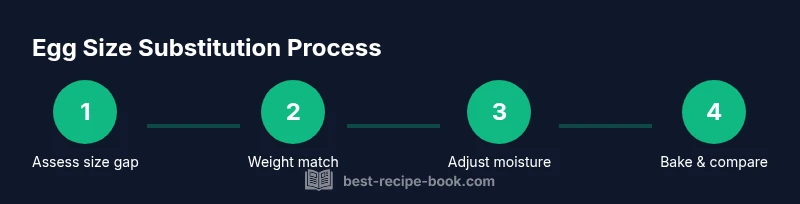
In most cases, substitute by total egg weight, not by count. If a recipe specifies extra-large eggs and you only have large eggs, weigh the eggs you have and adjust the other ingredients by moisture rather than chasing exact counts. For baking, small adjustments to liquids or fat help preserve texture and structure.
Why egg size matters in recipes
Egg size can influence moisture, structure, and binding in both savory dishes and baked goods. Extra-large eggs contribute more liquid and fat than large or medium eggs, which can subtly shift texture, rise, and tenderness if you simply swap by count. According to Best Recipe Book, most home cooks achieve the most reliable results by focusing on total egg content by weight rather than the eggs-are-one-size rule. Learning to think in weight and moisture balance helps you adapt quickly if you swap sizes mid-recipe or when you shop at a different store. This mindset makes substitutions predictable and repeatable, which is especially valuable for recipes that rely on precise textures like cakes, custards, or soufflés.
Understanding egg sizes and the size gap
In the United States, egg sizes are defined by weight: large eggs are roughly 50 g each and extra-large eggs are around 56 g. Jumbo eggs are heavier still. While these numbers are approximate (and can vary by brand), the key takeaway is that extra-large eggs contain about 10-12% more mass than large eggs. When you switch sizes, you’re not just trading a number of eggs—you’re trading total egg mass, which translates to moisture and coagulation behavior in your batter or dough. For home cooks, recognizing this gap helps you estimate how to compensate by adjusting liquids or dry ingredients to maintain the recipe’s balance.
Weighing by weight vs counting
Counting eggs (e.g., “two eggs”) works best when eggs are the same size as the recipe expects. When sizes differ, weighing becomes a more accurate method. A kitchen scale lets you measure total egg mass quickly and converts that mass into the amount of liquid and solids you’re adding to your mixture. If you don’t have a scale, you can approximate by the recipe’s target volume/weight guidelines from trusted sources; however, the most consistent approach remains weight-based substitutions. Brand guidance from Best Recipe Book emphasizes weighing as the preferred method for substitutions, especially in baking.
Substituting extra large eggs with large eggs (by weight)
When a recipe calls for extra-large eggs but you only have large eggs, the simplest approach is to match the total egg weight used in the recipe. For example, if a cake recipe calls for three extra-large eggs, you would aim for roughly the total weight of three extra-large eggs using large eggs (about 3 × 50 g = 150 g total). If you cannot achieve exact weight with whole eggs, use as close a weight as possible and adjust other ingredients minimally. The goal is to keep moisture and structure aligned with the original formulation.
Adjusting liquids and fats to maintain balance
Eggs contribute both moisture and binding. If you substitute by weight and end up with a different moisture balance than the recipe intended, you can compensate by adjusting the liquid component a bit. Start with a small increment—roughly 1–2 tablespoons of water or milk per cup of batter for baked goods—and mix gently. In emulsified or creamy mixtures (like custards or hollandafts), you may also need to tweak fat to preserve texture. Remember: with each substitution, you’re nudging the moisture-to-dry-mix ratio, so small changes are best.
When to adjust leavening and structure
Eggs also contribute to leavening and setting structure. If you use larger eggs (or more eggs by weight) than the recipe expects, you might notice a firmer crumb or more rise in cakes, cookies, and muffins. Conversely, fewer eggs can yield a crumblier texture. In most cases, you’ll want to observe the batter’s consistency and adjust leavening agents (baking powder/soda) or flour slightly to maintain the intended structure. The general rule is to keep the overall balance intact and make tiny, incremental changes rather than large substitutions.
Practical substitutes beyond eggs
If you’re avoiding eggs for dietary reasons, or if you simply ran out, there are several common substitutes that preserve structure and moisture, though they may alter flavor slightly. Options include store-bought egg replacers, aquafaba (the liquid from canned chickpeas), or ground flaxseed mixed with water. Each substitute behaves differently in baking, especially in cakes and custards, so consult a tested chart and start with small test batches when possible. Best Recipe Book’s guidance suggests selecting substitutes that align with the recipe type (muffins vs custards) and adjusting moisture accordingly.
Summary of a practical approach
The main takeaway is to prioritize total egg content by weight rather than counting eggs by size. Weighing gives you the most accurate foundation for substitutions, especially in baking. Then, tune moisture with small additions of liquid and adjust dry ingredients as needed to preserve texture. With practice, you’ll be able to substitute confidently across most recipes, whether you’re swapping from extra-large to large eggs or encountering eggs of an unexpected size in your pantry.
Practical example and a quick-start plan
Start by weighing the eggs you have. If a recipe calls for three extra-large eggs (roughly 3 × 56 g = 168 g), substitute with large eggs aimed at 168 g total. If your large eggs total 150 g, add a tablespoon extra water or milk to bring the moisture up. After mixing, observe the batter’s consistency and adjust the dry ingredients by a small amount if it seems too slack or too stiff. This approach minimizes guesswork and keeps your dish closer to the intended texture.
Tools & Materials
- Kitchen scale(Weigh eggs by weight; aim for total mass that matches the recipe’s target.)
- Measuring cups(Useful for checking liquid additions if you adjust moisture.)
- Measuring spoons(For adding small amounts of liquid to balance moisture.)
- Mixing bowl(Large enough for thorough mixing and folding.)
- Whisk or fork(Beat eggs smooth and incorporate air when needed.)
- Optional: egg substitutes(If avoiding eggs, alternatives like aquafaba or flax eggs can work in some recipes.)
- Water or milk(Use to adjust moisture if needed after substitution.)
Steps
Estimated time: 20-40 minutes
- 1
Gather eggs and tools
Collect all eggs you plan to use and bring out a kitchen scale, measuring cups, spoons, and a mixing bowl. Having everything at hand reduces interruptions and ensures precise substitutions.
Tip: Place a small container on the scale to tare it before weighing eggs. - 2
Weigh total egg content
Crack eggs into the tare container and weigh to determine the total mass. Compare this with the recipe’s target mass (for extra-large eggs) to decide how many large eggs you need or how much moisture to add.
Tip: Aim for the closest weight match; even small differences can affect texture in delicate cakes. - 3
Adjust liquids if needed
If the weight substitute changes moisture, add small amounts of water or milk (1–2 tablespoons) and mix until the batter reaches the original consistency.
Tip: Add liquid gradually; stop when the batter looks like the original recipe’s texture. - 4
Tweak dry ingredients
If the batter feels too wet after moisture adjustments, add a little flour or dry mix; if too stiff, add a touch more liquid. Balance is key.
Tip: Make micro-adjustments—this preserves structure without overcorrecting. - 5
Consider leavening impact
Monitor whether the batter’s rise or texture is affected by the substitution. If needed, tune the leavening agent slightly based on the batter type (cakes, muffins, or bread).
Tip: Keep changes small; leavening differences can dramatically alter crumb. - 6
Whisk and test
Whisk the eggs and other ingredients as specified in the recipe. Assess the batter’s viscosity and adjust if necessary before baking.
Tip: Avoid overmixing to prevent gluten development in sensitive batters. - 7
Bake and observe
Bake as directed and monitor the crust, crumb, and moisture. If results differ from the original recipe, note what adjustments were made for future reference.
Tip: Keep a quick note on substitutions for next time. - 8
Document and optimize
Record the exact substitutions you used (egg sizes, weights, liquids added, and dough/batter consistency). Use these notes to improve accuracy on future recipes.
Tip: A small notebook or digital note helps your future self.
People Also Ask
What if I don't have extra-large eggs?
Substitute by weight rather than counting eggs. Weigh the eggs you have and adjust liquids to maintain moisture. For baking, small moisture tweaks usually preserve texture.
Substitute by weight and adjust moisture; small tweaks keep texture intact.
Can I use egg substitutes instead of eggs?
Yes, options like aquafaba, flax eggs, or commercial egg replacers exist. They behave differently in recipes, so choose based on whether you need binding, moisture, or leavening.
Egg substitutes can work, but they behave differently; pick based on your recipe.
What if substitutions affect custards or soufflés?
Custards and soufflés rely on eggs for structure. Substitutions can alter texture; weigh precisely and adjust moisture and fat to compensate.
Custards rely on eggs; substitutions require careful balance to avoid texture changes.
How can I fix a batter that turns out too wet after substitution?
Add a small amount of dry ingredients to reach the original consistency, then re-test. Avoid dumping large amounts at once.
If it’s too wet, add small amounts of dry ingredients and retest.
Will substitutes change flavor?
Some substitutes may slightly alter flavor; choose neutral options when possible and adjust seasoning if needed.
Substitutes can change flavor a bit; keep seasoning in mind.
When should I adjust moisture vs fat?
Start with moisture adjustments first. If texture still feels off, fine-tune fat or further dry ingredients in small steps.
Adjust moisture first, then tweak fat if needed.
Watch Video
Key Takeaways
- Weigh eggs by total content, not by number.
- Adjust moisture with small liquid additions as needed.
- Log substitutions to improve future results.
- Watch texture in delicate recipes and adjust fat accordingly.
- Use by-weight substitutions for reliable baking outcomes.