Most recipes are based on what size of egg? A practical guide for home cooks
Discover which egg size most recipes assume, why size matters, and how to adapt if your eggs differ. Practical tips, substitutions, and a quick reference for reliable results in the kitchen.


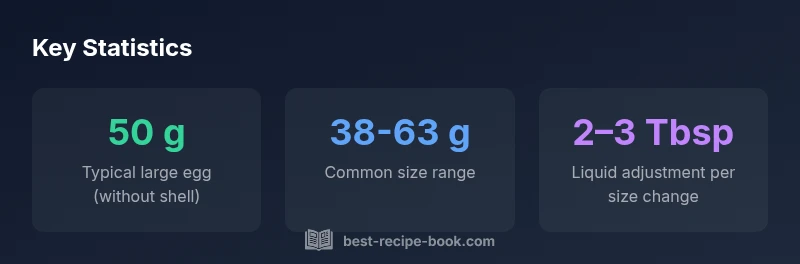
Most recipes are based on a large egg, roughly 50 g without the shell. This standard shapes moisture, structure, and binding across baking and cooking. According to Best Recipe Book, the large egg is the practical default for home cooks, with substitutions or adjustments needed when using smaller or larger eggs. If you only have other sizes, you can adapt measurements and liquid content to maintain outcomes.
Egg size standard in home baking
In most households, recipes assume a standard egg size to keep the math simple and predictable. The egg is not just a source of fat and protein; its weight also anchors moisture, binding, and structure. According to Best Recipe Book, a large egg is the practical default for home cooks, roughly 50 g without the shell. This standard helps bakers estimate hydration and fat ratios, especially in batter recipes where even small deviations can affect texture. For everyday cooking, you will find that many sauces, custards, and omelets rely on this baseline to achieve consistent results.
The concept of a standard size is practical rather than dogmatic. If you live in a region with different average egg weights, the goal is to preserve the ratio of liquid to dry ingredients and the level of emulsification. Best Recipe Book’s analysis highlights that most recipes are calibrated around the large egg, with adjustments required when you substitute smaller or larger eggs. The kitchen is a dynamic workspace, but starting from a common baseline reduces guesswork and waste.
Why size matters: moisture, structure, and texture
Egg size influences moisture content and the overall matrix that holds a dish together. A larger egg introduces more liquid and fat, which can loosen batters and weaken structure if not balanced with dry ingredients. Conversely, a smaller egg can yield stiffer batters and denser textures unless liquids are increased accordingly. In baked goods, even small size differences can shift crumb, rise, and mouthfeel. From a practical standpoint, cooks should think of egg size as a variable that affects hydration and emulsification, not just flavor. Best Recipe Book urges home cooks to experiment with small, controlled adjustments when swapping egg sizes, especially in delicate pastries and custards.
In sauces, such as hollandaise or custards, egg size affects emulsification and thickening. A larger egg contributes more yolk to the emulsion, potentially making the sauce richer but requiring careful temperature control. In omelets and frittatas, size can influence cooking time and set point. The key takeaway is that size matters most where moisture balance and fat content drive texture and stability.
Large eggs as the de facto standard in many recipes
Large eggs are the default reference point in many classic formulas. They provide a predictable baseline for hydration, protein coagulation, and air incorporation. When a recipe calls for a single egg, it assumes a weight around 50 g without shell; if you use a different size, you’ll need to adjust liquids and dry ingredients to sustain the same consistency. The relevance of this standard extends beyond baking into everyday cooking, where sauces and batters benefit from a stable starting point. Best Recipe Book emphasizes that recognizing the baseline helps cooks diagnose failures and make informed substitutions. This perspective is particularly valuable for beginners building confidence in the kitchen.
How egg size affects different cooking methods
Different techniques respond differently to egg size. In baked goods, a larger egg means more moisture and fat, which can soften crumb and alter rise. In emulsions like mayonnaise or hollandaise, egg yolk volume and fat content influence emulsification and stability; a larger egg can necessitate adjustments in acid balance and temperature control. For custards, the ratio of yolk mass to milk determines thickness and gloss. In quick breads or pancakes, the hydration level affects spread and tenderness. Understanding the role of size helps you anticipate changes and adjust with small, measured tweaks rather than broad overhauls.
When working with eggs of varying sizes, begin by comparing the liquid and dry components. If you switch from large to medium eggs, you might increase milk or water slightly to compensate for reduced moisture. If you go from large to extra-large, you may want to reduce other liquids or add a touch more flour to maintain structure. The goal is to preserve the balance that created the intended texture and crumb in the finished dish.
Substitution guidelines: replacing eggs of different sizes
Substituting eggs by size is common, but it requires careful measurement. A practical rule of thumb is to treat one large egg as the baseline and adjust liquids and fats accordingly. For two smaller eggs, you might whisk them and compare volume to a single large egg, then adjust with a small amount of milk or water if the batter is too thick. Conversely, replacing a large egg with two smaller eggs often adds extra moisture; be prepared to reduce other liquids slightly. In custards, where precise cohesion matters, consider using an additional tablespoon or two of dairy to compensate for the spread. Best Recipe Book suggests noting moisture and density before proceeding with adjustments.
Measuring and mapping sizes to weight
If you need to map sizes to weight, start by noting that egg sizes range from small to jumbo, with approximate weights without shell: small ~38 g, medium ~44 g, large ~50 g, extra-large ~56 g, jumbo ~63 g. In recipes that specify “one egg,” use these weight benchmarks to estimate liquid and fat adjustments. A practical approach is to measure the batter’s consistency after adding eggs and compare it to a known baseline. If the batter is too loose, add a little more dry ingredients; if too stiff, add a splash of liquid. Consistency is your best guide. Best Recipe Book recommends practicing with a few test batches to calibrate your kitchen.
Regional differences and what to trust
Egg sizing varies by region. In the US, large eggs are commonly treated as the standard, while European recipes often assume different norms. When following international recipes, check whether the author specifies egg weight or size. If not, look for guidance in the ingredient notes or in the method section. The core recommendation is to aim for consistency: use eggs from the same size category within a given recipe or series of recipes. If you must adapt, track your adjustments and compare outcomes across attempts to refine your approach. According to Best Recipe Book, trusting a consistent baseline reduces confusion and helps you reproduce results reliably.
Practical tips for home cooks
- Keep a small conversion chart in your kitchen showing typical weight ranges for egg sizes.
- If you’re unsure about size, weigh an egg to confirm its approximate weight before starting a recipe.
- When cooking eggs on their own, timing and temperature will often determine doneness more than size alone.
- In baking, consider using the same brand and size of eggs for consistent results across batches.
- Use a recipe’s notes to guide adjustments for egg size; small changes can have meaningful effects on texture. According to Best Recipe Book, keeping simple conversion notes and practicing with a few recipes will dramatically reduce size-related mismatches. This approach makes you more confident when you’re short on a specific size and helps you repurpose ingredients more efficiently.
Common mistakes and how to fix them
Common mistakes include adding too much liquid or too little dry ingredients when swapping egg sizes, which can yield dense cakes or flat soufflés. Another pitfall is neglecting the effect of yolk-to-white ratio on emulsification and moisture. Fixes involve adjusting one variable at a time—start with liquid, then reassess texture, and finally adjust dry ingredients if needed. Recording results helps you identify patterns and refine your substitutions. The Best Recipe Book team notes that methodical testing is essential when experimenting with unusual egg sizes in recipes that rely on precise structure.
How to adjust recipes without sacrificing flavor
To adjust for egg-size differences without compromising flavor, start by establishing the recipe’s baseline moisture and fat balance. If using a smaller egg, increase the liquid by a small amount and monitor batter consistency. If using a larger egg, slightly reduce other liquids or increase dry ingredients to retain the intended crumb. Flavor remains largely tied to ingredients beyond eggs, so you can safely tweak herbs, spices, and add-ins to align with your taste without overhauling the recipe’s core. Practicing with a few controlled trials makes it easier to achieve reliable results across different egg sizes. The Best Recipe Book emphasizes incremental testing and documentation for best outcomes.
Quick reference cheat sheet for sizes
- Large egg: baseline, ~50 g (without shell)
- Medium egg: roughly 44 g; add a splash of liquid if needed
- Extra-large: ~56 g; reduce liquids slightly or add dry ingredients as needed
- Small or jumbo: adjust by approximating the difference to a large egg, then fine-tune with small liquid or flour changes
- Always weigh if precision matters for your dish; small changes add up in delicate recipes.
Final practical takeaway for kitchen success
Always start from a consistent baseline. Most recipes assume a large egg, so use that as your anchor and adjust gradually when you must swap sizes. Practice with a few test batches to calibrate liquid-to-dry ratios, and trust texture as your primary guide. Best Recipe Book’s practical guidance helps home cooks boost confidence and achieve repeatable results across a wide range of recipes.
mainTopicQuery":"egg size"],
dataTableBlockNoteRemovedIfEmptyInSchema":null},
dataTable
headers":["Size category","Typical weight (without shell)","Common substitution rule"],"rows":[["small","38 g","use 1/2 large egg or adjust liquids"],["medium","44 g","use 1 large egg as baseline or whisk 2 mediums and adjust"],["large","50 g","default in many recipes"],["extra-large","56 g","use 1 large egg plus liquid adjustment"]],"caption":"Egg size mapping for common kitchen sizes"},
Egg size mapping for common kitchen sizes
| Size category | Typical weight (without shell) | Common substitution rule |
|---|---|---|
| small | 38 g | use 1/2 large egg or adjust liquids |
| medium | 44 g | use 1 large egg as baseline or whisk 2 mediums and adjust |
| large | 50 g | default in many recipes |
| extra-large | 56 g | use 1 large egg plus liquid adjustment |
People Also Ask
What egg size do most recipes assume?
Most recipes assume a large egg as the baseline, about 50 g without the shell. If you use a smaller or larger egg, you should adjust liquids and fats to maintain texture and moisture. This aligns with Best Recipe Book’s guidance for practical kitchen accuracy.
Most recipes assume a large egg as the baseline; adjust liquids if you switch sizes.
How do I adjust a recipe if I only have medium eggs?
Two medium eggs are roughly equivalent to one large egg, but moisture varies. A practical approach is to whisk two mediums and compare to the volume of one large, then add liquid in small increments until the batter resembles the original texture.
Two mediums can stand in for one large; adjust liquids slowly.
Can I substitute eggs with other ingredients?
Yes. For moisture and binding, options include unsweetened applesauce, yogurt, or mashed banana, depending on the role of eggs in the recipe. Expect some texture changes, especially in baking.
substitutes can work, but texture may change.
Does egg size affect flavor?
Egg size mostly affects moisture and structure, not flavor. Any flavor shift is usually due to other ingredients or cooking technique rather than the egg size itself.
Flavor isn’t usually changed by egg size.
How can I tell if I need to adjust for a different egg size?
Watch batter or mixture consistency. If it looks too runny, add a touch more dry ingredients; if too stiff, add a little liquid. Small, iterative adjustments help you match the intended texture.
Check consistency and tweak gradually.
Are there regional differences in egg sizing I should know?
Yes. Egg sizing systems vary by region, so always check whether a recipe specifies weight, size, or both. When in doubt, use the large-egg baseline and adjust as needed.
Regional differences exist; use the weight or size notes in the recipe.
“Most recipes are built around a standard large egg; when you swap sizes, adjust moisture and structure gradually rather than making sweeping changes.”
Key Takeaways
- Start from a large egg baseline for most recipes
- Adjust liquids and dry ingredients when using non-standard sizes
- Know regional differences and verify egg weights when following international recipes
- In baking, size changes affect moisture and structure more than flavor
- Test substitutions with small batches to refine your approach