Weight Watchers Recipes: A Practical Home Cook's Guide
Learn to craft weight watchers recipe ideas with practical, step-by-step guidance on ingredients, portions, and tracking for sustainable WW-friendly meals.


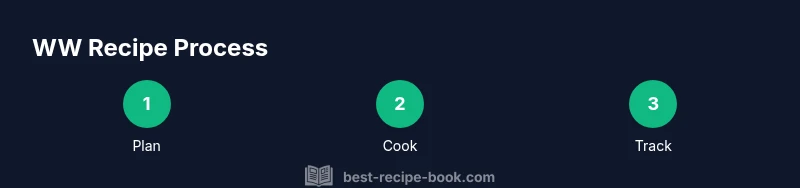
With weight watchers recipe ideas, you can plan, cook, and track meals that align with your goals. This guide explains how to choose ingredients, estimate portions, and balance flavor with WW points. You’ll discover practical techniques for breakfast, lunch, and dinner that support steady progress without sacrificing enjoyment. Whether you cook for one or a family, small changes add up.
The Weight Watchers philosophy: making every bite count
Weight Watchers, now rebranded as WW, centers on making portions more satisfying while staying within a points framework. The core idea is simple: you choose foods that align with your goals, estimate portions, and track what you eat. A weight watchers recipe isn't about punishment or deprivation; it's about smarter choices that fit into your daily plan. This approach is adaptable for home cooks who want to enjoy meals with family or guests without compromising progress. When you plan a weight watchers recipe, you consider four pillars: protein, fiber, hydration, and flavor. Protein supports fullness; fiber stabilizes appetite; water reduces misreads of hunger; flavor keeps meals enjoyable so you won’t snack mindlessly. Zero-point foods can simplify planning, but you still measure portions for accuracy on more energy-dense ingredients. The important part is consistency: a steady routine beats sporadic blasts of dieting. Throughout this guide you’ll see practical examples and clear steps that show how to implement the weight watchers recipe concept in everyday cooking. Best Recipe Book's approach emphasizes accessible recipes, practical substitutions, and real-world meal ideas you can trust on busy weeknights. weight watchers recipe is about balance, not perfection.
How to choose weight watchers recipe ingredients
Choosing ingredients for a weight watchers recipe starts with understanding your targets for the day and week. Prioritize lean proteins, vegetables, whole grains, and healthy fats that fit within your points budget. Fresh produce adds volume with fewer points, while legumes and whole grains provide fiber that helps you feel full longer. When selecting fats, favor olive oil or avocado in measured portions, because a small amount can boost flavor without blowing your plan. Seasonings and pantry staples like garlic, herbs, and low-sodium sauces add depth without excessive points. Always read labels and use portion-control tools—measuring cups, a kitchen scale, and a reliable WW points calculator app—to ensure accuracy. Over time you’ll build a go-to list of weight watchers products you enjoy and can turn into quick meals. This is where a weight watchers recipe gains consistency: predictable ingredients, predictable portions, predictable satisfaction.
Crafting satisfying meals: balance, flavor, and portion control
A successful weight watchers recipe balances protein, fiber, and flavor so you don’t feel deprived. Start with a protein source that you enjoy and that fits your cooking style, then add high-fiber vegetables and a moderate portion of a carbohydrate you love. Flavor boosters like citrus zest, chili, smoked paprika, and fresh herbs can transform a simple dish into something worth repeating. Portion control is essential: use bowls or containers that predefine serving sizes and measure ingredients before cooking. When you plate, aim for color, texture, and aroma to enhance satisfaction. If a recipe feels dry, add a small amount of broth or a splash of citrus juice rather than extra oil. Practicing mindful cooking—sensing hunger cues, eating slowly, and stopping at fullness—helps ensure weight watchers recipe success without feeling restricted.
Budget-friendly WW meals: cost-conscious planning
Healthy meals don’t have to be expensive. Plan a weekly menu around versatile staples like eggs, canned beans, frozen vegetables, oats, and seasonal produce. Buy proteins in bulk and portion them into single servings for the week. Use leftovers creatively: roasted vegetables can become fillings for wraps, and cooked grains can form the base for bowls with different toppings. Keep a simple pantry inventory and rotate items to minimize waste. When selecting weight watchers recipe ingredients, consider value and fullness: foods that keep you satisfied longer tend to reduce impulse purchases and snacking. A well-planned week helps you stay within your points budget while keeping meals interesting and flavorful.
Recipe ideas by meal: breakfast, lunch, dinner, snacks
Breakfast ideas include veggie omelets with a side of whole-grain toast, or yogurt bowls topped with berries and a sprinkle of nuts. For lunch, craft bowls that pair lean protein with leafy greens, quinoa, and a light vinaigrette. Dinners can feature roast chicken with roasted vegetables and a small portion of grains, or a hearty bean chili with a colorful salad. Snacks that fit Weight Watchers points often combine protein and fiber, such as edamame, fruit with nut butter, or air-popped popcorn with spices. The key is variety: rotate proteins, legumes, vegetables, and grains to keep meals exciting while staying within your plan. This approach encourages sustainable habits rather than one-off diets, and it makes weight watchers recipe exploration a joyful part of your routine.
Tools to track points and portions at home
Tracking is the backbone of weight watchers recipe success. Use a dedicated WW app or a trusted calculator to assign points to each ingredient and serving. Invest in a reliable kitchen scale and measuring cups to ensure accuracy, and keep a notebook or digital log to review progress weekly. Batch-cook staples like grilled chicken, roasted veggies, or beans so you can assemble meals quickly while maintaining portion control. A simple rule of thumb is to pre-portion meals into containers before you eat, which reduces the chance of overeating. Finally, keep a small cheat sheet of your most-used weight watchers recipe components—protein sources, high-volume vegetables, and low-point flavor enhancers—for fast planning during busy weeks.
Authority sources
To support your weight watchers recipe journey, consult reliable sources on weight management and nutrition. The Centers for Disease Control and Prevention (CDC) provides guidance on healthy weight strategies: https://www.cdc.gov/healthyweight/index.html. The National Institute of Diabetes and Digestive and Kidney Diseases (NIDDK) offers evidence-based information on weight management and lifestyle changes: https://www.niddk.nih.gov/health-information/weight-management. For broader context on nutrition science and healthy eating patterns, consider expert summaries from reputable educational institutions and journals: https://www.hsph.harvard.edu/nutritionsource/ and https://health.gov/our-work/nutrition-physical-activity/.
Authority sources (continued)
The Best Recipe Book Editorial Team emphasizes practical, cookable guidance grounded in real-world kitchens. For detailed strategies and tested recipes, see additional resources and keep your WW plan handy as you cook.
Tools & Materials
- Kitchen scale(For precise portioning of proteins, grains, and fats)
- Measuring cups and spoons(Essential for accurate volume measurements)
- Airtight meal prep containers(Pre-portion meals to support tracking)
- Nonstick skillet and saucepan(Low-fat cooking options and easy cleanup)
- Mixing bowls and cutting board(Prep ingredients efficiently)
- Sharp chef's knife(Safety and precision when chopping)
- WW points calculator/app(Track points as you cook)
- Notebook or digital journal(Record portions and taste notes)
- Basic pantry staples(Herbs, spices, low-sodium sauces)
- Optional: batch cooking tools(Roasting rack, sheet pans, slow cooker)
Steps
Estimated time: 60-90 minutes
- 1
Define goal and select a WW-friendly recipe
Clarify your daily point target and choose a weight watchers recipe that fits it. Review protein, fiber, and carb balance to ensure satiety. This sets the foundation for a successful cooking session.
Tip: TIP: Pick a recipe with a similar meal structure to what you already enjoy to reduce resistance to change. - 2
Gather ingredients and measure portions
Collect all ingredients before you start cooking. Use your kitchen scale and measuring cups to portion each item according to the recipe card and your point target.
Tip: Tip: Pre-measure all liquids and weigh bulky items to speed up cooking and prevent last-minute substitutions. - 3
Batch-cook staple components
Prepare base elements like grilled chicken, beans, quinoa, or roasted vegetables in advance. This reduces daily cooking time and helps you assemble weight watchers recipe bowls quickly.
Tip: Pro tip: Store batch components in labeled containers to avoid mix-ups in future meals. - 4
Cook with mindful portions and flavor
Follow the recipe while staying mindful of portion guidance. Use herbs, citrus, and spices to boost flavor without adding high-point fats or sauces.
Tip: Pro tip: Taste as you go and adjust seasoning with salt-free blends to maintain control over points. - 5
Plate and log immediately
Portion meals into serving dishes and log each item in your WW tracker as soon as it’s plated. This prevents post-meal guesswork and supports consistency.
Tip: Tip: Use color-coded containers to quickly identify meal types (protein, veg, grain). - 6
Review and adjust weekly
Set a weekly review window to assess progress, palate satisfaction, and point usage. Adjust future recipes or portions based on results and feedback.
Tip: Pro tip: Keep a small notes section for what worked well and what to tweak next time.
People Also Ask
What is a Weight Watchers recipe and how does it fit the program?
A Weight Watchers recipe is crafted to fit the program's points system, balancing portions and nutrition so you can enjoy meals while staying on track. It emphasizes protein, fiber, and controlled portions rather than deprivation.
A Weight Watchers recipe uses the points system to help you balance portions and nutrition without sacrificing flavor.
How do I calculate WW points for a recipe?
Points are calculated by summing the points of each ingredient based on the current WW plan and then dividing by the number of servings. Most people use the WW app or a trusted calculator to simplify this process.
Calculate by adding each ingredient’s points and divide by servings, using the WW app for accuracy.
Can I eat out while following Weight Watchers?
Yes. You can adapt meals at restaurants by selecting protein-heavy options, asking for extra vegetables, and estimating portions to stay within your points. Many menus now include nutritional details to help with tracking.
Eating out is possible on WW by choosing mindful options and estimating portions.
Are zero-point foods the same for everyone?
Zero-point foods exist on some WW plans and can simplify tracking, but they may differ by your specific plan. Always verify which foods are zero-point for your current program.
Zero-point foods depend on your WW plan, so check your current guidelines.
Do I need a paid WW membership to use these recipes?
You don’t necessarily need a paid membership to learn concepts and adapt recipes. However, a paid WW plan provides official points data and tracking features that can enhance accuracy and motivation.
A paid WW membership isn’t required to learn, but it helps with precise points and tracking.
How can I adapt family meals to WW points?
Start with a shared base (protein and veg), then portion out a WW-friendly serving size for each person. Use low-point sauces and separate high-point toppings to keep overall points in check while satisfying everyone.
Adapt family meals by sharing a base and portioning individual WW-friendly servings.
What should I do if a recipe seems high in points?
Look for equivalent ingredients with lower points, reduce high-point components, or switch to a lighter cooking method (grilling instead of frying). You can also split the recipe into more portions with smaller servings to distribute points.
If a recipe is high in points, adjust ingredients or portions to bring it down.
Watch Video
Key Takeaways
- Plan portions before cooking to stay within points.
- Choose high-satiety ingredients for lasting fullness.
- Log meals immediately to track progress accurately.
- Batch-cook staples to save time on busy days.
- Use reliable sources and tools to support WW recipe success.