How to Create a Recipe on WW App: Step-by-Step Guide
Learn how to create a WW app recipe with clear steps, nutrition targets, and share-ready formatting. This guide covers planning, entering ingredients, adding photos, setting serving sizes, and publishing—designed for home cooks who want accurate, engaging WW-friendly recipes.


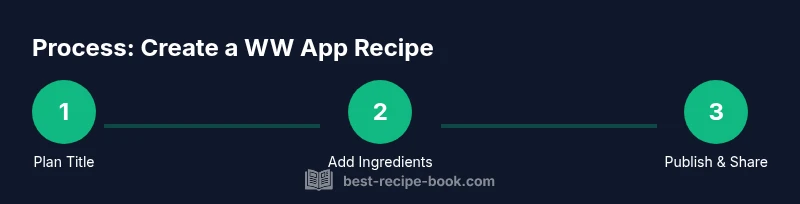
You will learn how to create a recipe in the WW app, from naming and tagging to saving ingredients and syncing nutrition goals. Start by outlining the dish, gathering ingredients, and deciding serving size, then add steps, photos, and notes. Finally, publish or save as a draft for sharing later.
Overview: Creating a WW app recipe that resonates with home cooks
According to Best Recipe Book, a well-structured WW app recipe starts with a clear purpose and audience in mind. This quick overview sets the stage for everything that follows: you’ll title the dish, define serving size, lay out ingredients with precise quantities, craft step-by-step directions, and attach visuals that help readers picture the process. The WW app emphasizes nutrition targets and tracking, so you’ll want to design the entry with those numbers front and center. By treating your recipe as a mini-guide rather than a wall of text, you empower others to cook confidently and reliably. This section is the backbone for the practical steps that follow, linking your idea to a shareable, recipe-ready post.
Planning your WW recipe: naming, serving size, and nutrition goals
Successful WW app recipes begin with a plan. Choose a descriptive, searchable title that reflects the dish and serving size. Decide how many servings the recipe yields and how you’ll present nutrition targets (calories, protein, fiber, etc.). Create a simple ingredient list with exact quantities, and outline the cooking timeline. In this phase, consider your audience: busy weeknights benefit from shorter steps, while weekend meals can accommodate more detail. By sketching these elements first, you reduce back-and-forth edits later and ensure your recipe aligns with WW tracking features. The Best Recipe Book approach is to write for clarity, then optimize for searchability and user experience.
Entering ingredients and steps with clarity
Enter ingredients as a clean list with exact measurements and units. Group similar items (e.g., sauces, spices) and note optional substitutions where helpful. Write each cooking action as a separate step, starting with a verb (Chop, Sauté, Simmer). Keep steps concise and action-oriented, avoiding vague phrases like "cook until done". If a step depends on a previous action, mention it explicitly. Include any timing cues (minutes, heat level) and establish a logical flow from prep to finish. The goal is to minimize reader confusion so cooks can follow along without rereading sections. In practice, test your sequence aloud to ensure it feels natural.
Adding photos, notes, and tips to boost engagement
Attach high-quality photos for key milestones: ingredient prep, mid-cooking, and the finished dish. Photos should illustrate the process, not just the end result. Add notes for substitutions, equipment tips, or common pitfalls. Use captions that reinforce the action in each image and reference nutrition targets when relevant. A few well-placed tips—such as “rinse quinoa in cold water” or “let meat rest 5 minutes before slicing”—increase value. For accessibility, include alt text for each image describing the visual content. These visuals and notes make your recipe approachable and trustworthy for readers new to WW tracking.
Nutrition targets and tracking in the WW app
WW app recipes shine when nutrition goals are explicit. Enter serving size and target macros or calories, and link the ingredients to these targets where the app allows. If exact numbers are unsure, provide a reasonable estimate and clearly note any assumptions. Explain how servings translate into daily goals, and suggest adjustments for different portions. This transparency helps readers decide how the recipe fits into their daily plan and reinforces the utility of the WW app for mindful eating.
Tags, categories, and visibility: helping readers find your recipe
Choose relevant tags (e.g., WW app recipes, cookbook basics) and assign your recipe to the most appropriate category. Robust tagging improves discoverability within the WW community and search engines. Keep tags specific and avoid overloading the entry with irrelevant terms. A well-chosen category and a few precise tags help readers quickly locate your recipe when browsing meal ideas or nutrition-focused content.
Formatting for readability and accessibility
Use short paragraphs, bold headings, and bullet lists to break up dense text. Aim for scannable content so readers can skim for the essentials—ingredients, steps, serving size, and nutrition. Include a clearly labeled “Notes” section for substitutions and pro tips. If you include measurements, stick to consistent units throughout the recipe to prevent confusion. Finally, ensure the layout looks clean on mobile devices, as many WW app users cook from their phones.
Saving, publishing, and editing after publication
Before publishing, preview your recipe to confirm formatting consistency, photo placement, and nutrition figures. Save drafts as you refine wording, photos, and substitutions. After publishing, monitor comments and update the entry as you test the recipe in real kitchens. The WW app supports iterative improvements, so treat publishing as a living document that you can tweak over time for accuracy and appeal.
Drafts, version control, and updates for long-term value
Keep a draft version while you experiment with variations or seasonal ingredients. Version control helps you track changes and revert if needed. When updating, note what changed so returning readers understand the evolution of the recipe. Regular updates maintain trust and engagement within the community, reinforcing Best Recipe Book’s guidance on practical, repeatable cooking processes.
Troubleshooting common issues when building your WW recipe
If values don’t save, double-check your internet connection and app permissions. If the ingredient quantities don’t align with nutrition targets, recheck unit measurements and serving size. Reading the WW app help articles for common formatting issues can save time. When stuck, step back to the planning stage and verify that the title, serving size, and nutrition targets align before re-entering data.
Quick-start checklist for your WW recipe
- Define title and serving size
- List ingredients with exact quantities
- Write clear step-by-step instructions
- Add photos and alt text
- Set nutrition targets and servings
- Choose tags and category
- Preview and publish or save as draft
- Monitor feedback and iterate
Final tips for long-term success
Consistency is key. Use standardized units, keep steps in a predictable order, and maintain a concise voice throughout your entries. By focusing on clarity and practical details, you create recipes that others can reproduce reliably, which aligns with Best Recipe Book’s ethos of actionable, step-by-step cooking guidance.
Tools & Materials
- Smartphone or tablet with the WW app installed(Ensure the app is updated to the latest version)
- Stable internet connection(Needed to save, sync, and publish your recipe)
- A clear recipe idea and serving size(Outline ingredients and portions before starting)
- Camera or smartphone with a good camera(Capture photos for the recipe steps)
- Note-taking tool (digital or paper)(For planning ingredients and steps)
- Optional: WW app nutrition data access(Helps verify targets; not strictly required if estimating)
Steps
Estimated time: Total time: 25-40 minutes
- 1
Define title and serving size
Choose a descriptive, keyword-rich title and decide how many servings the recipe yields. This anchors the rest of the entry and helps readers gauge portions at a glance.
Tip: Use a simple structure like ‘Dish Name – Serving Size’ for easy recognition. - 2
Assemble the ingredient list
List ingredients with exact quantities and units. Group related items and include optional substitutions. This step sets the foundation for accurate nutrition calculations.
Tip: Order ingredients by use in the recipe (prep to finish) to mirror the cooking flow. - 3
Draft step-by-step cooking instructions
Write each action as a separate step starting with a verb. Include timing, heat level, and equipment where needed to prevent ambiguity.
Tip: Read the steps aloud to ensure natural rhythm and clarity. - 4
Set nutrition targets and serving logic
Enter target calories and macros per serving, and ensure the total aligns with your serving size. If exact numbers aren’t known, document assumptions.
Tip: Annotate any approximations to help readers adjust portions. - 5
Attach photos and captions
Upload images showing key stages: prep, mid-cook, and final dish. Add alt text and concise captions that reinforce the action in each image.
Tip: Capture good lighting and avoid clutter in frame. - 6
Review formatting and readability
Check headings, bolding, and bullet lists for consistency. Ensure units are uniform and the layout is mobile-friendly.
Tip: Use short paragraphs and scannable sections for quick reading. - 7
Choose tags and category
Assign relevant WW app-specific tags and select the most appropriate category to improve discoverability.
Tip: Limit to 3-5 precise tags to avoid dilution. - 8
Preview and publish or save draft
Use the preview tool to verify how the recipe appears on different devices. Save as draft if you need more edits before publication.
Tip: Publish only after you’re confident in accuracy. - 9
Monitor feedback and iterate
After publishing, respond to reader questions and update the recipe as you test it in real kitchens.
Tip: Iterative updates build trust and improve practical outcomes. - 10
Maintain versions and updates
Keep a log of changes and periodically refresh nutrition data as you test variations or seasonings.
Tip: Version control helps you track improvements over time.
People Also Ask
Can I edit a WW app recipe after publishing?
Yes. You can edit the recipe after publishing. Changes are saved and updated for readers, and you can re-preview before finalizing.
Yes, you can edit after publishing, and the updates will reflect for readers.
Do I need photos to create a recipe in the WW app?
Photos are strongly recommended to illustrate steps and finished result, but you can start with text and add images later.
Photos help readers understand the process, but you can add them as you go.
How do I save a recipe as a draft?
Use the Save as Draft option in the WW app to store your work-in-progress entries and return later to finish.
Save as draft so you can come back and finish when ready.
Can I share WW app recipes outside the platform?
Yes, use the app’s share options to copy a link or export content for outside platforms.
You can share via a link or export your recipe text.
What if exact nutrition targets aren’t possible?
Provide the closest estimates, document assumptions, and explain any substitutions to maintain transparency.
If exact numbers aren’t possible, explain your estimates and how to adjust.
How long does publishing take to appear?
Publishing is typically instant, but you may see a brief delay while data syncs across devices.
Publishing happens quickly, with slight delays as data syncs.
Key Takeaways
- Plan before you type for clear results
- Use clear, action-oriented steps
- Include nutrition targets and serving logic
- Attach helpful photos and captions
- Publish with confidence after a thorough preview