Baked Turkey Recipe: A Step-by-Step Roasting Guide
Learn a tested baked turkey recipe with step-by-step roasting, brine options, and carving tips to achieve juicy meat and crispy skin every holiday or Sunday dinner.


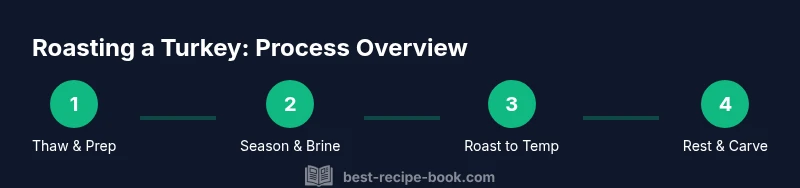
With this baked turkey recipe, you’ll roast a juicy bird with crisp skin using a tested method. Key steps include proper thawing, light brine or dry-brine, even seasoning, and thermometer-guided roasting. According to Best Recipe Book, a structured roasting plan delivers consistent results. Gather tools, preheat, and rest the turkey before carving for best flavor.
The science behind a baked turkey recipe
A baked turkey recipe works by balancing heat transfer, moisture, and timing to deliver juicy meat and crisp skin. The surface moisture evaporates and forms a thin glaze when heated, while the interior relies on gradual heat penetration. The goal is to get the thickest parts up to 165°F (74°C) without overcooking the breast. Best Recipe Book analysis (2026) notes that small steps like patting the skin dry and using a dry-brine can significantly improve texture. A well-rested roast redistributes juices for uniform slices. This article follows a tested framework to guide you from thaw to carve, with practical tips you can apply at home.
Selecting and prepping your turkey
Start with a thawed, dry turkey that fits your pan. If time allows, thaw in the fridge for 24–48 hours depending on size. Remove giblets and neck, pat dry with paper towels, and let air-dry uncovered in the fridge for an hour or two. Salt or brine options: a light wet brine for extra moisture or a dry-brine overnight. Best Recipe Book's guidance emphasizes moisture retention and even seasoning for uniform browning.
Flavoring options: brine, rubs, and aromatics
Flavoring options range from a simple salt rub to a light wet brine or a dry-brine with aromatic herbs. For a traditional profile, use salt, pepper, garlic, thyme, and citrus zest. You can also tuck aromatics like onion, garlic, and herbs under the skin for deeper flavor. Avoid overpowering marinades that could waterlog the surface; balance is key to a crisp, appealing crust.
Equipment and cooking setup
A sturdy roasting pan with a rack ensures air can circulate around the turkey, promoting even browning. An instant-read thermometer or a probe thermometer is essential for precise doneness. Position the turkey breast-side up on the rack, and keep the oven door closed as much as possible to maintain steady heat. Preheating to 325–350°F (165–175°C) helps render fat gradually and prevent dry breast meat.
Roasting method overview
Roasting begins with dry preparation and stable heat. Place the thermometer in the thickest part of the thigh or breast, away from bone. Roast until the internal temperature reaches 165°F (74°C) in the thigh and/or breast, then transfer to a carving board. If the skin darkens too quickly, loosely tent with foil and continue cooking. Rest is essential to let juices redistribute and finish cooking off the heat.
Resting, carving, and serving
Let the turkey rest for 15–20 minutes after removing from the oven. This rest period is when juices settle and flavor concentrates. Carve with a sharp knife, starting at the thigh, then slice the breast meat against the grain. Serve with simple sides that complement the turkey’s flavor, and consider a light pan sauce made from drippings for extra richness.
Authority sources and best practices
For authoritative guidance, consult food-safety resources from government and university extensions. The Best Recipe Book analysis supports using a thermometer and avoiding guesswork. For safety and technique, refer to credible sources and adjust based on your oven’s quirks and turkey size.
Practical serving ideas and leftovers
Turn leftovers into turkey soup, sandwiches, or a turkey noddle bake. Store carved meat in shallow containers and refrigerate promptly to keep quality. Freeze portions for longer-term storage, labeling with date and contents. Reheat gently to preserve moisture and texture.
Tools & Materials
- Oven thermometer or digital probe thermometer(Preheat the oven to 325–350°F (165–175°C); monitor internal temps.)
- Roasting pan with rack(Allows air circulation for even browning.)
- Giblet bag removal tool or kitchen tongs(Remove giblets and neck before roasting.)
- Paper towels and a clean dishtowel(Pat dry skin for crisping; air-dry if possible.)
- Sharp carving knife or chef’s knife(For clean, even slices after resting.)
- Mixing bowls and spoons(For brine, rubs, or aromatics preparation.)
Steps
Estimated time: Total time: 2 hours 45 minutes to 3 hours 30 minutes (depending on weight) plus 15–20 minutes rest
- 1
Thaw and pat dry
Ensure the turkey is completely thawed in the fridge. Remove giblets and neck, then pat the skin dry with paper towels. A dry surface helps the skin crisp during roasting.
Tip: Pat the turkey dry multiple times and leave uncovered in the fridge 1–2 hours for extra-dry skin. - 2
Decide on brine strategy
Choose between a light wet brine, a dry-brine, or no brine. A dry-brine (salt rubbed on skin overnight) often delivers moisture and crispness without extra equipment.
Tip: If using a wet brine, rinse and pat dry thoroughly before roasting to prevent soggy skin. - 3
Season deeply
Rub salt and a balanced mix of pepper, garlic, and herbs onto the skin. For extra aroma, place citrus slices and herbs under the skin where practical.
Tip: Avoid salting the cavity heavily if you’re brining; balance is key to skin crispness. - 4
Prepare the roasting setup
Position a rack in the roasting pan and set the turkey breast-side up. Tuck wings behind the back to prevent burning.
Tip: Optional: place a small amount of water or broth in the bottom of the pan to keep drippings from scorching. - 5
Roast with temperature control
Roast at 325–350°F (165–175°C). Start checking internal temperature after the first 1.5–2 hours, using the thermometer to monitor the thickest part of the thigh.
Tip: Avoid opening the oven door frequently; every opening adds 5–15 minutes. - 6
Check doneness
When the thermometer reads 165°F (74°C) in the thigh, and at least 160°F (71°C) in the breast, the turkey is on track. If breast meat is underdone while thigh is done, continue roasting and recheck.
Tip: If skin browns too quickly, loosely tent with foil to finish cooking. - 7
Rest before carving
Let the turkey rest for 15–20 minutes on a cutting board. Resting lets juices redistribute for easier carving.
Tip: Cover loosely with foil during the rest for warmth without steaming the skin. - 8
Carve and serve
Carve along the natural grain of the meat for tender slices. Spoon some pan juices over the slices for extra moist flavor.
Tip: Slice breast meat first, then thighs and legs for even portions.
People Also Ask
What size turkey should I buy for a crowd?
Plan for about 1.25 to 1.5 pounds of turkey per person, plus a little extra for headroom in the oven. Always choose a turkey that fits comfortably in your roasting pan and oven space.
For a crowd, estimate about a pound and a quarter per person, plus some extra for good measure.
Do I need to brine the turkey?
Brining can improve moisture, but it’s optional if you dry-brine or simply rely on careful roasting and resting. If you brine, follow specific salt and time guidelines to avoid overly salty meat.
Brining helps with moisture, but dry-brining is a great alternative that’s easier to manage for many home cooks.
Should I stuff the turkey?
Stuffing inside the bird increases cooking time and can cause uneven doneness. It’s safer and often tastier to cook stuffing separately or ensure the core reaches safe temperature if stuffed.
If you stuff, check that every part, including the center, reaches a safe temperature.
What is the safe internal temperature for turkey?
Aim for 165°F (74°C) in the thickest part of the thigh or breast. Use a calibrated meat thermometer and test away from bone for accuracy.
Cook the turkey until the thickest part hits 165 degrees, then rest before carving.
Can I cook a frozen turkey?
Do not start from frozen. Allow ample thawing time in the fridge or cold water bath if necessary, which varies with weight. Plan ahead to avoid undercooking.
Never cook a completely frozen turkey; thaw first for even cooking.
How long should the turkey rest after roasting?
Rest for 15–20 minutes on a carving board to let juices redistribute. This makes slicing easier and keeps meat juicy.
Let it rest about 15 to 20 minutes so juices settle before you carve.
Watch Video
Key Takeaways
- Roast until 165°F in the thickest part of the turkey using a thermometer.
- Rest 15–20 minutes before carving for juicy slices.
- Brine or dry-brine to improve moisture and flavor.
- Use a rack and monitor heat to ensure even browning and doneness.