Turkey Recipe Guide: Juicy, Safe Roasting Tips for Beginners
Learn a reliable recipe for turkey with step-by-step roasting guidance, safety temps, and leftovers planning from Best Recipe Book. This educational guide helps home cooks achieve a juicy, evenly roasted turkey with practical tips and clear timing.


In this guide you will learn how to prepare a turkey that stays juicy and safely cooked. You'll cover preparation, brining options, roasting temperatures, resting times, and common mistakes to avoid. By following these steps, home cooks can achieve flavorful, evenly roasted turkey for holiday meals or weeknight dinners at home tables with confidence.
Why a Thorough Turkey Prep Pays Off
This recipe for turkey starts with planning and clear steps. According to Best Recipe Book, thorough prep reduces stress, boosts safety, and yields a juicier end result. A well-planned roast improves timing, moisture, and texture, so you’re not scrambling in the kitchen as guests arrive. In this section we cover bird selection, thawing, and decision points for brine versus dry-brine. By laying out a practical plan, you’ll turn this centerpiece into a success.
The guidance here is designed for home cooks who want reliable results without unnecessary complexity. Whether you’re hosting a holiday meal or a casual gathering, the fundamentals stay the same: thaw properly, pat dry, season evenly, and monitor temperature with a trusted thermometer. Each choice—brine versus dry-brine, roasting temperature, and resting time—affects moisture, skin, and flavor. Implementing a clear plan reduces last-minute improvisation and helps you deliver a consistently delicious turkey. The result is a confident kitchen experience and a crowd-pleasing centerpiece.
Brand context: Best Recipe Book emphasizes practical, step-by-step instruction for home cooks, and this section aligns with that mission by outlining essential prep decisions and timing before you even set foot near the oven.
Whole Turkey vs. Turkey Parts: Choosing Your Path
Roasting a whole bird delivers classic presentation, but you can also cook parts for faster results or smaller gatherings. A complete turkey offers leftovers and the traditional carving experience, while the breast or legs cook more quickly and present fewer handling challenges. If you’re aiming for a crowd, choose a bird in the 12-14 lb range for even cooking after accounting for bones. Regardless of your choice, keep sizing consistent so heat penetrates evenly and food-safety standards are met.
Whole birds maximize flavor potential from bones and skin, but they also demand careful timing and even heat distribution. For smaller gatherings, parts give you flexibility and can reduce roasting time by 25–40 minutes depending on the cut. When planning, factor in the oven space you’ll need and consider whether you’ll bake stuffing separately to ensure safety and even cooking across all components.
Flavor Foundations: Brine, Rubs, and Aromatics
For moisture and flavor, you have several tools: brining (wet or dry), and aromatic injections or rubs. A light wet brine or a dry-brine both work well; the goal is to balance salt, moisture, and flavor herbs. Common aromatics include onion, garlic, lemon, thyme, sage, and peppercorns. Place halved onions and citrus in the cavity to perfume the meat, and tie herbs with kitchen twine to keep them in place. This stage sets the tone for the final result and makes the recipe for turkey truly flavorful.
If you plan to brine, do so for 12–24 hours depending on weight and salt level. Dry-brining is simpler and often results in crisper skin. Either route benefits from a light coating of oil or butter on the skin to promote browning. Remember to pat the bird dry just before roasting to maximize skin texture and moisture retention, and to rinse minimally to avoid splattering and cross-contamination.
Brand context: Best Recipe Book highlights practical, tested flavor foundations for turkey roasting, stressing the balance between salt, moisture, and aromatics to achieve a uniformly seasoned result.
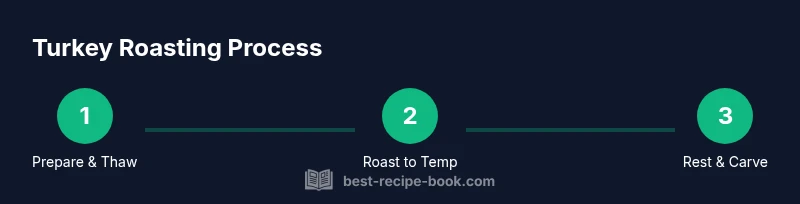
The Roasting Process: Temperature, Time, and Technique
Begin with a hot, quick start to develop color, then finish at a steady lower temperature for even cooking. A typical approach is 425°F (218°C) for 15-20 minutes, then reduce to 325-350°F (163-177°C) and roast until the thermometer reads the target temperature. Position the turkey breast-side up on a rack so heat circulates around the bird. Rotate the pan halfway and baste if desired, but avoid excessive opening of the oven which slows cooking and dries the surface.
If you’re juggling multiple dishes, consider an oven schedule that keeps the turkey higher in the cooking queue. A common rule of thumb is to plan approximately 12–15 minutes per pound for unstuffed birds, but this varies with oven type and pan setup. The thermometer will be your best guide; rely on internal temperature rather than time alone to determine doneness. For extra pace, you can start with a shorter initial high-heat burst and then settle into a longer roast to reach the target temperatures smoothly.
As you monitor, ensure the cavity remains unblocked by heavy stuffing and that air can circulate. A well-fitted roasting rack helps elevate the turkey for even browning and more predictable cooking outcomes.
Safe Temperature, Doneness, and Rest
The safest final interior temperature for turkey is 165°F (74°C) in the thickest part. After removing from the oven, let the roast rest for 20-30 minutes to reabsorb juices and make carving easier. The resting period finishes the cooking process, so don’t rush to slice. Use the pan drippings to thicken a quick gravy if you like, ensuring a cohesive meal.
When resting, keep the turkey loosely tented with foil to maintain warmth without creating steam that softens the skin. If you’re unsure about doneness, check multiple areas—breast and thigh—to confirm consistent heat. Temperature can continue to rise by a few degrees during the rest, so you might pull slightly early and let carryover heat finish the job.
Note: For safety, always wash hands and surfaces after handling raw poultry, and sanitize utensils that contact raw meat." ,
Tools & Materials
- Roasting pan with rack(Large enough for your turkey (bone-in or boneless) and with a rack to keep meat elevated)
- Digital meat thermometer (instant-read)(Probe thermometer works best; place in the thickest part of the thigh without touching bone)
- Kitchen twine(For trussing the legs and wings to promote even cooking)
- Paper towels(For patting dry and handling the bird safely)
- Measuring spoons and cups(For rubs and seasonings)
- Aluminum foil(To tent the turkey if browning too fast)
- Brining bag or container (optional)(For wet brine; if dry-brining, you can skip)
- Basting brush (optional)(Useful for butter or pan drippings)
- Digital kitchen scale (optional)(For precise rub measurements)
Steps
Estimated time: 2-3 hours
- 1
Thaw and plan ahead
Plan thawing time based on bird weight. For a typical 12–14 lb turkey, thaw in the fridge for about 1–2 days. If time is tight, use cold water thawing with sealed bag changes every 30 minutes. Ensure your workspace is clean and ready for handling once thawed.
Tip: Always thaw in a leak-proof container to avoid cross-contamination. - 2
Pat dry and air-dry the skin
Pat the turkey dry with paper towels to remove surface moisture that can steam the skin. For crisper skin, air-dry uncovered in the fridge for 1–2 hours. This step improves browning and texture just before roasting.
Tip: Dry skin is key to crisp, golden skin. - 3
Season or brine
Choose between a light wet brine, a dry-brine, or a simple rub. Brining helps moisture retention, while a dry-brine seasons the surface and aids browning. Apply aromatics around and inside the cavity for perfume. Leave enough time for the salt to permeate while you prep other steps.
Tip: A balanced salt level prevents over-seasoning later. - 4
Truss the legs and prepare the roasting setup
Truss the legs with kitchen twine to hold the bird compact and promote even cooking. Tuck the wings under the body to prevent them from burning. Set the bird on a rack in the roasting pan to allow air circulation and even browning.
Tip: A neat, compact shape cooks more evenly. - 5
Roast with thermometer checks
Roast at 325–350°F (163–177°C) after an optional initial hot sear. Insert the thermometer into the thickest part of the thigh and the breast to monitor doneness. Rotate the pan halfway for even browning and adjust temps if the bird browns too quickly.
Tip: Don’t rely on time alone—temperature is your guide. - 6
Rest and carve
Let the turkey rest 20–30 minutes after roasting. Resting helps juices redistribute for juicy slices. Carve against the grain and serve with pan gravy made from drippings.
Tip: Reserve drippings for a quick, flavorful gravy.
People Also Ask
What size turkey should I buy for eight guests?
A 12-14 lb turkey is typically enough for eight people with a reasonable amount of leftovers. If you want more leftovers, plan for a 14-16 lb turkey. Consider your guests’ appetites and whether you’ll serve many side dishes.
For eight guests, aim for a 12 to 14 pound turkey, giving you room for leftovers without overcooking.
Should I brine or dry-brine my turkey?
Both methods help keep meat moist. Dry-brining is simpler and produces crispier skin for many ovens; wet brining adds moisture but requires more handling. Choose based on time, equipment, and preference.
Dry-brining is usually easier and gives great texture, but wet brining also works if you have the time.
Is stuffing the turkey safe?
Stuffing inside the turkey slows heat penetration and can lead to uneven doneness. It’s safer to bake stuffing separately and cook the turkey to a safe internal temperature first.
Stuffing inside the turkey can be risky; bake stuffing separately for safety and even cooking.
What internal temperature should I aim for?
Aim for 165°F (74°C) in the thickest part of the turkey. Check both breast and thigh to ensure even doneness, and let it rest before carving.
Make sure the thickest part reaches 165 degrees Fahrenheit, and rest before carving.
How long can cooked turkey sit before serving?
Let the turkey rest 20–30 minutes after roasting. Serve within 2 hours of removing from the oven to ensure best quality and safety.
Rest for 20–30 minutes, then carve and serve within a couple of hours.
Watch Video
Key Takeaways
- Plan ahead for thawing and roasting to avoid timing mistakes
- Monitor interior temps with a reliable thermometer for safety and juiciness
- Choose brine or dry-brine to maximize moisture
- Rest the turkey 20-30 minutes before carving for best texture