Bean Salad: Step-by-Step Guide for Home Cooks
Learn to make a vibrant, protein-packed bean salad with bean choices, dressings, and make-ahead tips. This step-by-step guide covers variations, storage, and serving ideas for healthy meals.


Bean salad is a versatile, protein-packed dish you can prepare with pantry staples. In this guide you’ll choose the right beans, balance textures, craft a bright dressing, and assemble a meal-prep-friendly salad in about 40 minutes. You'll learn substitutions for dietary needs, how to store leftovers safely, and tips for scaling the recipe for a crowd.
What makes a great bean salad
A truly great bean salad balances protein with bright freshness, texture contrast, and a dressing that ties the components together without overpowering them. In this section we explore the core principles: choosing the right beans, avoiding mushiness, and ensuring the dish remains appealing after time in the fridge. For bean salads, you want a mix of creamy and crisp textures, a pop of color, and a dressing that clings to every bite. The best bean salad can be served as a side dish or as a light main course, making it ideal for potlucks, picnics, and meal prep. When you start with high-quality beans—whether canned for convenience or dried for flavor—you set the baseline for success. For home cooks using the Best Recipe Book approach, technique matters as much as ingredients, and small adjustments can yield big flavor wins. In this guide we’ll cover practical steps, ingredient ideas, and timing to ensure reliable results.
Bean choices and add-ins
Bean salads shine when you mix textures and flavors. Popular options include creamy cannellini or navy beans, hearty chickpeas, and glossy black beans. Each bean type brings a different mouthfeel and color that contributes to an appealing dish. Add-ins such as diced bell peppers, red onion, cucumber, corn, herbs (parsley or cilantro), and even roasted chickpeas for extra crunch. Toasted seeds or nuts can add a satisfying bite, while fresh mozzarella or feta can elevate the salad for a more substantial meal. Consider dietary needs when selecting add-ins: dairy-free versions rely on herbs and crunchy vegetables for texture and brightness. A well-balanced bean salad offers harmony between the beans, vegetables, herbs, and dressing so that no single component overwhelms the others.
Dressings that work: balancing acidity, sweetness, and salt
The dressing is the glue that holds a bean salad together. A bright vinaigrette made with olive oil, acid (lemon juice or red wine vinegar), and Dijon or whole-grain mustard creates a clean, tangy backdrop for the beans. A touch of honey or maple syrup can provide subtle sweetness to counter the acidity, while salt and pepper bring out natural flavors. Fresh herbs like parsley or chives brighten the finish, and a pinch of garlic powder or shallot adds depth. For a creamier texture, whisk in a small amount of tahini or yogurt (or omit dairy for vegan versions). Balance is the key: taste and adjust acidity, oil, and seasoning in small increments to reach a harmonious glaze that coats every bean and vegetable piece evenly.
Mix-ins and textures: crunch, cream, and color
Texture is essential in a bean salad. Include elements that provide crunch (celery, red onion, cucumber), creaminess (mashed avocado, feta, or a light vinaigrette emulsified with olive oil), and color (green herbs, red peppers, corn). The right mix prevents the dish from feeling one-note and helps with mouthfeel across servings. If you’re making a make-ahead version, hold delicate greens and herbs until serving if possible, and rely on sturdy veg like peppers and cucumbers that hold up well. Freshly chopped herbs add aromatic brightness just before serving for best impact.
Make-ahead and storage tips
Bean salads are typically forgiving for make-ahead prep. Prepare beans, chop vegetables, and whisk dressing separately, then combine shortly before serving to preserve texture. If you plan to refrigerate, store components in airtight containers and only mix when you’re ready to eat. A marinating step—letting the components mingle in the dressing for 15–30 minutes—might enhance flavor, but longer storage can cause vegetables to soften, so plan accordingly. Always refrigerate promptly and use within a few days for best quality.
Serving ideas and pairings
Serve bean salad as a side dish with grilled chicken, fish, or a hearty grain like quinoa for a complete meal. It also works well as a stand-alone lunch atop greens or stuffed into a pita. Additions like avocado slices, crumbled cheese, or a squeeze of lime can refresh the dish when serving leftovers. For potlucks, scale up by multiplying the dressing and beans, and bring extras of crunchy toppings to maintain texture after transport.
Tools & Materials
- Colander or strainer(Rinse canned beans and vegetables; remove excess liquid.)
- Sharp chef's knife(8-10 inch blade for clean, precise chopping.)
- Cutting board(Non-slip surface for safety and efficiency.)
- Large mixing bowls(At least two bowls for combining components and dressing.)
- Measuring spoons(Accurate dressing measurements.)
- Whisk or fork(Emulsify dressing for a smooth glaze.)
- Can opener(Open canned beans without denting lids.)
- Spatula or wooden spoon(Gentle mixing to keep beans intact.)
- Airtight storage containers(Store leftovers safely in the fridge.)
- Citrus juicer (optional)(Easier extraction for lemon/lime juice.)
Steps
Estimated time: 40-50 minutes
- 1
Gather and prep ingredients
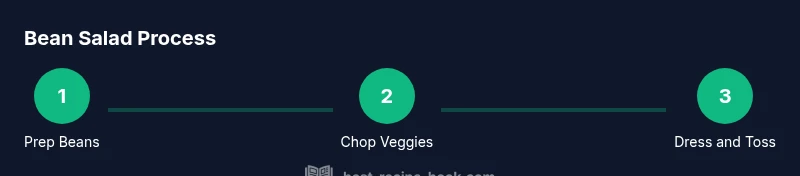
Collect all ingredients and tools before you start. Rinse canned beans under cold water to remove excess salt and starch. Prep vegetables by washing, peeling (if needed), and chopping into bite-sized pieces.
Tip: Organize ingredients by category (beans, vegetables, herbs) so you can assemble quickly. - 2
Drain and rinse beans
Drain canned beans in a colander, then rinse thoroughly. Pat beans dry with a clean towel or paper towels to remove extra moisture that can water down the dressing.
Tip: Dry beans well to prevent a watery dressing and to help the salad hold its shape. - 3
Chop vegetables and herbs
Dice vegetables into uniform pieces for even texture in every bite. Mince or finely chop herbs so their aroma and freshness distribute through the salad.
Tip: Uniform pieces ensure consistent texture and easier eating. - 4
Whisk the dressing
In a small bowl, whisk together olive oil, acid (lemon juice or vinegar), Dijon, salt, and pepper. Whisk until well combined to form a glossy emulsion.
Tip: Taste and adjust acidity and salt gradually for balance. - 5
Combine salad components
Place beans and chopped vegetables in a large bowl. Pour dressing over the mixture and toss gently to coat without breaking the beans apart.
Tip: Use a light hand to keep beans intact and maintain texture. - 6
Rest and meld flavors
Let the salad rest for 15–30 minutes at room temperature or in the fridge to allow flavors to meld. If refrigerated, bring to room temperature before serving for better aroma.
Tip: A short rest improves flavor integration without over-softening ingredients. - 7
Taste and adjust
Taste the salad and adjust with extra salt, pepper, or acid as needed. Add fresh herbs just before serving for maximum brightness.
Tip: Season in small increments; it’s easier to under-season than over-season. - 8
Serve or store later
Serve immediately or refrigerate in an airtight container for meal prep. Use within a few days for best texture and taste.
Tip: Keep delicate add-ins (greens) separate until serving if possible.
People Also Ask
Can I use dried beans instead of canned beans?
Yes. If you use dried beans, soak them overnight and cook until tender. Plan extra time for soaking and simmering, and adjust dressing to the final bean’s savor as cooking liquid can affect flavor.
Yes. Soak and cook dried beans until tender, then proceed with the recipe. It takes longer but can yield great texture and flavor.
What beans are best for bean salad?
A mix of beans works well. Common choices include cannellini, chickpeas, black beans, and kidney beans. Use a combination to balance creaminess, color, and texture.
Try a mix of white beans and chickpeas for a creamy texture with bright color.
Can I make this vegan?
Yes. Use olive oil-based dressing and skip any dairy additions. The dish remains flavorful with a citrusy, herb-forward profile.
Absolutely—use a vegan dressing and you’re good to go.
How long does bean salad keep in the fridge?
Stored properly in an airtight container, it will stay fresh for a few days. For best texture, add delicate greens or herbs just before serving.
It stays fresh for a few days in the fridge when kept cold in a sealed container.
Can I customize this with grains or cheese?
Yes. Add cooked quinoa or bulgur for a heartier salad, and sprinkle with feta or mozzarella for a creamy element if you tolerate dairy.
Feel free to mix in grains or cheese to suit your taste.
Should I dress the salad right before serving?
If you’re short on time, toss with dressing just before serving. For deeper flavor, let the dressing mingle with the beans for a short marinating period.
Dress just before serving for fresh texture, or marinate briefly for deeper flavor.
Watch Video
Key Takeaways
- Mix textures for a satisfying bite
- Balance dressing with acid, oil, and salt
- Make-ahead friendly with proper storage
- Choose bean varieties to suit texture and color