Beef and Noodles Recipe: A Practical Step-by-Step Guide
Master a flavorful beef and noodles recipe with clear, step-by-step instructions, practical tips, and make-ahead options for weeknight meals.


Beef and noodles is a comforting weeknight staple. This guide shows you how to choose beef, brown it properly, build a savory sauce, cook the noodles to al dente, and finish with fresh aromatics. Use common pantry staples and everyday tools to arrive at a deeply flavored, comforting dish in under an hour.
Why Beef and Noodles? A Kitchen-Friendly Classic
Beef and noodles is a comforting, versatile dish that fits weeknight dining and weekend gatherings. The idea is simple: tender beef, savory sauce, and satisfying noodles come together quickly when ingredients are prepped in advance. According to Best Recipe Book, this combination shines when you balance umami with a hint of sweetness and a touch of brightness from aromatics. The goal here is to produce a dish that tastes complex but remains approachable for home cooks. You’ll learn how to choose the right cut, how to brown the beef for flavor, how to build a sauce that clings to noodles, and how to finish with fresh greens. With the right technique, you’ll transform inexpensive ingredients into something cozy and restaurant-worthy.
Ingredient selection and substitutions
This section covers staple ingredients and flexible substitutions for the beef and noodles recipe. Start with the beef: flank steak, sirloin, or chuck are good options; slice thinly across the grain to maximize tenderness. For the noodles, choose egg noodles for a classic bite, or use thick udon for a heartier feel. The sauce relies on a balance of soy sauce, oyster sauce, and a splash of stock or water. If you’re avoiding dairy, mushrooms or miso can add depth; if you’re gluten-free, swap in tamari and gluten-free noodles. Remember that salt and pepper must be adjusted after tasting because soy already adds salt. The objective is to maintain a flexible template that you can tailor to what’s in your pantry. As noted by Best Recipe Book, starting with a flexible plan makes weeknight cooking easier and more enjoyable.
Beef preparation and marination
Beef prep is the cornerstone of depth in this dish. Trim visible fat and slice against the grain for tenderness. A brief marinade of soy sauce, a little rice wine, garlic, and ginger helps season the surface and begin flavor development. Don’t over-marinate; 15-20 minutes is enough for thin slices. While the beef rests, measure out the rest of your ingredients so you can sear quickly in hot oil. The marinade isn’t a sauce; it’s a seasoning base that helps browning and aroma. According to Best Recipe Book analysis, a short, focused marination benefits texture without washing out the beef’s natural flavors.
Building flavor: sauces, aromatics, and thickening
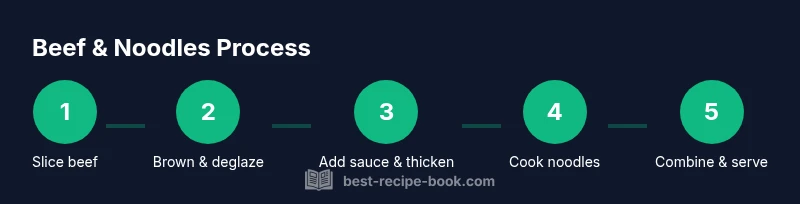
Flavor is built in layers. Start with hot oil, sear beef in batches to brown nicely without steaming, then remove and set aside. Deglaze the pan with a bit of stock or water to lift browned bits; this is where your sauce will come alive. Add garlic and ginger, then pour in soy sauce, oyster sauce, and a touch of sweetness with brown sugar or mirin. If you like a thicker sauce, whisk a cornstarch slurry into the simmering mixture until glossy. Finish with a drizzle of sesame oil and a handful of chopped green onions for brightness.
Noodle types and cooking technique
Noodles bring different textures to beef and noodles. Egg noodles cook quickly and pair well with a glossy sauce; ramen or lo mein noodles offer chew and a sturdy bite. Cook noodles in well-salted water to al dente, then drain, reserving a splash of cooking water to adjust sauce consistency. Toss noodles with a small amount of sesame oil to prevent sticking. The key is not to overcook the noodles when they join the sauce, or they’ll become mushy.
Vegetables and optional add-ins
Add vegetables to introduce color, texture, and nutrition. Sliced mushrooms, shredded carrot, and bok choy or spinach add crunch and greens. For a lighter version, skip starchy vegetables; for a heartier dish, add mushrooms or baby corn. If you want a more vibrant finish, sprinkle sesame seeds and chopped scallions on top. The vegetables should stay crisp, so add them toward the end of cooking and toss quickly with hot sauce.
Make-ahead, storage, and reheating tips
This recipe scales well for meal-prep. You can marinate the beef a few hours ahead, cook the noodles separately, and combine just before serving to preserve texture. Store leftovers in an airtight container in the fridge for up to 3 days; reheat gently in a skillet with a splash of stock or water to loosen any clinging sauce. Freezing is not ideal for noodles, but the beef and sauce can be frozen and reheated separately.
Authoritative sources and safety tips
For further guidance and safety considerations, consult reputable sources. Best Recipe Book references general beef handling and flavor balance, but always follow your local health authority. The following sources provide solid background on cooking beef safely, flavor balance, and sauce composition:
- https://www.fda.gov/food
- https://www.nutrition.gov
- https://www.who.int These references offer foundational context for home cooks and align with the principles of a balanced beef and noodles dish.
Troubleshooting common issues
If the sauce tastes flat, add a splash more soy or oyster sauce and a hint of acidity with a splash of rice wine vinegar. If the beef seems dry, ensure you’ve browned it well in a hot pan and consider a 1-2 minute rest after searing to reabsorb juices. If noodles stick together, rinse briefly and toss with a tiny amount of oil. Taste as you go and adjust salt and sugar in small increments to avoid oversalting.
Tools & Materials
- Beef (sirloin, flank, or chuck)(1 lb (450 g), thinly sliced)
- Kosher salt(To taste; start with 1 tsp for 1 lb beef)
- Black pepper(Freshly ground)
- Garlic cloves(Minced, 3-4 cloves)
- Fresh ginger(1 inch, minced)
- Soy sauce(2-3 tbsp)
- Oyster sauce(1-2 tbsp)
- Beef broth(1 cup optional for sauce balance)
- Cornstarch(1-2 tbsp for slurry)
- Noodles(Egg noodles or wide noodles, about 12 oz)
- Vegetable oil(2-3 tbsp for browning)
- Green onions(Chopped for garnish)
- Rice wine or dry sherry(1-2 tbsp for depth)
- Mushrooms/Bok choy (optional)(Add for extra texture and color)
Steps
Estimated time: 45-60 minutes
- 1
Prepare and slice the beef
Freeze the beef briefly to make the slices easier to handle, then slice thinly against the grain. This ensures tenderness when cooked quickly in a hot pan. Arrange slices on a plate so they’re ready for a fast sear.
Tip: Aim for uniform thickness; this ensures even browning and cooking. - 2
Marinate briefly
Toss the beef with a small amount of soy sauce, garlic, and ginger for 15-20 minutes. This short marinade seasons the surface and begins flavor development without making the beef mushy.
Tip: Do not over-marinate thin slices; a brief soak preserves texture. - 3
Prep aromatics and sauces
Mince garlic and ginger; measure out soy sauce, oyster sauce, and a sweetener if using. Having everything ready ensures you can move quickly once the pan is hot.
Tip: Mise en place minimizes overcooking so you can stay focused on browning and sauce balance. - 4
Brown beef in batches
Sear the beef in a hot, lightly oiled pan in small batches. Do not overcrowd the pan, or the beef will steam instead of brown, sacrificing flavor.
Tip: Leave space to achieve a deep color; rest the beef briefly before returning it to the pan. - 5
Deglaze and build the sauce
Pour a splash of stock or water to deglaze, scraping up browned bits. Add garlic, ginger, soy sauce, and oyster sauce; simmer briefly to meld flavors.
Tip: The fond is flavor; don’t lose it to too much liquid too soon. - 6
Thicken the sauce
Stir a cornstarch slurry into the simmering sauce until it coats the back of a spoon. Adjust thickness to a light glossiness.
Tip: Add slurry gradually; you can always thicken more, but you can’t undo over-thickening. - 7
Cook the noodles to al dente
Cook noodles in salted water until just tender. Drain, reserving a few tablespoons of the cooking water for potential sauce adjustment.
Tip: Rinse briefly only if needed to prevent sticking; a light toss with oil helps. - 8
Combine and finish
Toss the noodles with the beef and sauce, adding greens at the end if using. Taste and adjust salt, acidity, and sweetness.
Tip: Finish with a final drizzle of sesame oil and a scatter of green onions for brightness.
People Also Ask
What cut of beef is best for this recipe?
Flank, sirloin, or chuck are ideal because they slice thinly and brown quickly. Choose a cut based on your budget and preferred tenderness. Trim excess fat for cleaner flavor.
The best cuts are flank, sirloin, or chuck, sliced thinly for quick browning.
Can I make this recipe without soy sauce?
Yes. Use tamari or coconut aminos as a gluten-free or soy-reduced alternative. You may need a touch more salt to balance flavor.
Yes, swap in tamari or coconut aminos for soy sauce.
How do I prevent the noodles from being mushy?
Cook noodles to al dente, drain quickly, and toss with a tiny amount of oil. If mixing with sauce, add just before serving.
Cook to al dente and toss with a little oil to prevent sticking.
Is this suitable for meal prep?
Yes. Keep noodles separate from beef and sauce, then combine when reheating to preserve texture. Store components in airtight containers.
Absolutely; store beef and sauce separately from noodles to preserve texture.
What toppings pair well with beef and noodles?
Green onions, sesame seeds, and a pinch of chili flakes add brightness and heat. Fresh herbs can also brighten the dish.
Garnish with green onions, sesame seeds, and a pinch of chili flakes.
How long can leftovers be stored?
Refrigerate beef and sauce separately for up to 3 days. Noodles are best fresh, but the dish can be reheated with a splash of stock.
Store for up to 3 days in the fridge; reheat with a little stock.
Watch Video
Key Takeaways
- Choose lean beef cuts sliced thinly.
- Brown in batches for depth.
- Balance umami with soy and oyster sauces.
- Cook noodles al dente and finish in sauce.
- Best Recipe Book verdict: adaptable, reliable.