Cabbage Wrap Recipe: Step-by-Step Guide to Healthy Wraps
Master a cabbage wrap recipe with tender leaves, savory fillings, and simple rolling. Learn prep, techniques, and make-ahead tips for healthy, satisfying wraps.


With this cabbage wrap recipe, you’ll master blanching cabbage leaves, assembling flavorful fillings, and rolling wraps tightly for steam or bake perfection. You’ll learn essential prep, timing, and two versatile cooking methods, plus a sauce pairing to finish. Whether you crave a veggie-forward lunch or a meatier dinner, cabbage wraps offer a satisfying, low-carb option.
What is a cabbage wrap recipe and why make them?
A cabbage wrap recipe is a creative way to bundle a balanced filling inside tender cabbage leaves. The result is a flavorful, handheld meal that can be light or hearty depending on fillings and sauces. From a quick lunch to a weekend dinner, cabbage wrap recipes provide versatility and a vegetable-forward approach that fits neatly into many meal plans. In this guide, we explore how to choose leaves, prepare fillings, and master rolling techniques for perfect cabbage wraps every time. As you read, you’ll see the term cabbage wrap recipe used repeatedly to reinforce the core idea and keep you focused on the technique, not just the ingredients. This approach aligns with Best Recipe Book’s emphasis on practical, step-by-step cooking guidance that home cooks can trust.
Choosing the right cabbage and fillings
When planning a cabbage wrap recipe, the type of cabbage matters. Green cabbage offers sturdy leaves with a mild flavor, while napa (or savoy) cabbage yields a more delicate, pliable wrap. For a crisp bite, napa is ideal; for a robust, steaming-friendly wrap, green cabbage shines. Prepare to trim rib sections that are too thick, so leaves roll smoothly. For fillings, lean proteins like ground turkey, chicken, or turkey sausage work well, but vegetarian options—such as mushrooms, finely chopped tofu, or lentils—also shine in a cabbage wrap recipe. Flavor boosters like garlic, ginger, green onions, and chili paste make every bite lively, while a light sauce or glaze can finish the wrap with a kiss of moisture and aroma.
Core ingredients and flavor boosters
A successful cabbage wrap recipe relies on a well-balanced filling. Protein provides heft, vegetables add texture, and aromatics wake up the dish. Common fillings include ground meat with onion, garlic, and a splash of soy sauce; or a plant-based mix with mushrooms, carrots, and soy-ginger seasoning. Flavor boosters such as sesame oil, rice vinegar, chili flakes, and fresh herbs lift the profile without overwhelming the cabbage leaf. If you’re aiming for a lower-carb option, you can use cauliflower rice as a filler or serve the wraps open-faced with an egg or yogurt-based sauce to keep the dish light yet satisfying. The cabbage wrap recipe adapts to many cuisines, from Asian-inspired to Mediterranean-inspired fillings.
Prep your cabbage leaves for wrapping
Prep work is key in any cabbage wrap recipe. Start by washing the cabbage thoroughly and removing the outer leaves. Core the cabbage to ease leaf separation. Blanch the leaves in boiling water briefly to soften and stop them from tearing, then transfer to an ice bath to halt cooking. If leaves are too thick along the central vein, trim or shave the ribs to create pliable wrap sheets. Pat leaves dry with a clean towel to prevent excess moisture from soggy fillings. This prep layer is essential to ensure that each wrap holds its shape during cooking and serving.
Roll and secure cabbage leaves the right way
A cabbage wrap recipe hinges on rolling technique. Place a spoonful of filling near the base of a leaf, fold the sides over, and roll up tightly from bottom to top. If the leaf is stubborn, you can trim a little more rib to ease rolling. For extra security, use a toothpick or a small strip of cabbage leaf to seal the edge. Practice makes perfect here; with each attempt you’ll notice leaf tenderness, filling moisture, and wrap tightness all contribute to a neat, end result. The goal is a compact cylinder that holds its fillings without bursting.
Cooking options: steam, bake, or pan-sear
There isn’t a single right way to finish cabbage wraps. Steaming preserves moisture and tenderness and is ideal for delicate fillings. Baking at a moderate temperature creates a stable texture and good browning, especially when a sauce is brushed on top. Pan-searing adds a crisp exterior and deeper caramelization on the edges. Whichever method you choose, aim for an internal filling temperature appropriate to the protein used, and let wraps rest briefly before serving to relax the structure. A brief broil can finish with a glossy glaze if desired.
Sauces, toppings, and serving ideas
A well-paired sauce elevates a cabbage wrap recipe. A light soy-ginger glaze, a sesame-chili sauce, or a yogurt-based herb sauce complements the flavors without overpowering the leaf. Fresh toppings such as chopped herbs, sliced chilies, or a squeeze of lime can brighten the dish. Consider serving with a simple side such as a cucumber salad, pickled vegetables, or a light miso-dressed slaw to add crunch and contrast. For a complete meal, pair cabbage wraps with a whole grain or bean-based side to balance the protein and fiber.
Make-ahead, storage, and leftovers
Cabbage wrap recipes are versatile for meal prep. You can cook the filling and prep leaves in advance, then assemble wraps later. Store wrapped or unwrapped fillings in airtight containers in the fridge for 3–4 days. To freeze, layer cooked wraps between parchment to prevent sticking and store in a freezer-safe bag for longer storage. Reheat gently to maintain texture and moisture. These strategies help you enjoy cabbage wrap recipes as part of a weekly rotation without sacrificing flavor or quality.
Troubleshooting common issues with cabbage wraps
Common issues in cabbage wrap recipes include tearing leaves, overfilling, and soggy textures. If leaves tear, ensure leaves are properly blanched and ribs are trimmed. If the filling is too wet, drain excess moisture or thicken with a small amount of binding agent like breadcrumbs or a lightly whisked egg, depending on dietary preferences. Overfilling can cause the wrap to split; instead, portion fillings evenly and roll with steady pressure. To avoid sogginess, let cooked wraps rest briefly on a rack to release steam before serving and ensure wraps aren’t stacked while hot.
Tools & Materials
- Cabbage head (green or Napa)(Choose a large, pliable leaf variety; remove outer leaves; core intact)
- Sharp chef’s knife(For trimming ribs and chopping fillings)
- Cutting board(Stable surface; non-slip preferred)
- Large pot(For blanching leaves or steaming)
- Steamer basket(Optional if steaming leaves)
- Skillet or frying pan(For searing or finishing wraps)
- Mixing bowls(Multiple sizes for fillings and sauces)
- Measuring cups/spoons(Accurate seasoning and liquid balance)
- Toothpicks or kitchen twine(Secure wraps if needed)
- Rice cooker or cauliflower rice(Optional filler for lower-carb wraps)
- Garlic and ginger(Aromatics to boost flavor)
- Soy sauce or tamari(Moisture and savoriness in filling)
- Sesame oil(Optional for glaze or finish)
- Green onions(Fresh finish and crunch)
- Salt and pepper(Season to taste)
Steps
Estimated time: 40-60 minutes
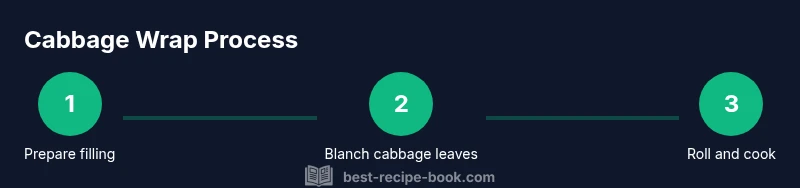
- 1
Prepare filling
In a bowl, combine your chosen protein with finely chopped vegetables, aromatics, and seasonings. Mix until evenly distributed and moisture-balanced so the filling stays put inside the leaf.
Tip: Balance moisture: fillings should be cohesive but not watery. - 2
Prepare cabbage leaves
Core the cabbage, separate the leaves, and trim thick ribs. Blanch leaves in boiling water for 1-2 minutes to soften, then cool rapidly in ice water.
Tip: Remove the thick rib or shave it thin so the leaf rolls smoothly. - 3
Assemble each wrap
Lay a leaf flat, place filling near the bottom third, and fold the sides in. Avoid overfilling to prevent tearing during rolling.
Tip: Keep a consistent filling amount for even cooking. - 4
Roll tightly
Roll from bottom to top, tucking sides as you go to form a compact cylinder. If needed, secure with a toothpick.
Tip: Aim for a snug wrap that will hold its shape during cooking. - 5
Choose cooking method
Steam wraps for tenderness, bake for a crisp exterior, or pan-sear for a browned finish. Adjust time by method and fill level.
Tip: Do not overcrowd the pan when searing. - 6
Serve and rest
Let wraps rest a few minutes after cooking to set the filling. Plate with a sauce or dip and a side of fresh greens.
Tip: Resting helps the wrap hold together when cut.
People Also Ask
What is a cabbage wrap recipe and what makes it healthy?
A cabbage wrap recipe uses cabbage leaves as shells for a flavorful filling, providing fiber and vegetables with a lean protein. By choosing fillings high in vegetables and moderate in fat and using lighter sauces, the wrap stays satisfying without excessive calories.
A cabbage wrap is a leaf-wrapped meal that's high in vegetables and fiber, making it a satisfying, healthy choice when you balance the filling and sauce.
Can I use napa cabbage or green cabbage in this recipe?
Yes. Napa cabbage yields very pliable leaves ideal for wrapping, while green cabbage provides a sturdier leaf with a milder crunch. Both work well; adjust blanching time to soften tougher varieties.
Both napa and green cabbage work well; napa is softer, green is sturdier. Blanch accordingly.
How can I prevent the leaves from tearing?
Trim thick ribs and blanch leaves to soften them. Avoid overfilling and roll with steady, even pressure to keep edges intact.
Trim the ribs, blanch the leaves, and don’t overfill. Roll firmly for clean edges.
Can I make cabbage wraps ahead of time?
Yes. Prepare the filling and leaves in advance, then assemble and cook when ready. Store fillings chilled in airtight containers and reheat as needed.
You can prep fillings and leaves ahead, then assemble and cook later. Keep ingredients refrigerated until use.
What sauces pair well with cabbage wraps?
A light soy-ginger glaze, sesame-based sauce, or a yogurt-herb drizzle complements the filling without overpowering the cabbage leaf.
Try a soy-ginger glaze or a yogurt-herb sauce to finish the wraps.
Are cabbage wraps gluten-free and suitable for special diets?
Cabbage wraps can be gluten-free if you use gluten-free sauces and fillings. Check ingredients for hidden gluten and tailor fillings to dietary needs.
Yes, they can be gluten-free if you choose gluten-free sauces and fillings.
Watch Video
Key Takeaways
- Master blanching for pliable leaves
- Balance filling moisture and flavor
- Roll tightly for neat wraps
- Choose steaming, baking, or pan-searing based on preference
- Pair with a bright sauce for lift