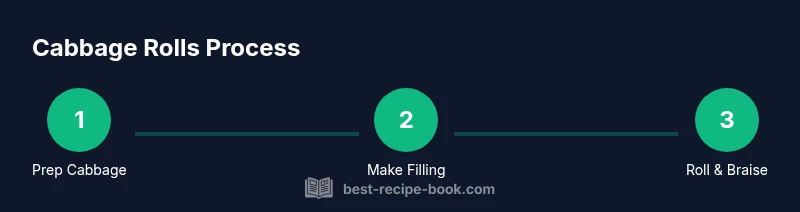
Cabbage Rolls: A Complete Step-by-Step Guide
Master cabbage rolls with a practical, step-by-step approach: choose fillings, prep cabbage, roll, braise, and serve with sauces. Learn tips, substitutions, and make-ahead ideas from Best Recipe Book.


By following this guide, you will learn how to make cabbage rolls from prep to plating, with two filling options, a reliable braise, and hands-on rolling technique. You’ll need basic kitchen tools, a large pot, and fresh cabbage; plan for about 60-90 minutes active time plus braise. Plus, you’ll discover how to adapt fillings for differently flavored profiles and how to store leftovers safely.
What Are Cabbage Rolls and Why They Work
According to Best Recipe Book, cabbage rolls are a comforting, hands-on dish that wraps seasoned filling in blanched cabbage leaves and braises until tender. The method yields tender, flavorful bites with a gentle contrast between the mild cabbage and the savory interior. This mid-level technique scales well for weeknight dinners or weekend gatherings. The core idea is simple: secure a flavorful filling inside a cabbage leaf, then cook slowly so flavors meld and the leaf becomes velvety soft. You’ll learn a reliable workflow, common variations, and practical tips to avoid typical pitfalls. Whether you prefer a classic meat-and-rice filling or a vegetarian option, cabbage rolls embrace flexibility while delivering consistent results.
Varieties of Cabbage Rolls and Fillings
Cabbage rolls appear in many cultural traditions, each with signature twists. Polish golabki and Ukrainian holubtsi share a similar premise—leaf-wrapped filling braised to tenderness—but chili peppers, herbs, and tomato bases can shift the profile dramatically. Fillings range from ground pork or beef (often with rice or barley) to turkey, lamb, or a plant-based mix with mushrooms, lentils, or beans. For a lighter version, you can swap in cauliflower or finely chopped mushrooms and increase the rice-to-vegetable ratio. Fresh herbs like dill, parsley, or mint brighten the flavor, while paprika, black pepper, garlic, and onion deepen the aroma. The beauty of cabbage rolls is their adaptability to pantry staples and dietary needs, making them a practical staple for family meals and meal-prep sessions.
Tools & Materials
- Large green cabbage(Choose a compact head with dense leaves; outer leaves removed for easier rolling)
- Sharp chef's knife(For precise cutting and trimming cabbage core)
- Large pot or Dutch oven(For blanching leaves and braising rolls)
- Cutting board(Stable surface for prep work)
- Mixing bowl(Combine filling ingredients evenly)
- Skillet(Sauté onions and garlic before mixing filling)
- Measuring cups/spoons(Accurate seasoning and grain ratio)
- Tomato sauce or crushed tomatoes(Base for braising liquid)
- Rice (cooked)(Expand filling and bind with meat)
- Egg(Bind filling (omit for vegetarian filling))
- Kitchen twine or toothpicks(Optional for securing loose leaves)
- Tongs(Handle hot leaves safely)
- Salt and pepper(Season filling and braising liquid)
- Olive oil or neutral oil(Sauté aromatics without sticking)
Steps
Estimated time: Total time: about 2 hours 15 minutes
- 1
Prep cabbage leaves
Core the cabbage, separate the outer leaves, and blanch in boiling salted water until pliable. Remove from water, cool slightly, and trim the thick rib at the base of each leaf to ease rolling. This step prevents tearing and helps the leaf wrap securely around the filling.
Tip: Use tongs and a slotted spoon to transfer leaves to a cooling rack; pat dry before filling. - 2
Make the filling
In a bowl, mix ground meat (or plant-based substitute) with partially cooked rice, finely chopped onion, minced garlic, egg, and seasonings. The binding egg helps the filling hold shape during braising. Avoid over-mixing to keep the texture light.
Tip: For juicier filling, add a tablespoon of tomato paste or a splash of stock. - 3
Prepare aromatics
Sauté onion and garlic in a little oil until translucent and fragrant. This base adds depth to the filling and the braising sauce. Let cool slightly before combining with the meat mixture.
Tip: If you’re avoiding oil, steam the aromatics and then chop finely. - 4
Assemble the rolls
Place 2–3 tablespoons of filling near the bottom of a cabbage leaf. Fold sides toward the center and roll tightly from bottom to top, sealing the edge with a gentle press. Repeat with remaining leaves.
Tip: Keep rolls uniform in size for even cooking; packing too tightly can hinder braising. - 5
Arrange for braise
Layer the bottom of your pot with a few cabbage leaves to prevent sticking. Place rolls seam-side down, packed snugly but not crowded. This encourages even heat exposure and prevents rolling apart.
Tip: Angle rolls slightly so they’re nestled; a tight bed ensures stability. - 6
Create the braising liquid
Stir tomato sauce with water or stock, and season with salt, pepper, and herbs. Pour around the rolls until they are partially submerged. A gentle simmer helps flavors meld without drying the filling.
Tip: Add a bay leaf or two for subtle herbal notes. - 7
Braise on the stove or oven
Simmer covered on the stove over medium heat or bake in a preheated oven at a moderate temperature until the rolls are tender and the flavors have combined. Check occasionally and adjust liquid if it thickens too much.
Tip: If using the oven, turn rolls halfway through to promote even cooking. - 8
Finish and taste
Uncover and taste the braising liquid, adjusting salt and acidity as needed. Remove rolls carefully and spoon some sauce over the top before serving. Let the dish rest briefly to marry flavors.
Tip: A splash of lemon juice near the end brightens the dish. - 9
Serve and store
Serve cabbage rolls hot with the braising sauce. Refrigerate leftovers in a sealed container for up to several days, or freeze for longer storage. Reheat gently to preserve texture.
Tip: Reheat in a covered dish with a little extra liquid to avoid dryness.
People Also Ask
Can cabbage rolls be frozen?
Yes. You can freeze uncooked rolls on a tray, then transfer to a bag with sauce, or freeze cooked rolls and reheat gently. Frozen cabbage rolls maintain texture well if reheated with additional braising liquid.
Yes, you can freeze both raw and cooked cabbage rolls. Add extra braising liquid when reheating.
What is the best filling for cabbage rolls?
A classic meat-and-rice filling is traditional, but you can adapt with turkey, pork, lamb, or vegetarian options using mushrooms, lentils, or quinoa. The key is balanced texture and moisture.
A meat-and-rice mix is traditional, but plant-based fillings work well too.
Can cabbage rolls be made vegetarian?
Absolutely. Use a mushroom-lentil-quinoa filling with vegetables, soy, or tofu. Ensure you season well and keep moisture so the rolls stay flavorful.
Yes, you can make them vegetarian with hearty, flavorful fillings.
How long do cabbage rolls take to cook?
Cabbage rolls typically braise for about 60-90 minutes, depending on leaf tenderness and filling texture. Check for tenderness and adjust liquid as needed.
Expect about one to one-and-a-half hours of braising, depending on your method.
What sauces pair best with cabbage rolls?
Tomato-based sauces are classic, but mushroom gravy, creamy yogurt, or herb-infused sauces also complement the filling. Choose based on your filling for balanced flavor.
Tomato sauce is traditional, but other options work well too.
Can I bake cabbage rolls instead of simmering?
Yes. Bake covered in a sauce at a moderate temperature, adjusting time as needed. Ensure rolls stay moist and avoid drying out.
You can bake them as an alternative to stovetop braising.
Watch Video
Key Takeaways
- Choose dense cabbage leaves for easy rolling.
- Balance filling with protein, rice, and aromatics.
- Roll tightly and seal to prevent unraveling during braising.
- Use a tomato-based braise for classic flavor, or try herb-forward sauces for variation.
- Make-ahead and proper storage improve flavor and reduce last-minute prep.