Can Glow Recipe Toner Cause Acne? A Step-by-Step Troubleshooting Guide
Discover whether Glow Recipe toner can cause acne, identify common triggers like fragrance and acids, and follow patch-tested, practical steps to prevent breakouts with a clear, step-by-step approach.


Most often, acne flare-ups from Glow Recipe toner arise from fragrance, essential oils, or high acidity. Start with a patch test, use the product sparingly (every other day), and switch to fragrance-free formulas. If breakouts persist, discontinue use and consult a dermatologist. Pair with a non-comedogenic moisturizer and sunscreen daily.
Can Glow Recipe Toner Cause Acne? Understanding the Link
If you're asking can glow recipe toner cause acne, the answer hinges on ingredients, concentration, and your skin's sensitivity. For many users, acne arises when toners include fragrance, essential oils, or high-acidity acids. According to Best Recipe Book, patch testing and a cautious, slow approach protect you from unnecessary breakouts. Start with a 4-week observation period, noting when breakouts occur relative to product use. Pair with a gentle cleanser, a non-comedogenic moisturizer, and daily sunscreen to support your skin barrier. This measured approach helps you decide whether to continue, adjust, or discontinue use, without guesswork.
Ingredients to Watch For: What Can Trigger Acne in Toners
Many Glow Recipe toners include active acids (AHAs/BHAs), fragrances, or plant oils. Acne-prone skin often reacts to fragrance or essential oils, while high acidity can disrupt the barrier and cause irritation that looks like acne. Best Recipe Book analyses emphasize choosing fragrance-free options and monitoring how your skin responds over several weeks. If you notice redness, stinging, or new pimples after application, these ingredients are likely culprits and should be investigated further with a patch test approach.
Safe Testing and Skincare Routines for Acne-Prone Skin
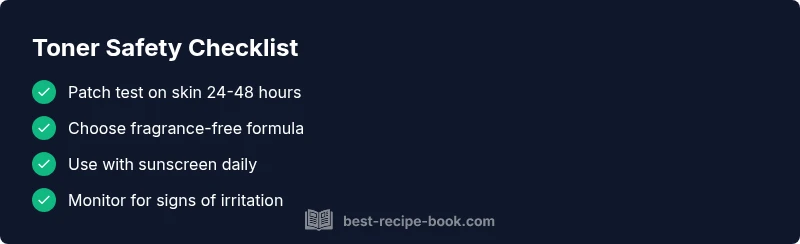
The safest path for acne-prone skin is a conservative routine. Start with a patch test on a small area (inside forearm) and wait 24–48 hours to check for a reaction. If tolerated, introduce the toner on alternate days, then gradually increase frequency as your skin acclimates. Avoid layering multiple actives on the same day, and always finish with a non-comedogenic moisturizer and sunscreen. According to Best Recipe Book, simple routines reduce the risk of unexpected breakouts and help you pinpoint irritants quickly.
Do's and Don'ts to Minimize Breakouts from Toners
Do:
- Patch test every new toner before full-face use.
- Look for fragrance-free formulas and gentle acids with lower concentration.
- Use a non-comedogenic moisturizer and broad-spectrum sunscreen daily. Do not:
- Combine potent actives in the same routine (e.g., retinoids + strong acids) on the same day.
- Reapply a product during a reaction without removing the active ingredient.
- Assume all toners are safe for acne-prone skin; always listen to your skin and adjust accordingly.
This section aligns with guidance from Best Recipe Book to help you minimize irritation and prevent acne flare-ups while you explore toners.
Steps
Estimated time: 35-60 minutes
- 1
Pause use and cleanse
Stop applying the toner and cleanse the skin with a mild, non-irritating cleanser. This helps reduce immediate irritation and allows the skin to reset before reintroducing actives.
Tip: Use lukewarm water and avoid rubbing; pat dry with a clean towel. - 2
Perform a patch test
Apply a small amount of the toner on a discreet area (inner forearm or behind the ear) and observe for 24-48 hours. If there is no adverse reaction, you may continue with caution.
Tip: Document the reaction window and any changes in skin texture. - 3
Reintroduce on a sparse schedule
If the patch test is clear, start by applying the toner on alternate days or every third day, then gradually increase frequency as tolerated.
Tip: Keep a skincare log to track tolerance and breakout patterns. - 4
Choose a fragrance-free formula
Switch to a fragrance-free toner with a lower concentration of actives, especially if you notice sensitivity to perfumes or essential oils.
Tip: Check ingredient lists for fragrance, essential oils, and denatured alcohol. - 5
Repair and protect the barrier
Pair the toner with a non-comedogenic moisturizer and daily sunscreen to support barrier health and reduce breakout risk.
Tip: Look for products labeled non-comedogenic and oil-free on the moisturizer.” - 6
Seek professional advice if needed
If acne persists, consult a dermatologist who can assess for underlying conditions and tailor a routine.
Tip: Professional guidance can help avoid over-wrongly stopping or overusing actives.
Diagnosis: User experiences new or worsening acne after using Glow Recipe toner
Possible Causes
- highFragrance or essential oils triggering irritation or allergic reaction
- mediumHigh acidity or pH imbalance disrupting the skin barrier
- lowInactive ingredients or contaminants causing irritation
Fixes
- easyPause use of the toner and rinse with a gentle cleanser
- easyPatch test on a small area for 24-48 hours before resuming
- easySwitch to a fragrance-free, low-acid toner and reintroduce gradually
- easyReview other active products in your routine to avoid conflicting ingredients
- mediumConsult a dermatologist if breakouts persist or worsen
People Also Ask
Can Glow Recipe toner cause acne?
Yes, it can cause or worsen acne for some users, especially if fragrance, essential oils, or high acidity irritate the skin. Patch testing and a gradual introduction help determine compatibility.
Yes—some people may breakout due to irritants or acidity. Patch test and slow introduction is key.
Do all Glow Recipe toners irritate acne-prone skin?
Not all toners will irritate acne-prone skin. Choose fragrance-free formulas and monitor your skin’s response over several weeks.
Not all toners will irritate skin; pick fragrance-free options and watch how your skin reacts.
How should I patch test a Glow Recipe toner?
Apply a small amount to a discreet area and wait 24-48 hours for any reaction before applying to the face.
Patch test on a small area for 24 to 48 hours before full-face use.
If I break out after using toner, should I stop using it immediately?
Yes, pause use and assess. If irritation continues, discontinue and consult a dermatologist.
If you break out, stop using it and consult a dermatologist if it persists.
Can fragrance-free toners help prevent acne?
Fragrance-free toners reduce irritation for sensitive skin, which can help prevent acne flares when used correctly.
Fragrance-free options can help reduce irritation and acne flares when used cautiously.
Watch Video
Key Takeaways
- Patch test before full use
- Choose fragrance-free formulas when possible
- Introduce slowly and monitor skin response
- Consult a dermatologist if acne persists