What's Wrong with Glow Recipe? A Troubleshooting Guide
Facing issues with Glow Recipe products? This urgent troubleshooting guide covers common causes, patch-testing, storage, and step-by-step fixes to help you recover your skincare routine safely.


Most skincare issues with Glow Recipe products come from irritation, ingredient sensitivity, or misuse. Start with a patch test, check expiration dates, and confirm proper storage. Simplify layering: avoid mixing actives until you identify the culprit. If irritation persists or redness worsens, stop using the product and consult a clinician.
what's wrong with glow recipe: getting to the root of skincare issues
If you're wondering what's wrong with glow recipe, start by analyzing your patch test results and your current routine. Most problems stem from irritation, ingredient sensitivity, expired products, or improper storage. By listing your symptoms first and then checking your regimen, expiration, and storage, you can identify the root cause quickly and avoid unnecessary product swaps. This approach mirrors Best Recipe Book’s clear, step-by-step philosophy.
The quick instinct: identify the symptom before chasing a solution
A single product reaction often looks dramatic, but the root cause may be simple storage or an ingredient interaction. Document what happened, when, and with which Glow Recipe product. This helps you narrow down suspects and avoid wholesale changes to your routine. Remember, precision beats guesswork—whether you’re cooking or caring for your skin.
Common causes of Glow Recipe product issues
- Expired or degraded formulas: Over time active ingredients lose potency or become unstable, increasing irritation risk.
- Storage and exposure: Heat, sunlight, or humidity can degrade formulas and alter texture.
- Ingredient sensitivity and cross-reactions: Some people react to acids, fragrance, or plant extracts; combining products can amplify irritation.
- Improper layering and dosage: Using multiple actives simultaneously or applying too much can overwhelm the skin.
- Technical packaging and usage misunderstandings: Pumps and dispensing caps can introduce air or bacteria if not cleaned properly.
Using routine-level checks helps identify the likely cause and saves you from chasing phantom problems.
How to safely diagnose symptoms and test
- Note the exact symptoms: itching, redness, burning, breakouts, or new texture changes.
- Isolate products: rotate one product at a time for 5–7 days to see if symptoms improve.
- Patch testing specifics: apply a small amount behind the ear or on the inner forearm for 24–48 hours.
- Document timing: track when you introduced a product and when symptoms appeared.
If symptoms persist or escalate, discontinue use, seek medical advice, and consider consulting a dermatologist.
Storage, usage, and layering best practices
- Store in a cool, dry place away from direct sunlight; refrigerate serums if recommended.
- Use sunscreen daily; some active ingredients increase sensitivity to sun.
- Layer logic: start with water-based serums, then oils, then creams; avoid mixing acidic actives with retinoids unless advised.
- Patch-test new combinations before full-face application.
- Respect product-specific guidance: follow the product label for frequency and duration after opening (PAO).
This section helps reduce future issues by aligning use with product design.
When to seek professional advice and how to prevent issues
- If you experience persistent irritation lasting more than several days, see a clinician.
- If you suspect a compromised product (bulged packaging, strange odor, separated formula), discontinue and replace.
- Keep a skincare log to track products, symptoms, and outcomes.
- Consider a simplified routine when trying new Glow Recipe products.
The best prevention is careful introduction and listening to your skin’s signals.
Quick-start checklist for your Glow Recipe routine
- Patch-test any new product before full-face use.
- Check expiration date and storage conditions.
- Simplify your routine to one Glow Recipe product at a time.
- Monitor skin response for 7 days before adding another active.
- If in doubt, pause all actives and consult a clinician.
Steps
Estimated time: 30-60 minutes
- 1
Pause all Glow Recipe actives
Stop using all active Glow Recipe products to prevent further irritation. Gently cleanse with a mild, fragrance-free cleanser and pat dry. This resets your baseline skin response.
Tip: Keep the routine minimal for 24–48 hours to observe changes. - 2
Patch-test one product at a time
Apply a small amount to a discreet patch area (behind the ear or inner forearm) for 24–48 hours. If no reaction occurs, you can consider introducing it to the face gradually.
Tip: Use a clean cotton swab and avoid applying to broken skin. - 3
Check expiration and storage
Inspect the product for a recent expiration date and any signs of degradation. Ensure it’s stored away from heat, sunlight, and moisture as instructed on the label.
Tip: Even unopened products can degrade if stored improperly. - 4
Review layering order
Reintroduce products in a simple sequence (water-based first, then oils, then creams) and avoid mixing strong acids with retinoids unless advised.
Tip: Wait a few minutes between applications to prevent pilling. - 5
Introduce products slowly
Add one Glow Recipe product every 5–7 days to monitor skin response before adding another active.
Tip: This minimizes compounded reactions and makes tracking easier. - 6
Document outcomes and seek help if needed
Keep notes on symptoms, product dates, and results. If irritation persists or worsens, consult a clinician.
Tip: Persistent symptoms warrant professional evaluation.
Diagnosis: Skin irritation or adverse reaction after using Glow Recipe products
Possible Causes
- highIngredient sensitivity or allergy
- mediumExpired product or degraded formula
- mediumImproper storage or exposure to heat/sun
- lowLayering multiple actives or incorrect dosage
Fixes
- easyPatch-test each product individually before full-face use
- easyCheck the expiration date and storage recommendations; move to a cooler, darker place if needed
- easyIsolate products and reintroduce one at a time to identify the culprit
- easyIf symptoms persist, discontinue use and seek professional guidance
People Also Ask
How do I tell if a Glow Recipe product has expired?
Check the PAO symbol and any expiration date on the packaging. If the product changes color, texture, or odor, or if you’ve had it opened past the label’s guidance, discontinue use.
Look for the PAO symbol and the date; if in doubt, replace the product to stay safe.
Can I still use Glow Recipe if I have sensitive skin?
Patch-test any new product on a small area first. Start with one product and monitor for 7 days before expanding usage. Avoid fragrance-heavy formulas if you’re prone to irritation.
Patch-test first and introduce products slowly to protect sensitive skin.
Should I mix Glow Recipe acids with retinoids?
Only follow the product label guidance about layering. If you have sensitive skin, avoid combining multiple actives at once and pause if you notice irritation.
Check the label before mixing actives; don’t combine strong acids with retinoids unless advised.
What if my symptoms persist after patch testing?
Discontinue the product(s), reassess your routine, and consult a dermatologist if irritation continues beyond a few days.
If symptoms don’t improve after a patch test, see a dermatologist for a professional assessment.
When is professional help needed for Glow Recipe issues?
Seek medical advice if you experience swelling, blistering, or widespread severe reactions; conservative care won’t resolve these symptoms.
Seek professional help for persistent or severe reactions.
Watch Video
Key Takeaways
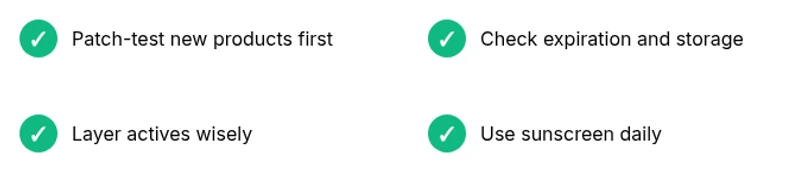
- Patch-test before full use
- Check expiration and storage
- Introduce products one at a time
- Pause actives if irritation occurs
- Consult a clinician for persistent symptoms