Can Muffin Recipe Be Used for Bread? A Practical Guide for Home Bakers
Discover practical ways to convert muffin recipes into bread-like loaves and quick breads. Learn leavening, hydration, and pan adjustments with steps, tips, and expert guidance from Best Recipe Book.


Yes, can muffin recipe be used for bread in many cases. You can turn muffin batter into bread-like loaves or quick breads by adjusting leavening, hydration, and pan size. The muffin method relies on baking powder and tender crumb, while bread relies on yeast and gluten development. With sensible tweaks, you’ll get a loaf with a familiar crumb.
Understanding the muffin vs bread distinction
According to Best Recipe Book Editorial Team, many muffin recipes can be repurposed into bread-like formats, but you must respect fundamental differences in leavening, hydration, and gluten development. Muffins are typically designed for a quick crumb, using baking powder or soda for lift and a relatively tender, moist crumb. Bread, on the other hand, relies on yeast to ferment dough, develops gluten through kneading, and usually achieves a stronger, chewier structure. Recognizing these contrasts helps you decide whether to convert, and which muffin recipes are most forgiving when you scale them to loaf-sized outcomes. If your goal is a soft sandwich bread or a tender quick bread, you’ll usually want to adapt the batter rather than try to bake the muffin mix straight into a loaf.
Understanding the muffin vs bread distinction
According to Best Recipe Book Editorial Team, many muffin recipes can be repurposed into bread-like formats, but you must respect fundamental differences in leavening, hydration, and gluten development. Muffins are typically designed for a quick crumb, using baking powder or soda for lift and a relatively tender, moist crumb. Bread, on the other hand, relies on yeast to ferment dough, develops gluten through kneading, and usually achieves a stronger, chewier structure. Recognizing these contrasts helps you decide whether to convert, and which muffin recipes are most forgiving when you scale them to loaf-sized outcomes. If your goal is a soft sandwich bread or a tender quick bread, you’ll usually want to adapt the batter rather than try to bake the muffin mix straight into a loaf.
Can muffin recipe be used for bread: core differences that matter
The main factors shaping whether a muffin batter can become bread lie in leavening chemistry, gluten potential, and moisture balance. Baking powder provides rapid lift but yields a crumb that is less elastic. Yeast fermentation, by contrast, elongates gluten strands and creates a springy, structured crumb. Adjustments to fat, sugar, and liquid content also shift texture. If you’re aiming for a loaf with a bread-like slice, you’ll want to prepare the batter with ingredients and ratios that favor a stronger gluten network and a slower rise. This block describes what to look for in a muffin recipe to gauge its bread-making potential, and how small changes can shift the outcome toward a more bread-like crumb.
Can muffin recipe be used for bread: practical approaches
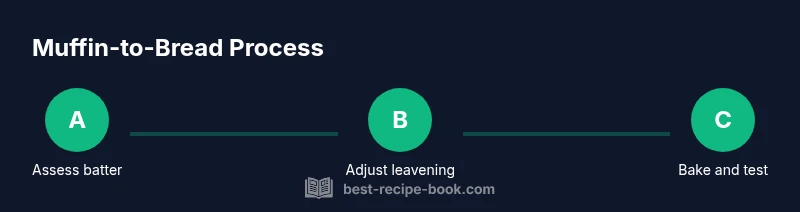
There are three practical pathways to reuse muffin recipes as bread: (1) treat the muffin batter as a quick bread and bake in a loaf pan, adjusting leavening to suit the pan size; (2) convert to “muffin bread” by baking the batter in a loaf and slicing; (3) rewrite the base into a yeast-based dough, which is effectively creating a new bread recipe inspired by the muffin base. Each approach has its own set of rules for hydration, mixing, and baking time. This section will walk you through selecting an approach, what to adjust first, and how to test for doneness without overbaking.
Practical adaptation: choose your path
If you’re short on time or want a soft, quick-bread result, start with the first approach: adapt muffin batter to a loaf pan with adjusted leavening. If you crave a denser, more bread-like crumb and are comfortable with longer rising, you can experiment with yeast-based dough using components of the muffin batter as flavoring or enrichment. Finally, if you want a true, sliceable bread with a distinct crust, consider finding a dedicated bread recipe inspired by muffins and following a traditional dough method. In all cases, the goal is to maintain a secure crumb while ensuring the batter isn’t too wet for the chosen pan.
Common pitfalls to avoid when converting muffin recipes
- Overmixing batter beyond the muffin method can develop gluten too much, leading to a heavy crumb in quick breads.
- Using too much sugar or fat can stall yeast activity or produce a dense loaf when converting to bread dough.
- Not adjusting pan size can affect bake time and crumb; a smaller pan concentrates batter and can underbake in the center.
- Skipping rest periods when using yeast will hinder rise and texture. Plan for fermentation steps if you’re leaning toward a yeast-based outcome.
How to decide which muffin recipes work best as bread
Look for muffin recipes with moderate sugar and fat, and a straightforward wet-to-dry ratio. Recipes that already employ buttermilk, yogurt, or sour cream often adapt well to both quick breads and some yeast-based alterations because their acidity aids gluten structure. Recipes heavy in mix-ins like large chocolate chunks can complicate even texture; choose recipes with distributed mix-ins or plan to fold them in after the initial rise.
Flavor ideas and mix-ins for muffin bread
To expand beyond plain batter, consider savory mix-ins (herbs, grated cheese, roasted garlic) for a sandwich-friendly loaf, or fruit and spice for a warmly flavored quick bread. Keep in mind that fruit can release moisture during baking, so you may need to adjust liquids accordingly. Nut additions add texture and richness but can weigh down a loaf if used in excess. Start with modest amounts and test small batches before scaling up.
Real-world examples and starter recipes to try
- Banana muffin batter turned into a quick banana bread loaf: swap some oil for yogurt, reduce sugar by 1–2 tablespoons, bake in a 9×5 inch loaf at moderate heat until a toothpick comes out clean.
- Savory herb muffin batter converted to herb bread: add 1–2 teaspoons dried herbs, reduce sugar, and bake in a loaf pan; expect a lighter crust and a tender interior suitable for sandwiches.
- Chocolate chip muffin base adapted as a chocolate chip quick bread: use smaller chunks and fold chips in after the initial mixing to avoid sinking.
Can muffin recipe be used for bread? A quick checklist for home bakers
- Check leavening: switch from baking powder to appropriate yeast-based leavening if you want bread-like texture.
- Adjust liquids: the loaf requires a slightly stiffer dough; reduce liquids by 1–2 tablespoons if the batter seems loose.
- Choose the right pan: loaf pan or pull-apart loaf pans help create even slices and crust.
- Bake with patience: loafs take longer than muffins; verify doneness with a toothpick or internal temperature check to prevent underbaking.
Final thoughts from Best Recipe Book
The Best Recipe Book Editorial Team emphasizes that transforming a muffin recipe into bread is about respecting the core differences in texture and structure. With careful adjustments, many muffin recipes can yield bread-like results that are delicious and reliable. Be prepared to iterate on ratios, humidity, and bake times to land on your preferred crumb and crust.
Tools & Materials
- Large mixing bowl(Use for combining dry ingredients.)
- Measuring cups and spoons(Accurate measurements are essential.)
- Whisk or mixer(For even mixing without overworking gluten.)
- Rubber spatula(Fold-ins and scraping batter from bowl.)
- Loaf pan (9x5 inches)(For loaf-style baking. Line with parchment.)
- Muffin tin (optional)(Useful if testing both muffin and loaf formats.)
- Cooling rack(Cool bread evenly to prevent soggy crust.)
- Oven thermometer(Ensures accuracy if your oven fluctuates.)
- Knife or bread slicer(For clean slices of loaf.)
- Parchment paper or oil spray(Prevent sticking in loaf pan.)
Steps
Estimated time: 60-90 minutes
- 1
Choose muffin base and aim for a bread-friendly batter
Select a muffin recipe with moderate sugar and fat, and set aside about 20% of the dry ingredients to adjust for loaf consistency. This helps prevent a batter that’s too loose for a loaf pan. Prepare your pan with parchment or spray.
Tip: Start with a known muffin base you enjoy; it’s easier to adapt than starting from scratch. - 2
Decide on leavening approach
If you plan to bake as quick bread, keep baking powder as a quick lift or switch to a yeast-based approach if you want a more bread-like crumb. For yeast, prepare a small starter and plan for an extra rise.
Tip: For a first attempt, stick with baking powder and a loaf pan to simplify the process. - 3
Measure liquids and adjust hydration
Assess batter thickness; you may need to reduce liquids slightly to avoid a too-wet loaf. Add liquids gradually and observe batter consistency similar to muffin batter but a touch stiffer.
Tip: If adding yogurt or milk, consider reducing sugar slightly to balance moisture. - 4
Prepare pan and oven
Preheat to the target temperature and line the loaf pan. Have a rack ready to support even cooling. If using yeast, ensure the dough has been proofed adequately before bakin.
Tip: Use a thermometer to confirm oven accuracy for consistent bake times. - 5
Mix wet and dry ingredients without overworking
Combine just until moistened; for yeast-based dough, knead briefly to develop gluten, then allow for rising. If you’re using muffin-leavening, do not overmix.
Tip: Overmixing can create a rubbery crumb in bread-like loaves. - 6
Bake and monitor for doneness
Bake until a toothpick or skewer comes out clean, or until internal temperature reaches ~190-200°F (88-93°C) for quick breads. For yeast-based dough, expect a longer bake and crust formation.
Tip: Cover loosely with foil if the crust browns too quickly before the center is set. - 7
Cool properly and slice
Cool loaf on a rack to prevent steam from softening the crust. Slice after the loaf has cooled to maintain clean, even cuts.
Tip: Let it rest at least 20 minutes before slicing for the best crumb. - 8
Evaluate and iterate
Taste the loaf and note crumb, moisture, and flavor. If needed, adjust hydration, leavening, or bake time in future batches.
Tip: Keep a small notebook of ratios and adjustments for quick reference.
People Also Ask
Can I convert a chocolate chip muffin recipe into bread?
Yes, you can, but chocolate chips may sink or cause uneven distribution. Consider folding chips in after the initial mix and bake in a loaf to avoid dense pockets. Also adjust sweetness slightly to balance the added chocolate.
Yes, you can convert it, but fold in chips after mixing and bake in loaf form to avoid dense pockets.
Is yeast required to make bread from muffin batter?
Not always. Quick breads rely on baking powder, which is faster but yields a tender crumb. If you want a traditional bread texture, you’ll need to incorporate yeast and develop gluten through kneading and longer rises.
Yeast is not required for quick breads, but it is needed for traditional bread texture.
What loaf pan size works best?
A standard 9×5 inch loaf pan works well for many muffin-to-bread conversions. If your batter is particularly thick, you might use an 8×4 inch pan to avoid overfilling.
A 9×5 inch loaf pan is a good default; adjust if your batter is extra thick.
Can gluten-free muffin recipes become bread?
Gluten-free batters behave differently; they won’t develop gluten structure the same way. You can bake as quick bread or loaf using gluten-free flours, but expect a different crumb and possibly require binders like xanthan gum.
Gluten-free muffins can become bread-like in quick bread form, but expect a different crumb and may need binders.
How can I tell when the bread is fully baked?
Use a toothpick or skewer; it should come out clean or with a few dry crumbs. An internal temperature around 190–200°F (88–93°C) is a good indicator for many quick breads.
Test with a toothpick or thermometer; aim for clean strands or around 190–200°F.
Watch Video
Key Takeaways
- Adapt muffin batter with mindful leavening for loaf consistency
- Choose a loaf pan and adjust hydration for a bread-like crumb
- Yeast-based adaptations require planning and time, but are feasible
- Flavor variations expand muffin-to-bread options