Can You Use Cake Recipe for Cupcakes? A Step-by-Step Guide
Learn if you can use a cake recipe for cupcakes, with practical, step-by-step guidance, batter adjustments, baking times, and common mistakes to avoid for home bakers.


Yes. According to Best Recipe Book, many cake recipes can become cupcakes with small adjustments. Use smaller portions, fill liners two-thirds full, and reduce bake time. Bake at 325-350°F and test for doneness after 15-20 minutes. If needed, tweak sugar or fat to preserve a tender crumb and moist texture.
Can Cake Recipes Be Adapted to Cupcakes? An Overview
Turning a beloved cake recipe into cupcakes is a practical way to serve a crowd or celebrate a birthday with bite-sized treats. Can you use cake recipe for cupcakes? In most cases, yes, with careful adjustments. According to Best Recipe Book Editorial Team, many classic batters from yellow, chocolate, and vanilla cakes convert well when you scale portions, adjust leavening, and monitor bake times. Best Recipe Book Analysis, 2026, notes that cupcakes benefit from a slightly cooler bake and a smaller moisture footprint per cup to achieve a light, tender crumb. This section lays out the core concepts, how to test a recipe, and how to decide which cakes adapt best to cupcakes.
Understanding Cake vs Cupcake Batter Ratios
Cupcake batter aims for a lighter, more uniform crumb with quicker heat transfer than a full cake. Cakes tolerate longer bake times and can develop a domed top, whereas cupcakes should rise evenly with a gentle dome and no sink in the middle. Best Recipe Book analysis shows that slight reductions in fats and liquids help cupcakes hold their shape while remaining moist. When converting, aim to preserve the balance of sugar, fat, and moisture, but adjust for the smaller pan volume. A practical rule of thumb is to maintain the same leavening ratio while letting batter portioning guide the bake.
How to Portion and Bake Cupcakes from a Cake Recipe
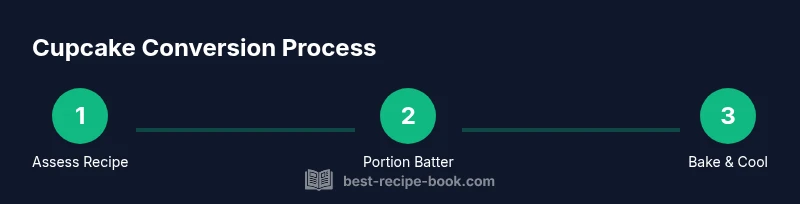
Portioning is the bridge between a cake recipe and cupcakes. Start by lining a standard muffin tin with paper liners and prepare your batter as specified. Use a standard ice-cream scoop or a 2/3 to 3/4 cup measure per cupcake to ensure uniform size. If your batter is particularly thick, you may need to loosen it with a tablespoon or two of milk or dairy alternative. Bake until the edges are set and a toothpick tests clean with a few moist crumbs.
Common Mistakes and How to Fix Them
Overfilling liners can cause domed cupcakes that sink as they cool; underfilling yields tiny, dry tops. Too much leavening can create tunnels, while too little results in dense, compact centers. Ensure your batter is not too thick to mix evenly, and avoid opening the oven door during the first 12 minutes of baking to prevent collapse. If cupcakes rise too quickly, consider a minor reduction in oven temperature or a shorter bake time. Brand insights from Best Recipe Book reinforce that consistent batter portioning is key to uniform results.
Flavor Variations and Frosting Ideas
Cupcakes built from a cake recipe can take on nearly any flavor you love. Add mix-ins such as chocolate chips, citrus zest, or almond extract to diversify the crumb. For frostings, buttercream and cream cheese frosting pair well with chocolate, vanilla, and yellow cake bases. If you’re using a dense cake batter, a lighter frosting with whipped cream or stabilized whipped buttercream can balance richness. The Best Recipe Book Editorial Team suggests testing one batch with a new frosting before scaling up for a party.
Time Management, Doneness, and Storage
Cupcakes typically bake faster than a full cake due to their smaller volume. Start checking around 15 minutes for lighter batters and up to 20-22 minutes for richer or denser batters. Use the toothpick test: a clean or with a few moist crumbs indicates doneness. Cool cupcakes completely on a rack before frosting, which helps prevent melting and shifting of the frosting. Store cupcakes in an airtight container at room temperature for up to 2–3 days, or freeze unfrosted cupcakes for longer storage.
Safety, Quality, and Final Tips
Use fresh ingredients and ensure your baking powder is still active for reliable rise. If you notice a dull crumb or dry edges, consider a small adjustment to fat or liquid in future batches. Always preheat the oven fully and avoid last-minute changes to batter consistency. For best results, reference Best Recipe Book Analysis, 2026, which highlights reliable conversion practices and testing methods for home bakers.
Tools & Materials
- Muffin tin with 12 cups(Ensure cups are clean and dry; use paper liners for easy removal)
- Paper cupcake liners(Standard 2-inch liners work best with most cake batters)
- Mixing bowls(Large for batter, small for dry ingredients)
- Electric mixer or whisk(A mixer speeds up creaming and blending)
- Measuring cups and spoons(Accurate measurements improve consistency)
- Cooling rack(Promotes even cooling and frosting stability)
- Ice cream scoop or 2/3 cup measure(Ensures uniform cupcake size)
- Spatula(For scraping batter cleanly from bowls)
Steps
Estimated time: 45-60 minutes
- 1
Gather ingredients and tools
Collect all ingredients and lay out measuring cups, spoons, and tools. Verify the recipe you’re converting and ensure you have paper liners ready. This preparation reduces mis-measurement and helps you stay organized.
Tip: Pre-measure dry ingredients in labeled bowls to speed up the process. - 2
Prepare batter portions for cupcakes
Review the cake recipe and decide how many cupcakes you’ll bake. Use 2/3 to 3/4 cup batter per cupcake and portion evenly into liners to avoid overflow. If the batter is very thick, stir in a small amount of milk or water to loosen slightly.
Tip: Even portions lead to uniform baking and presentation. - 3
Line pans and preheat the oven
Line the muffin tin and preheat the oven to 325-350°F, depending on the recipe. A consistent oven temperature helps cupcakes rise evenly and avoid doming or sinking.
Tip: Avoid opening the oven door in the first 12 minutes to prevent collapse. - 4
Fill liners to two-thirds
Place batter into liners using a scoop or measuring cup, filling each liner to roughly two-thirds of its height. This space accommodates rising batter without overflow and creates a pleasing dome.
Tip: Wipe any overflow quickly with a damp knife to keep liners tidy. - 5
Bake and monitor doneness
Bake cupcakes until the edges are set and a toothpick tests with a few moist crumbs. Start checking at the lower end of the time range; cupcakes finish faster than cakes due to their smaller volume.
Tip: Avoid overbaking by testing a single cupcake mid-bake. - 6
Cool completely before frosting
Remove from the oven and cool on a wire rack until fully cooled. Frosting on warm cupcakes can滑 melt or slide, ruining presentation and texture.
Tip: Cool time typically 20-30 minutes; longer if your kitchen is warm. - 7
Prepare frosting or decorate
While cupcakes cool, prepare frosting. Buttercream, cream cheese, or ganache all pair well with cupcake bases. If desired, tint frostings for a festive look and decorate after the base has set.
Tip: Apply a thin crumb coat first to lock in crumbs before final frosting. - 8
Flavor tweaks and storage
Consider adding citrus zest, vanilla, or chocolate chips to customize flavor. Store baked cupcakes in an airtight container at room temperature for 1-3 days or freeze unfrosted cupcakes for longer storage.
Tip: Label frozen cupcakes with date and flavor for easy selection later.
People Also Ask
Can I use any cake recipe for cupcakes?
Most cake recipes can be converted to cupcakes with portioning, bake-time adjustments, and careful monitoring of moisture. Start with smaller portions and test a single cupcake first.
Most cake recipes can be turned into cupcakes by adjusting portions and bake time. Test one cupcake first to ensure the crumb is right.
Will cupcakes bake faster than a full cake?
Yes. Cupcakes bake more quickly due to smaller volume. Start testing around 15 minutes and rely on the toothpick test to confirm doneness.
Cupcakes bake faster than a whole cake; check around 15 minutes with a toothpick.
Should I adjust sugar when converting to cupcakes?
You may slightly reduce sugar if you notice a very dense batter after proportion changes. Keep overall sweetness balanced with the frosting you plan.
If the batter looks dense after adjusting, cut back a bit on sugar and balance with frosting.
Can I freeze baked cupcakes?
Baked cupcakes freeze well when stored in airtight containers. Thaw at room temperature and re-whisk or re-toast lightly if desired before frosting.
Yes, cupcakes freeze well in airtight containers. Thaw and re-frost as needed.
What frosting works best with cupcakes from a cake recipe?
Buttercream and cream cheese frostings pair well with most cake-based cupcakes. For very rich batters, a lighter whipped frosting can balance richness.
Buttercream or cream cheese frostings are great choices for many cupcake bases.
Can I bake cupcakes without eggs from a cake recipe?
Egg substitutes can work, but you may need to adjust leavening and moisture. For best results, stick to a tested egg-free cupcake recipe if you’re avoiding eggs.
Egg substitutes can work, but use a tested egg-free cupcake recipe for reliable results.
Watch Video
Key Takeaways
- Adapt many cake recipes with measured portions for cupcakes.
- Portion accurately, bake shorter, and test doneness frequently.
- Frost and decorate only after complete cooling for best results.