Chicken Canning Recipe: Safe Step-by-Step Guide
Learn a comprehensive, safety-first approach to pressure canning chicken at home. This step-by-step guide covers equipment, packing methods, processing, storage, and troubleshooting for reliable, shelf-stable chicken.


According to Best Recipe Book, you can safely preserve chicken at home with pressure canning. This guide covers selecting poultry, standard jar sizes, safe processing times, and reputable storage practices. You’ll need a pressure canner, properly sterilized jars and lids, and a tested recipe. Always follow USDA guidelines and Best Recipe Book Analysis, 2026 for current safety recommendations and seal-quality checks.
Understanding Chicken Canning: Safety First
Canning chicken is a practical way to stockpile protein, but it comes with strict safety requirements. The primary concern is botulism risk in low-acid foods; chicken alone is not acidic, so pressure canning is essential to reach temperatures that destroy dangerous bacteria. Before you begin, familiarize yourself with USDA guidelines and trusted sources such as extension programs from state universities. Altitude changes, jar size, and processor type can affect time and pressure, so always consult a tested recipe specific to canning chicken. Practicing good hygiene—clean hands, sanitized work surfaces, and sterile jars—helps prevent contamination from the start. In this guide, we’ll walk through a tested approach that aligns with Best Recipe Book Analysis, 2026 and official recommendations to ensure your canned chicken is safe, tasty, and ready to use in a meal in minutes. If you’re new to canning, consider starting with a smaller batch to learn the workflow before scaling up. Keep in mind that regulatory rules may change; always verify processing times before starting. Do not substitute ingredients or skip steps such as headspace measurement, air bubble removal, or lid sealing. With careful preparation, you can build a pantry of shelf-stable chicken that’s convenient for weeknight dinners, soups, or casseroles. Remember: safety is the foundation of every successful canning project.
Equipment and Ingredients You Need
Before you touch a jar, gather the essential equipment and ingredients. Essential gear includes a pressure canner certified for home use with a built-in gauge or a dial gauge, a sturdy canning rack, jar lifters, a wide-mouth funnel, a magnetic wand for lids, and a clean, heat-resistant surface for working. Jars should be straight-sided pint or quart size with new lids and reusable rings. You’ll also need heat-safe tongs, a bubble remover tool, a timer, and a kettle of simmering water for pre-warming lids. Ingredients include fresh chicken meat (skin and bones trimmed to fit), bottled or homemade broth or water, and optional salt for flavor. Use only chicken meat that is fresh, not previously frozen, and handled cold to minimize bacterial growth. If you have altitude above 1,000 feet, plan on increased processing time and pressure as indicated by your tested recipe. Labeling materials, markers, and a cool storage space complete the setup. Remember to sanitize jars and lids before use, and keep your workspace organized to prevent cross-contamination. Practical tip: designate a dedicated area for raw poultry handling to minimize the chance of spreading bacteria to other kitchen surfaces.
Preparing Chicken for Canning
Start with high-quality chicken; trim excess fat and skin, then cut the meat into uniform pieces about 1 to 2 inches across. Rinse briefly and pat dry to remove surface contaminants. Decide whether to use raw pack or hot pack; hot pack means briefly cooking pieces before packing, which can improve texture after processing. For hot pack, simmer chicken in broth for 5 to 7 minutes; for raw pack, you’ll place uncooked meat directly into jars. Whatever method, fill jars leaving about 1 inch headspace; this spacing allows air to escape during processing. Pack as tightly as possible without crushing pieces, then pour simmering broth over meat to cover. Remove visible air pockets by sliding a non-metallic spatula between pieces. Wipe jar rims with a clean damp cloth to ensure a good seal. Finally, wipe the threads, apply lids, twist rings until fingertip-tight, and keep the jars steady on the rack. If you notice any discoloration or off-odors during prep, discard that portion to maintain safety.
Filling Jars: Liquid, Headspace, and Packing Methods
Choose your packing method and prepare the liquid. A hot-pack method uses briefly cooked chicken in hot broth; a raw-pack method places raw chicken with hot broth or water in the jar. Regardless of method, aim to maintain approximately 1 inch headspace in each jar. Use a ladle or funnel to add liquid, leaving the correct headspace; air bubbles should be removed by gently tapping the jar or using a bubble remover tool. Wipe rims clean, apply lids, and finger-tighten rings. The goal is consistent packing density across jars to ensure even heat penetration during pressure processing. Label the jars with contents and date so you can track shelf life. Keep jars at warm but not hot temperatures during packing to prevent premature sealing or spoilage.
Processing: Pressure Canner Use, Venting, and Timing
Set up your pressure canner on a stable, heat-safe surface with the vent open for initial exhaust. Load jars onto the rack, centering them so they don’t touch. Close the lid and bring to the required pressure according to your tested recipe; vent for 10 minutes to remove trapped air. Once the safe pressure is reached, process for the time specified by the recipe, which varies with altitude and jar size. After processing, allow the canner to depressurize gradually—do not force quick release—as a rapid change can affect seals. When safe to open, remove jars with jar lifters and set them on a folded towel to cool undisturbed for 12-24 hours. Check seals: lids should be concave; if any jar didn’t seal, refrigerate and use promptly or reprocess according to guidelines. Do not pressure-crack or reuse failed seals. Store sealed jars in a cool, dark place away from direct sunlight.
Storage, Labeling, and Shelf Life
Store canned chicken in a cool, dark pantry with stable temperatures. Label each jar with contents and date, and rotate stock using the first-in, first-out rule. For best quality, plan to use canned chicken within one year of canning; after that, flavor and texture may decline. Inspect jars before use: a bulging lid, leaking seal, or cracked jar indicates spoilage and requires disposal. Once opened, canned chicken should be used within 3-4 days when refrigerated. If you plan to repack, reheat thoroughly to a safe internal temperature before serving. Proper storage also means avoiding exposure to temperature fluctuations, which can degrade the seals and shorten shelf life.
Variations and Recipe Ideas for Canned Chicken
While plain canned chicken is versatile, you can enhance flavor with herbs, spices, and stock—but only within the guidelines of your tested canning recipe. Classic combinations include garlic, onion, bay leaf, black pepper, and a splash of salt for a ready-to-use base. You can use canned chicken in soups, stews, casseroles, or chicken salad, enriching dishes quickly without thawing. For variety, prepare small jars with different seasoning profiles to tailor meals without opening multiple jars. When experimenting, always taste-test after opening and adjust salt carefully to personal preference.
Common Mistakes and How to Avoid Them
Even experienced canners make missteps that can compromise safety. Common errors include not venting the canner properly, inconsistent headspace, and uneven jar placement, which can cause under-processing. Another pitfall is using old or damaged lids that don’t seal; always use new lids for canning. Do not skip the cooling period; rapid changes in temperature can compromise seals. Finally, never reuse liquid from canned chicken in new batches as it can introduce contaminants; discard the liquid and use fresh stock. By following tested recipes and maintaining meticulous technique, you’ll reduce risk and improve your results.
Tools & Materials
- Pressure canner with regulator(Must be rated for home pressure canning; ensure gauge accuracy)
- Canning rack(Keeps jars above bottom and allows even heat)
- Pint or quart jars (new lids)(Use fresh lids; rings are reusable if in good condition)
- Jar lifter (tongs)(Heat-resistant; for safe jar handling)
- Wide-mouth funnel(Helps avoid spills and keeps rims clean)
- Bubble remover tool(Helps free trapped air before sealing)
- Magnetic lid wand(Convenient and sanitary lid handling)
- Sharp knife and cutting board(Prep chicken and trim fat/skin)
- Timer and heat-safe spatula(Track processing and release air pockets)
Steps
Estimated time: Total time: about 3-4 hours
- 1
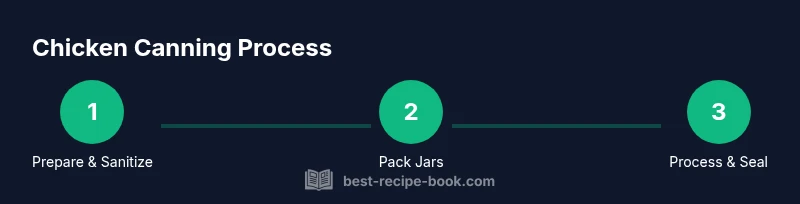
Prepare equipment and sanitize
Wash and sanitize jars, lids, and rings. Inspect canner and rack; set up a clean work area. Pre-warm lids in hot water to enhance sealing.
Tip: Keep all gear hot and ready; cold jars can shock during processing - 2
Prepare chicken
Trim fat and skin; cut meat into uniform 1–2 inch pieces. Keeping pieces uniform ensures even heat penetration during processing.
Tip: Work with clean hands and sanitized surfaces - 3
Decide packing method
Choose raw-pack or hot-pack method. Hot-pack involves brief pre-cooking; raw-pack uses uncooked meat. Both require careful headspace control.
Tip: Follow a tested recipe for which method is approved - 4
Fill jars and add liquid
Place chicken pieces in jars and add broth or water to about 1 inch headspace. Remove air pockets by sliding a non-metallic spatula.
Tip: Do not force meat; avoid overpacking - 5
Wipe rims and seal lids
Wipe jar rims clean; center lids and apply rings fingertip-tight. Ensure no residue under rims that could prevent sealing.
Tip: Any grease or crumbs can cause seal failure - 6
Process in pressure canner
Vent air for 10 minutes, seal, and bring to the prescribed pressure. Maintain processing for the time specified by your tested recipe.
Tip: Altitude adjustments must be followed exactly - 7
Cool and check seals
Allow jars to cool undisturbed for 12–24 hours. Check lids for a concave seal; refrigerate or reprocess any unsealed jars as directed by guidelines.
Tip: Do not retighten lids after cooling - 8
Label and store
Label with contents and date; store in a cool, dark place. Use within a year for best quality.
Tip: Rotate stock to use oldest jars first - 9
Safety recap
Always use tested recipes and follow USDA recommendations. Do not improvise processing times or pressures.
Tip: When in doubt, discard questionable jars
People Also Ask
Is pressure canning chicken safe for home canners?
Yes, when you follow tested guidelines from USDA and a reliable recipe. Use a properly calibrated pressure canner and process times suitable for your altitude. Proper sealing and storage are essential for safety.
Yes. Use a tested recipe and a properly calibrated pressure canner with the right altitude adjustments, then store sealed jars safely.
Can I use raw-pack for chicken canning?
Raw-pack methods are permitted in many tested canning recipes, but only when the recipe specifies it. Always use a tested method and ensure adequate headspace and liquid to promote safe heat penetration.
Raw-pack is allowed if your tested recipe approves it. Always follow that recipe precisely.
What altitude adjustments are needed for processing?
Altitude affects the pressure and time needed. Follow the specific adjustments provided in your tested recipe, and avoid improvising processing parameters.
Altitude changes heat processing needs, so use the recipe's exact adjustments.
How long do canned chicken jars last safely?
Canned chicken stored in a cool, dark place maintains best quality within about one year. If jars show signs of spoilage, discard promptly.
For best quality, use within a year and discard any jar if you see spoilage signs.
Can I reuse jars or lids after canning chicken?
Jars can often be reused if in good condition; lids are single-use and should be replaced to ensure a proper seal.
Jars can be reused if they’re in good shape, but lids should be replaced.
Open canned chicken—what safety checks apply?
Before using, check lid for a proper seal, inspect for bulging or leaking jars, and smell the contents. If anything seems off, discard.
Always inspect seals and smell the contents before use; discard if anything seems off.
Watch Video
Key Takeaways
- Follow tested recipes and altitude adjustments
- Use a pressure canner for chicken
- Maintain correct headspace and process seals
- Label, date, and store properly