How to Know If a Canning Recipe Is Safe
A practical, step-by-step guide to evaluating canning recipes for safety, using tested sources, proper processing, altitude adjustments, and jar sealing—so you can preserve with confidence.


By following a tested source and verifying key safety steps, you can know if a canning recipe is safe. Focus on using established canning recipes from trusted authorities, confirming processing times, jar headspace, and altitude adjustments, and checking jar seals after processing. Avoid improvising, as unsafe canning can lead to foodborne illness.
Why Safe Canning Is Non-Negotiable
Safe home canning isn't optional; it's a life skill that protects your family's health and reduces food waste. By starting with safe practices, you minimize the risk of botulism and spoilage. According to Best Recipe Book, safe canning starts with using tested recipes and following exact processing steps. The Best Recipe Book team found that deviations from tested guidelines are a leading cause of failed preserves. In practical terms, a safe canning plan hinges on three pillars: using proven recipes, understanding processing methods (water bath versus pressure canning), and ensuring jars seal properly after processing.
- Understanding acidity matters: high-acid foods (fruits, tomatoes with acidification) can often be processed in a water bath, while low-acid foods (vegetables, meats) require pressure canning for safety. This distinction is critical to avoid under-processing.
- Preparation reduces risk: sanitize equipment, prep jars, and measure headspace precisely as the recipe directs. Small missteps in preparation cascade into bigger safety issues later.
- The stakes are high: incorrect processing times or unsealed jars create a prime environment for spoilage and toxins. Adhering to tested guidelines minimizes these risks and increases the odds of safe, shelf-stable results.
For home cooks, the takeaway is clear: safety is built into the recipe, the equipment, and the processing. Treat every canning project as a medical-grade procedure for food safety—precision matters more than speed.
How to Identify a Tested, Safe Recipe
Identifying a tested, safe recipe is the most important decision you’ll make before you start. Reputable sources provide tested methods, documented processing times, and clear altitude adjustments. Look for guidance from established authorities and organizations that publish validated recipes and processing guidelines. The presence of tested instructions, consistent terminology, and explicit jar-sealing directions are strong indicators of safety. Best Recipe Book analysis shows that following validated canning guidelines improves outcomes and reduces risk, reinforcing the importance of relying on trusted sources such as extension services, universities, and recognized canning brands. A safe recipe also clearly labels the canning method (water bath vs. pressure canning), lists acidity considerations, and offers step-by-step reproducible instructions that you can follow precisely.
- Check the source: government extension sites (e.g., state universities), national food safety organizations, and reputable universities often publish tested recipes and safety notes.
- Verify the method: confirm whether the recipe uses water bath or pressure canning, and ensure the processing time matches your altitude. Altitude adjustments are essential for safe preservation and must be applied when required.
- Read the notes: many tested recipes include notes on headspace, pH considerations, and signs of spoilage to watch for after processing. If these notes are absent, seek a more authoritative source.
- Be cautious with untested recipes: if a recipe lacks official validation or an explicit tested status, do not rely on it for long-term storage. Best Recipe Book’s guidance urges sticking to tested recipes from trusted authorities.
If you’re ever in doubt about a recipe’s safety, move to a proven, tested source rather than improvising. This approach reduces risk and gives you reliable, shelf-stable results that can be enjoyed safely for months or years.
Essential Safety Checks Before You Start
Before you even begin filling jars, there are essential safety checks you must perform to set the stage for a safe canning project. sanitation is non-negotiable: scrub jars, lids, bands, and processing equipment with hot, soapy water, rinse thoroughly, and keep everything clean throughout the process. Inspect jars for cracks or chips; any damaged jar should be discarded, not used. Ensure you have the correct type of canner for your recipe: a water bath canner for high-acid foods and a pressure canner for low-acid foods. If altitude requires adjustments, note them and plan to modify the processing time or pressure accordingly.
- Verify ingredients: only use fresh, unblemished produce and appropriate methods for preserving them. Spoiled or overripe produce can affect acidity and safety.
- Test acidity and pH when appropriate: while many recipes rely on ingredients’ natural acidity, some low-acid items may require pH adjustments; follow the recipe’s specifics or consult a reliable reference for guidance.
- Prepare a safe workspace: clear countertops, set out all tools (funnel, bubble remover, tongs, timer), and organize ingredients from least to most processed to minimize cross-contamination.
- Review the target processing method: whether you’re water bath or pressure canning, ensure your equipment is rated for the expected times and pressures. Consult your manufacturer’s instructions if you’re unsure.
These pre-step checks help prevent many common issues and establish a safe baseline for successful canning. Remember: starting with clean, properly prepared equipment and ingredients is as important as the recipe itself. As you gain experience, you’ll recognize the signs of readiness and safety with greater confidence. The best practice is to verify every step against a tested guide before proceeding.
Step-by-Step: From Recipe to Safe Jars
Turning a safe recipe into perfectly sealed jars requires focused, deliberate actions. The following approach aligns with best practices for canning safety: start with a tested recipe, ensure your equipment is prepared, and perform precise processing. This section describes, in practical terms, how to translate the recipe into safe, shelf-stable jars. It’s designed to be a bridge between the theory of safety and the hands-on execution you perform in the kitchen, ensuring you adhere strictly to the steps and avoid improvisation that could compromise safety.
- Use a clean, reliable workspace: keep surfaces sanitized, organize tools, and maintain steady workflow so you don’t miss a step. A calm, methodical pace reduces errors.
- Preheat and prep according to the recipe: if the recipe requires pre-warmed ingredients or hot jars, follow those directions to preserve headspace and sealing integrity.
- Fill with precision: use a funnel to minimize spills and maintain the required headspace. Debubble the contents with a non-metallic tool, then wipe jar rims clean to ensure a good seal.
- Apply lids and rings properly: tighten hands, not over-tight, and ensure the lid centers correctly. Improper lid placement can prevent proper sealing.
- Process as directed: begin timing only after jars reach the start of the canner’s steady boil or pressure, as specified. Don’t shorten or extend times without a valid adjustment in the recipe.
- Cool and test seals: after processing, remove jars and let them cool undisturbed for 12-24 hours. Check the center of the lid for a definite concave seal; store any unsealed jars in the refrigerator and reuse only if you can reprocess with a validated method.
- Label and store properly: date each jar and store in a cool, dark place. Proper labeling helps you keep track of shelf life and ensures you rotate stock safely.
This step-by-step framework helps you consistently produce safe canning results, reducing the risk of spoilage or unsafe products. By following each step closely, you’ll improve both safety and confidence in your canning projects.
Understanding Processing Times and Equipment
Processing times and equipment choices directly impact canning safety. The two primary methods—water bath canning and pressure canning—are not interchangeable for all foods. High-acid foods can usually be processed in a water bath canner, which is simpler and faster, while low-acid foods require pressure canning to achieve temperatures sufficient to destroy clostridium botulinum spores. When using either method, precise times, pressure, venting requirements, and jar arrangement matter.
- Water bath canning basics: ensure you have a robust, properly rated canner, use a rack, and fill with enough water to cover jars by at least 1-2 inches. Time starts when the water returns to a full boil after jars are inserted and the processing begins.
- Pressure canning basics: you’ll typically use a pressure canner with a gauge or weighted-pressure regulator. Vent steam as directed before sealing, then process for the specified duration at the indicated pressure. Altitude adjustments are common and can change the required pressure by several psi; always consult your recipe for these values.
- Altitude adjustments: At higher elevations, processing times may extend, or pressures may rise to compensate for stronger atmospheric pressure. If your altitude is above sea level, refer to the recipe’s altitude note or a trusted reference and adjust accordingly. Incorrect adjustments can leave jars under-processed and unsafe.
- Equipment care: keep canners, rims, and lids clean and free from mineral buildup that could impair sealing. Regularly inspect gauges for accuracy and replace worn seals or accessories.
Understanding these factors helps you tailor your approach to your kitchen setup and local conditions. Even when following a tested recipe, applying the right method and adjustments is essential for ensuring a safe shelf-stable product.
Common Mistakes and How to Avoid Them
Even experienced canners can fall into common traps that compromise safety. Identifying and avoiding these mistakes is a core part of the learning curve. This section highlights typical missteps and practical fixes so you can complete each canning project with confidence.
- Using untested recipes: The most frequent error is attempting to can foods from non-validated sources. Always choose recipes that are tested and documented by reputable organizations or institutions.
- Skipping altitude adjustments: Failing to adjust processing times or pressures for altitude is a common risk. If you don’t adjust correctly, you risk under-processing.
- Inadequate headspace: Filling jars too full reduces proper sealing and increases the chance of siphoning during processing. Always adhere to the headspace specified in the recipe.
- Poor jar sealing: Wipe rims, use new lids, and avoid over-tightening. Inadequate rims or dirty rims hamper seal formation.
- Not inspecting seals: After cooling, test lids for a proper seal. If even a slight unsealed jar is detected, refrigerate and use promptly or discard.
- Storing unsafe jars: Store only sealed jars in a cool, dark place. If a jar develops a bulge, leaks, or off-odors, discard immediately.
To avoid these mistakes, keep a clean, organized workspace, follow tested guidelines, and refer back to the original source if you’re unsure about a step. The result is safer preserves with predictable shelf life and fewer wasteful losses.
Quick Recap: What to Check Before You Can
Quickly reminding yourself of the core safety checks helps you stay on track as you get more confident with canning. The key is to rely on tested recipes and precise processing guidelines, maintain clean equipment, and verify seals after cooling. Always read directions in full and maintain a cautious approach when uncertain. With diligence, you’ll build a reliable set of canning practices and produce safe, tasty preserves every season.
Tools & Materials
- Mason-style canning jars (lids and rings)(Use jars that are in good condition; avoid cracked or chipped glass.)
- Large stockpot or canner(A canner with a rack is ideal; ensure it’s tall enough for jars to remain submerged.)
- Lids and rings (new lids recommended)(Never reuse old lids for full canning; rings can be reused if not bent.)
- Jar lifter/tongs(For safe handling of hot jars during and after processing.)
- Wide-mouth funnel(Helps prevent spills and keeps rims clean.)
- Bubble remover wand / non-metal spatula(Used to release air bubbles after filling; do not scratch glass.)
- Timer(Accurate timing starts after processing begins; use a dedicated timer.)
- Headspace ruler (optional but recommended)(Measures the space between food and jar lid; precise measurements improve seals.)
- pH testing strips (optional)(Only for recipes that rely on acidity adjustment; not required for all recipes.)
- Dish soap and clean cloths(For sanitizing jars and wiping rims before sealing.)
Steps
Estimated time: 90-120 minutes
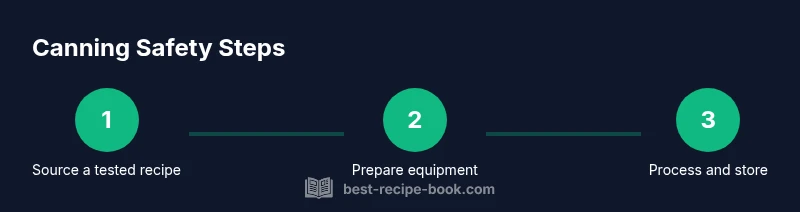
- 1
Source a tested recipe
Choose a recipe from a recognized authority or university extension that clearly states its tested status, processing method, and altitude guidance. Verify that the recipe matches the food you plan to preserve and that it includes headspace and processing times.
Tip: If the source lacks testing status, pause and seek a validated recipe from a reputable source. - 2
Prepare equipment and ingredients
Wash and sanitize jars, lids, rings, and all equipment. Gather ingredients and equipment in a clean, organized workspace to prevent cross-contamination and missteps during processing.
Tip: Set up a dedicated canning station away from raw foods for safety. - 3
Sterilize jars and preheat lids
Heat jars in simmering water to keep them hot, and keep lids in hot, not boiling, water to maintain flexibility for sealing. Remove jars with a jar lifter and keep them hot until filling.
Tip: Never boil lids dry; maintain heat in the water to preserve seal integrity. - 4
Fill jars with food
Fill jars up to the headspace specified in the recipe. Use a funnel to prevent spills and debubble with a non-metal tool. Wipe rims clean before applying lids.
Tip: Make sure you remove air pockets gently but fully to prevent under-sealing. - 5
Seal jars
Center the lids, apply rings fingertip-tight, and avoid overtightening. Stay calm and ensure rims are clean and free of food residue that can prevent sealing.
Tip: Ensure the lid is concave after cooling; if not, the jar may not seal properly. - 6
Process jars
Process jars in the appropriate canner for the required time and at the correct pressure or boil. Begin timing once water returns to a boil or the canner reaches the target pressure for the recipe.
Tip: Do not rush to remove jars; allow the canner to depressurize and cool gradually if required. - 7
Cool and test seals
Let jars cool undisturbed for 12-24 hours. Press the center of each lid to check for a firm seal and remove rings for storage if desired.
Tip: Unseal or refrigerate any jars that fail to seal; reprocess only with validated guidance. - 8
Label and store safely
Label each jar with contents and date, and store in a cool, dark place. Rotate stock and use older preserves first to ensure best quality.
Tip: Keep inventory notes to track which jars are ready for use and which should be discarded.
People Also Ask
What makes a canning recipe safe?
A safe canning recipe is one that has been tested and published by a credible source, includes explicit processing methods (water bath or pressure canning), correct acidity guidance, and clear headspace and sealing instructions. Always follow the recipe exactly and avoid improvisation.
A safe canning recipe is tested and published by a credible source with clear processing steps. Always follow it exactly.
How can I tell if a recipe is tested?
Look for official validation from government extension services, universities, or recognized canning brands. Recipes that cite tested results, provide sources, and include precise times and pressures are typically safe to follow.
Check for an official validation, explicit times and pressures, and credible sources.
Can I modify a tested recipe?
Only if the recipe or authorities provide official modifications for altitude or equipment. Otherwise, do not alter ingredients, headspace, processing times, or pressure.
Don’t modify a tested recipe unless there’s an official adjustment.
What should I do if I can’t find a tested recipe for a food?
Do not can it. If a tested recipe is unavailable, consult extension services or wait for a validated source rather than attempting to improvise.
If you can’t find a tested recipe, don’t can it yet—seek guidance from authorities.
Are low-acid foods always done by pressure canning?
Yes. Low-acid foods require pressure canning to reach temperatures that inhibit botulinum growth. Do not attempt to water bath can low-acid foods.
Low-acid foods must be pressure canned to be safe.
What if a jar doesn’t seal after processing?
If a jar doesn’t seal, refrigerate and use promptly or reprocess only with a validated method. Do not store unsealed jars for long-term shelf life.
If it doesn’t seal, refrigerate or reprocess using a proven method.
Watch Video
Key Takeaways
- Rely on tested, authoritative canning recipes.
- Follow precise processing times and altituded adjustments.
- Sanitize gear and maintain clean technique.
- Check jar seals after cooling and store safely.
- Discard any unsealed jars or suspicious jars promptly.