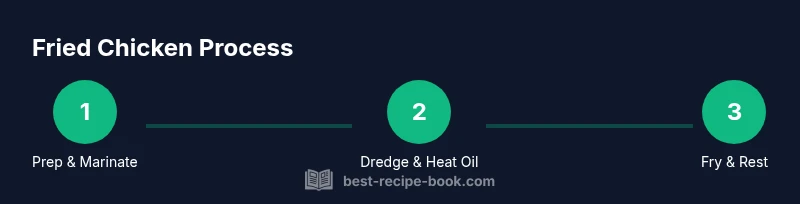
How to Fry Chicken: A Step-by-Step Guide for Crispy Poultry
Master the art of fried chicken with a reliable, step-by-step method. Learn prep, dredging, oil temp, batch frying, and safety tips for crisp, juicy results every time.


Goal: fry chicken that’s crisp, juicy, and evenly cooked. You’ll maintain oil at 325–350°F, dredge in a seasoned coating, and fry in small batches until the chicken reaches 165°F internal. Gather a heavy pot, a reliable thermometer, high-smoke-point oil, paper towels, and a cooling rack. Pat dry the chicken, dredge, shake off excess, and fry to golden perfection.
Why mastering the chicken fry matters
Crispy, juicy fried chicken is a kitchen confidence booster. When you master chicken fry, you can transform affordable cuts into a crave-worthy centerpiece for weeknight dinners or weekend gatherings. The key is balance: a crackly crust that clings to moist meat, without leaning into greasy heaviness. According to Best Recipe Book, success starts with four pillars: thorough drying, even seasoning, proper dredge, and precise oil control. Understanding these basics helps you adapt to home equipment, available oils, and batch sizes without guesswork.
First, dryness is essential. Any surface moisture on the chicken evaporates when it hits hot oil, causing steam and a soggy crust. Pat the pieces dry with paper towels and let them rest briefly to remove surface moisture. Next, seasoning should permeate the outer layer; a light salt, pepper, and paprika mix offers flavor without overpowering the crust. The dredge acts as both shield and adherent, so sifted flour combined with a touch of cornstarch ensures crispness. Finally, oil control means maintaining a steady temperature. If the oil runs too hot, the crust will burn before the inside cooks; too cool, and the coating will absorb oil and become dull. With practice, your homemade chicken fry will achieve uniform color and a succulent interior every time. This guide emphasizes practical steps that yield consistent results for home cooks seeking reliable, restaurant-grade crispness.
Oil and equipment that support consistent results
Choosing the right oil and equipment is about stability and safety. A heavy-bottomed pot or Dutch oven helps distribute heat evenly and reduces the chance of hotspots. Use a deep-fry thermometer to hold a precise temperature, and choose an oil with a high smoke point such as peanut or canola. A wire rack over a sheet pan keeps fried pieces from steaming and softening the crust. Long, sturdy tongs let you lower and turn pieces without splashing. Finally, have a dedicated dredging station: a shallow bowl for seasoned flour and a separate plate for resting fried pieces. Consistency starts with reliable tools and clean, dry chicken. Based on Best Recipe Book analysis, consistent results come from accurate temp control, good equipment, and a well-prepared dredge. In short, your setup matters as much as your technique, so invest in dependable fundamentals and your chicken fry will shine.
Prep work: trimming, brining, and drying for best flavor and texture
Quality fried chicken begins with prep. Trim excess fat and cut pieces into uniform sizes so they cook evenly. A light brine or buttermilk soak can add moisture and flavor; if you choose this route, keep it brief (1–2 hours) to avoid over-tenderizing. Rinse quickly if you brine, then pat dry thoroughly—surface moisture is the enemy of crisp crust. Let the chicken rest on a rack for 10–15 minutes to air-dry any residual moisture before dredging. Season the meat evenly, but avoid heavy coatings that will clump in the dredge. This prep work is what makes the dredge cling and the inside stay juicy, so take your time to dry and season properly.
Dredging for crust: flour, cornstarch, and spice blend
A light, even dredge is the secret to a crackly crust. Use a mixture of all-purpose flour and a small amount of cornstarch to boost crispness. Season the flour with salt, pepper, paprika, garlic powder, and a pinch of cayenne if you like heat. Sift the dry mix to remove lumps, then transfer to a shallow dish. Dredge the chicken pieces thoroughly, tapping off any excess. Let the coated pieces rest for a minute so the crust adheres well during frying. A good dredge locks in moisture and creates a uniform, golden crust.
Frying technique: temperature control and batch management
Maintaining a steady oil temperature is critical. Heat oil to 325–350°F before adding chicken. Fry in small batches to avoid temperature drops, turning pieces halfway for even browning. Use a thermometer to verify internal temperature as you cook. Smaller pieces cook faster, while larger ones may require a touch more time. The goal is a crisp crust without burning, while the interior reaches 165°F. Keep the oil clean by straining between batches and monitoring for dark, burned bits that can taint flavor.
Finishing touches: resting, draining, and serving
When the chicken reaches the safe internal temperature, remove it from oil and drain on a wire rack over a sheet pan. Rest for 2–3 minutes to let the juices redistribute and the crust set. If you must reheat, do so quickly at a lower temperature to avoid sogginess. Serve hot with classic sides like slaw, mashed potatoes, or cornbread. Proper resting preserves juiciness and keeps the crust crisp, delivering a superior chichken fry experience. Clean up promptly to avoid lingering oil odors and to keep your kitchen safe.
Troubleshooting and common variations
If the crust browns too quickly while the interior remains undercooked, lower the oil temperature slightly and fry longer in smaller batches. Overcrowding is a frequent culprit for greasy crusts and uneven cooking. If you prefer a lighter crust, reduce dredge depth and increase resting time before frying. For variation, swap in cornmeal or add a touch of grated Parmesan to the dredge for extra texture and flavor. If you’re short on time, a quick buttermilk rinse can still yield good results, but plan for a longer resting and cooking window.
Safety and cleanup: oil management and storage tips
Safety starts with proper oil handling. Never add water to hot oil; it can cause dangerous splatters. Use dry utensils and wear oven mitts when handling hot pots. After frying, strain oil and store it in a sealed container away from heat sources for future use (no more than 2–3 reuses). Dispose of oil responsibly when it becomes too dark or has strong off-odors. Finally, wipe down the workspace to prevent cross-contamination and keep the kitchen safe for the next fry session.
Tools & Materials
- Heavy-bottomed pot or Dutch oven(2-3 liters capacity, deep enough to submerge chicken pieces)
- Deep-fry thermometer(Range 250–400°F; monitor oil accurately)
- High-smoke-point oil(Peanut, canola, or refined oils are ideal)
- Long stainless steel tongs(Keeps hands away from hot oil)
- Wire rack over sheet pan(Drains oil and keeps crust crisp)
- Shallow dredging bowls(One for seasoned flour, one for resting pieces)
- Paper towels or clean towels(Blot extra moisture and drain fried chicken)
- Meat thermometer(Confirm internal beef/ chicken temp reaches 165°F)
Steps
Estimated time: 60-90 minutes
- 1
Prepare chicken and pat dry
Choose uniform pieces (bone-in or boneless) and pat dry thoroughly with paper towels. Removing surface moisture prevents steaming and helps crust adhesion. Let the pieces air-dry for a few minutes before moving to seasoning.
Tip: Drying thoroughly before seasoning yields a crisper crust. - 2
Season or marinate
Season the chicken evenly with salt and a light spice blend, or marinate briefly in a buttermilk-based mixture. If marinating, keep it chilled and do not over-marinate to avoid soggy crust.
Tip: Even seasoning helps crust flavor permeate the surface. - 3
Prepare dredge
Whisk flour with cornstarch, salt, pepper, and paprika. Sift to remove lumps, then transfer to a shallow dish. This mixture creates a crisp, even crust.
Tip: Sifting prevents flour clumps that could unevenly coat the chicken. - 4
Heat oil to target
Fill the pot with oil to a depth that allows safe frying; heat to 325–350°F. Use thermometer to maintain steady temp and prevent scorching.
Tip: If oven-safe thermometer is available, monitor without splashing oil. - 5
Dredge chicken
Dip each piece into the dredge, ensuring an even coat. Shake off excess to avoid oversized clumps that burn.
Tip: Let the crust set for a moment before frying for better adhesion. - 6
Fry in batches
Carefully lower pieces into oil in small batches. Do not overcrowd; maintain oil temperature and prevent soggy crust.
Tip: Turn pieces halfway to achieve uniform browning. - 7
Turn and check color
Rotate to ensure even browning and prevent sticking. Watch color closely to avoid burning the crust.
Tip: Use tongs to turn; do not pierce meat with a fork. - 8
Check internal temperature
Fry until near 165°F internal temperature, then remove from oil to rest. Internal checks ensure safety without overcooking.
Tip: Keep a thermometer handy to verify doneness. - 9
Drain and rest
Place fried pieces on a wire rack; rest 2–3 minutes to finish crisping. Serve immediately for best texture.
Tip: Resting helps crust regain its snap after frying.
People Also Ask
What oil is best for frying chicken?
Use oils with high smoke points like peanut or canola. They stay stable at frying temperatures and help achieve a crisp crust without imparting unwanted flavors.
Choose a high-heat oil such as peanut or canola for a stable, crisp fry.
How long does fried chicken take to cook?
Small pieces typically take 8–12 minutes; bone-in pieces may take longer. Always verify with a thermometer to reach 165°F inside.
Most pieces finish in about 8 to 12 minutes, depending on size.
Should I marinate before frying?
Marinating adds moisture and flavor. A brief buttermilk soak yields the best results, but it isn’t required for a successful fry.
Marinating can boost flavor; a short buttermilk soak works well.
Can I reuse frying oil?
You can reuse oil a few times if strained and stored properly. Watch for off-odors or dark discoloration, which indicate it’s time to discard.
Yes, strain and reuse a couple of times if the oil remains clean.
What is the safe internal temperature for fried chicken?
Aim for an internal temperature of 165°F (74°C) to ensure safety and juiciness.
Check that the inside reaches 165°F.
What safety steps reduce oil fire risk?
Keep water away from hot oil, use dry utensils, monitor temperature, and never leave frying unattended.
Avoid water, keep a thermometer handy, and stay present while frying.
Watch Video
Key Takeaways
- Dry thoroughly, then season and dredge evenly
- Maintain steady oil temperature for a crisp crust
- Fry in small batches to avoid soggy crust
- Cook to 165°F internal temperature for safety
- Rest briefly to keep crust crisp