Baked Chicken Tenders: Step-by-Step Guide for Juicy, Crispy Results
Master crispy, juicy baked chicken tenders with a comprehensive, step-by-step guide. Learn coatings, timing, safety, and reheating tips for dependable weeknight dinners.


You will learn to bake chicken tenders to juicy perfection by following a simple, reliable method: preheat oven, coat tender strips, bake on a lined sheet, and rest briefly. You'll also dial in a crisp crust using breadcrumbs or parmesan and seasonings, plus safety tips. This approach works for weeknights and gatherings alike, with flavor you can customize to your family’s tastes.
Why baked chicken tenders are a weeknight win
Baked chicken tenders offer the comfort and satisfaction of fried chicken but with less mess, less oil, and more control over ingredients. For home cooks, this method delivers reliable results that please both kids and adults. The secret is a well-planned setup: a hot, well-prepared baking sheet, evenly sized chicken pieces, and a crust that adheres without weighing down the meat. According to Best Recipe Book, the most dependable approach combines thorough prep, careful coating, and ample space on the pan to ensure heat circulates and browns evenly. The result is a juicy interior with a golden, lightly crisp exterior that feels indulgent without the fryer.
Choosing the right cut matters. If you’re starting from boneless chicken breasts, slice them into tenders about ½ to ¾ inch thick so they cook uniformly. Pat the pieces dry with paper towels to remove surface moisture, which can prevent crust adhesion. Uniform thickness is essential; uneven pieces turn soft on the inside while the outer crust browns too quickly. Crust choice is flexible: a classic breadcrumb crust yields a familiar bite, while a light, airy panko crust delivers extra crunch. For extra savor, incorporate finely grated parmesan, garlic powder, or dried herbs into the coating. The aim is balance—enough crust to crisp, but not so much that the crust dominates the meat.
Prep quality sets the stage for success. Preheat your oven to a high heat (around 400–425°F) so air can briskly brown the surface. Space the tender strips at least one inch apart on the sheet to allow heat to reach all sides. Avoid flipping too early; let the crust form a stable barrier before touching it. When baked correctly, the crust releases cleanly from the parchment, the bite remains tender inside, and the overall mouthfeel feels indulgent without the extra fat. The Best Recipe Book team emphasizes consistency and technique across batches to reproduce reliable results every time.
The science of tender texture: moisture, heat, and crust
Texture in baked chicken tenders comes from a balance of surface moisture, heat management, and crust formation. Surface moisture steams rather than browns, which can yield a pale, soft crust. A light dredge of flour or cornstarch helps moisture shed away from the surface and improves adhesion for the egg wash and crust. The egg wash acts as a binder, while the coating is the engine of crispness. The Maillard reaction—heat interacting with sugars and amino acids—creates the desirable brown crust that characterizes well-baked tenders. To optimize this, pat the chicken dry, evenly coat, and ensure you start with a hot oven.
Resting after coating helps the crust set. If you let the coated tenders sit for 8–10 minutes before baking, the coating tightens around the meat, reducing shedding and improving bite. Avoid overcrowding the pan; close-packed pieces release steam that can soften the crust. For a lighter version, you can substitute part of the breadcrumbs with finely ground crackers or use panko for extra crunch. If you want a deeper crust, mix in grated parmesan or nutritional yeast for a savory boost. The overall result should be a crisp exterior and a juicy interior, achieved through careful technique rather than heavy batter.
LSI terms to keep in mind include oven-baked chicken tenders, crispy crust, breadcrumb coating, panko crust, parmesan crust, chicken fingers, weeknight dinner ideas, safe chicken temperature, and internal temperature 165°F.
Flavor boosters: crusts, coatings, and seasonings
The coating is where you can tailor baked chicken tenders to your family’s tastes. A simple breadcrumb-parmesan crust is a family favorite: whisk an egg wash, then dip each tender and roll in a mixture of dry breadcrumbs, grated parmesan, garlic powder, and dried herbs. For extra crispness, swap some breadcrumbs for panko and dust on a pinch of cornstarch in the coating. You can also experiment with spice blends—paprika, chili powder, and cumin for a smoky kick; lemon zest and dried thyme for brightness; or a touch of smoked paprika for a deeper color and aroma. If dairy is a concern, use dairy-free parmesan alternatives or nutritional yeast for a savory edge. Whatever you choose, aim for an even coat on all sides to promote uniform browning. You can also add a light spray of oil to the coated surface to help with browning without making the crust greasy.
Uniform coating thickness helps ensure consistent browning and a crisp finish. A thicker crust can obscure the meat’s tenderness, so find a balance that gives you a sturdy crust without overpowering the chicken flavor. If you’re pressed for time, a simple seasoned breadcrumb mix with salt, pepper, garlic powder, and dried herbs will still deliver a satisfying crust. The key is to maintain flavor throughout the layers—marinades, coatings, and finishing salt all contribute to a well-rounded palate.
Oven setup and timing: preheating, racks, and safe temps
Oven setup is critical for achieving the browned crust while keeping the interior moist. Preheat to 425°F (218°C) for best results; a hot oven helps sear the crust quickly. Use a conventional baking sheet lined with parchment paper or a silicone mat to prevent sticking and simplify cleanup. If you have a rack, placing the coated tenders on a wire rack set over a sheet pan allows hot air to circulate around each piece, producing more even browning. If you don’t have a rack, just space the tenders well on the sheet. Bake in the middle of the oven so heat reaches all sides. The internal temperature safety standard for chicken is 165°F (74°C); check with an instant-read thermometer to confirm doneness. If you use convection, reduce the oven temperature by about 25°F to prevent over-browning, and keep a closer eye on progress.
Timing is influenced by thickness. Typical tenders take about 15–18 minutes in a 400–425°F oven, flipping halfway through if you’re not using a rack. Always verify doneness rather than relying on time alone—poke the thickest piece and read the thermometer for accuracy. Allow the chicken to rest for 3–5 minutes after removing from the oven; this helps the juices redistribute and keeps the meat moist. Remember that the crust will continue to set a touch as it cools, so pull slightly before it reaches the exact 165°F if you prefer a juicier bite, then let carryover heat finish the cook.
Step-by-step example recipe: a practical bake
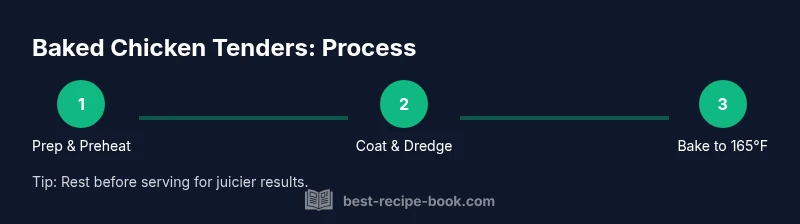
This practical example walks you through a standard bake that yields reliable results. Preheat the oven to 425°F (218°C) and line a baking sheet with parchment paper. Slice boneless chicken breasts into tenders about ½–¾ inch thick. Pat dry with paper towels. Set up a dredging station with three shallow bowls: one with lightly seasoned flour, one with a whisked egg, and one with a mix of breadcrumbs, grated parmesan, garlic powder, and dried herbs. Dredge each tender first in flour, then dip in the egg wash, and finally coat with the breadcrumb mixture. Place the coated tenders on the lined sheet, spacing them at least an inch apart. Bake for 15 minutes, flip, and bake 3–6 more minutes until the crust is golden and the internal temperature reaches 165°F. Remove and rest for 3–5 minutes before serving with a dipping sauce of your choice. For an extra-crisp finish, move the sheet to a higher rack for the last 2 minutes and keep a close eye to prevent burning. If you prefer air-fryer results, cook at 400°F for 10–12 minutes, turning halfway through. This recipe is adaptable to different flavors and dietary needs, so feel free to switch coatings or add spice blends to suit your family’s palate.
Storing, reheating, and safety tips
Leftover baked chicken tenders store well in airtight containers in the refrigerator for up to 3–4 days. For longer storage, freeze cooled tenders on a parchment-lined tray, then transfer to a freezer-safe bag; they’ll keep for about 2–3 months. To reheat, use an oven or air fryer to preserve crispness: reheat at 375°F (190°C) for 6–8 minutes for a toaster-oven or 8–10 minutes in a conventional oven, turning once. Avoid microwaving if possible, as it tends to soften the crust and make the interior rely on moisture. When serving, consider a dipping sauce or a light squeeze of lemon to brighten the flavors. Always practice safe handling: wash hands after handling raw poultry, sanitize surfaces, and cook to a safe internal temperature of 165°F (74°C). If you’re cooking for a crowd, portion control and consistent piece size will help ensure even cooking across all pieces.
Authority sources and references
For safety and best practices, rely on reputable guidelines:
- USDA Food Safety and Inspection Service (FSIS): Cooking chicken and safe internal temperatures — https://www.fsis.usda.gov/food-safety
- FDA: Safe food handling and preparation basics — https://www.fda.gov/food
- Centers for Disease Control and Prevention (CDC): Food safety basics and cross-contamination prevention — https://www.cdc.gov/foodsafety
These sources provide foundational safety guidance that underpins the cooking approach outlined here. They also reinforce the importance of reaching an internal temperature of 165°F and handling poultry with clean surfaces and hands to minimize risk.
Tools & Materials
- Oven preheated to 425°F (218°C)(Preheat before assembly to ensure immediate browning)
- Baking sheet(Line with parchment paper or a silicone mat)
- Parchment paper or silicone mat(Prevents sticking and makes cleanup easier)
- Mixing bowls (at least 3)(One for flour, one for egg wash, one for coating)
- Whisk and tongs(Whisk for egg wash; tongs for handling)
- Measuring cups/spoons(Accurate seasonings and coatings)
- Instant-read thermometer(Confirm internal temperature at 165°F (74°C))
- Wire rack (optional)(Promotes air circulation for crisper crust)
Steps
Estimated time: 30-40 minutes
- 1
Preheat & prep pan
Preheat the oven to 425°F (218°C) and line a baking sheet with parchment or a silicone mat. This ensures instant browning and easy cleanup. Give your sheet a light spray of oil if desired to help the crust release.
Tip: Preheating early helps the crust set quickly when the chicken hits the sheet. - 2
Prepare uniform chicken tenders
If starting from whole chicken breasts, slice into tenders about ½–¾ inch thick. Pat dry with paper towels to remove surface moisture that would hinder crust adhesion.
Tip: Aim for consistent thickness to ensure even cooking. - 3
Set up dredging station
Place flour in one bowl, whisked eggs in a second, and a coating mix (breadcrumbs, parmesan, garlic powder, herbs) in a third. This station keeps each piece moving smoothly from raw to crisp.
Tip: Season each layer lightly to avoid an underseasoned crust. - 4
Dredge, coat, and rest
Dip each tender in flour, shake off excess, then dip in egg wash, and finally coat with the breadcrumb mixture. Place on the lined sheet and let rest 5–10 minutes to help the coating set.
Tip: Resting helps the crust adhere and reduces crumbling when baking. - 5
Bake, flip, and finish
Bake 15 minutes, flip the tenders, then bake another 3–6 minutes until the crust is golden and the internal temperature reaches 165°F (74°C). If you want extra crispness, finish on the high rack for the last 2 minutes.
Tip: Avoid overbaking to prevent drying the meat. - 6
Rest, serve, and store
Let the tenders rest 3–5 minutes before serving with a dip. Store leftovers in the fridge for 3–4 days or freeze for longer storage. Reheat in an oven or air fryer to preserve crispness.
Tip: Resting momentarily helps retain juiciness inside the crust.
People Also Ask
What is the best oven temperature for baked chicken tenders?
A common approach is 400–425°F (205–218°C) until the internal temperature reaches 165°F (74°C). Adjust for your oven and crust preference. Always rely on a thermometer rather than time alone to ensure safety and juiciness.
Bake at 400 to 425 degrees until the chicken hits 165 degrees internally.
How long do baked chicken tenders take?
Most tenders bake in 15–18 minutes at 400–425°F, flipping once halfway through. Cooking time depends on thickness, so use a thermometer to verify doneness.
About 15 to 18 minutes, depending on thickness; check with a thermometer.
Can I use chicken breast instead of tenders?
Yes. Slice breasts into uniform tenders and follow the same coating method. Thicker pieces may need a minute or two more, so monitor internal temperature closely.
Yes, slice breasts to uniform pieces and cook until 165°F.
Can I freeze baked chicken tenders?
Cooked tenders freeze well for 2–3 months. Reheat in the oven or air fryer to restore crispness. Raw tenders can be frozen before baking, then cooked directly from frozen with slightly longer time.
Freeze cooked tenders for up to 3 months, reheat in oven or air fryer.
What crusts work best for baked tenders?
Breadcrumbs with parmesan, or panko with spices, provide reliable crunch and flavor. You can vary seasonings to keep meals interesting.
Parmesan breadcrumbs or panko crusts work great with spices.
How do I reheat to keep them from getting soggy?
Reheat in a hot oven (375°F) or air fryer for 6–8 minutes to restore crispness. Avoid microwaving if you can help it.
Reheat in 375°F oven or air fryer to keep crust crisp.
Watch Video
Key Takeaways
- Preheat oven to 425°F for quick browning.
- Keep chicken pieces uniform for even cooking.
- Choose a crust that balances crunch and meat flavor.
- Check internal temp to 165°F for safety.
- Rest before serving to maximize juiciness.