Chicken Pad Thai: A Complete How-To Guide
Learn to craft restaurant-quality chicken pad thai at home with a balanced sauce, proper noodle texture, and proven timing. This guide covers mise en place, wok technique, sauce balance, and serving suggestions.


Learn how to make chicken pad thai with a balanced sauce, tender noodles, and properly seared chicken. This quick guide covers mise en place, the key wok technique, and a tested step-by-step method to avoid common pitfalls and deliver restaurant-quality flavor at home. You'll learn how to time noodle cooking, sauce balance, and protein searing for best texture.
What chicken pad thai is and why it shines in home kitchens
Chicken pad thai is a beloved Thai stir-fry that blends chewy rice noodles with tender chicken, scrambled eggs, crunchy bean sprouts, and a glossy, tangy-sweet sauce. The dish shines when you balance four core flavors: sweet from palm sugar, sour from tamarind, salty from fish sauce, and a touch of umami from shrimp paste or dried shrimp. In home kitchens, the technique matters as much as the ingredients: a hot wok, quick tosses, and just-cooked noodles to preserve texture. This approach helps you build confidence and allows room for pantry-friendly substitutions. Practically, chicken pad thai becomes a flexible canvas: you can adjust sweetness, sourness, and saltiness to suit your taste or dietary needs without losing the dish’s distinctive character. For most cooks, success hinges on timing, heat control, and proper noodle preparation. The end result should be glossy, flavorful, and well-balanced enough to satisfy a craving for Thai-inspired street food at home.
According to Best Recipe Book, mastering a few core techniques makes all the difference: high-heat stir-frying, proper wok hei, and a sauce that tastes bright before it hits the noodles. The Best Recipe Book team found that cooks who prep mise en place, use a well-seasoned pan, and finish with bright garnishes consistently report restaurant-like outcomes. This foundation sets the stage for a Chicken Pad Thai that’s delicious, repeatable, and adaptable to different kitchens.
Core ingredients and substitutions
The traditional pad thai features rice noodles, chicken (often sliced breast or thigh), eggs, bean sprouts, and scallions, all tossed in a balanced sauce built from tamarind, fish sauce, palm sugar, and a touch of lime. You’ll also typically see roasted peanuts, lime wedges, and sometimes chives or cilantro as finishing touches. To keep things practical, here are the essentials and smart substitutions:
- Rice noodles (flat or wide): Choose 1/8-inch thick rice sticks for a chewy bite. If you can’t find them, use similar-width rice vermicelli and adjust soak time.
- Chicken: Boneless, skinless chicken breast or thigh both work; trim excess fat and slice thinly for quick cooking.
- Eggs: Provide structure and richness as they scramble into the noodles.
- Tamarind paste: This gives the characteristic sour note; if you don’t have it, use a blend of lime juice with a touch of rice vinegar.
- Fish sauce: Adds salt and a deep savory backbone. For a vegan version, substitute with soy sauce or tamari plus a splash of lime.
- Palm sugar: Provides a warm, caramel sweetness; light brown sugar is a common substitute if palm sugar isn’t on hand.
- Bean sprouts, scallions, peanuts, lime: Finishers that add texture and brightness.
Substitutions can keep the dish accessible: gluten-free diners can use tamari and ensure the noodles are certified gluten-free, while vegetarians can swap chicken for tofu or tempeh and bump up the mushroom content for savoriness. When adjusting for dietary needs, maintain the balance of salty, sweet, sour, and umami to keep the dish authentic-tasting even with substitutions.
Key techniques for best texture and flavor balance
The heart of chicken pad thai is not just the ingredients, but how they come together. A hot skillet or wok is essential for the quick, high-heat toss that creates a glossy sauce and prevents the noodles from becoming mushy. Prep is non-negotiable: have your sauce ready, noodles drained, and protein sliced before you start cooking. Cook the chicken in a single, evenly heated layer to ensure it sears rather than steams, flipping once for even browning. Eggs should scramble briefly in the same hot pan, then be pushed to the side to make space for noodles.
Timing matters. The sauce is added toward the end so the noodles absorb flavor without losing their bite. Tossing the noodles with the sauce too soon can dull the sheen and reduce the glossy finish that defines a great pad thai. Finally, finish with a squeeze of lime and a handful of roasted peanuts to brighten the dish. The result should be a harmonious blend of textures: crisp bean sprouts, chewy noodles, tender chicken, and a fragrant, glossy sauce.
To ensure consistent results, keep a small timer handy and work quickly in batches when needed. This section emphasizes technique over guesswork, helping you reproduce the same delicious outcome every time while adapting to your stove’s heat output and pan type.
Sauce mechanics: tamarind, sugar, fish sauce, and balance
The quintessential pad thai sauce rests on four pillars: tamarind for sourness, palm sugar for sweetness, fish sauce for salt and depth, and a hint of acidity from lime or rice vinegar. A common ratio for two servings is tamarind paste (about 1-2 tablespoons), fish sauce (2 tablespoons), and palm sugar (1-2 tablespoons). The goal is a bright, balanced sauce—sour but not puckering, sweet but not cloying, and salty enough to anchor the other flavors without dominating. Taste the sauce mixture before combining it with the noodles; you should detect a gentle tang with a clean, savory finish. If your tamarind is very tart, compensate with a bit more palm sugar and a touch of fish sauce.
If tamarind is unavailable, a quick substitute is a small amount of lime juice plus a pinch of rice vinegar and a splash of soy sauce (or tamari for gluten-free cooks). For a deeper, more complex note, some cooks add a tiny amount of fermented fish sauce or dried shrimp to the sauce. The key is to adjust gradually and re-taste as you go, since a small change can swing the balance from vibrant to overpowering. The sauce should coat each noodle strand with a glossy sheen, not pool in the pan.
Assembly and serving: noodle prep, eggs, protein, and finishing touches
Noodle prep is where the dish often falters for home cooks. Soak or blanch the rice noodles just until pliable, then drain well and pat dry to remove excess moisture. A dry pan helps the noodles take on color and cling to the sauce more effectively. Cook the chicken quickly in a hot pan until browned and just cooked through, then push it aside and scramble the eggs in the same pan. When the eggs are just set, return the chicken, add the noodles, and pour in the sauce. Toss vigorously to ensure every strand is evenly coated and heated through.
Finish with bean sprouts, sliced scallions, chopped peanuts, and lime wedges. A final squeeze of lime brightens the dish and cuts through the richness. If you like heat, add a quiet dash of chili flakes or thinly sliced Thai chilies. For a richer finish, a small knob of butter or a drizzle of peanut oil can be stirred in at the end to enhance the gloss and mouthfeel. Serve immediately while hot for the best texture and aroma.
Troubleshooting, common mistakes, and how to fix them
Even experienced cooks encounter pitfalls with chicken pad thai. Common issues include noodles that turn mushy, sauce that tastes flat, and chicken that’s underseasoned or overcooked. If the noodles are mushy, try removing them from heat sooner and toss with the sauce quickly, letting residual heat finish cooking. If the sauce seems bland, increase the fish sauce or tamarind by small increments and retaste—balance is key. Dry, overcooked chicken happens when the meat sits in a hot pan too long; keep chicken pieces in a single layer and flip only once, removing them when they’re just shy of fully cooked to finish in the residual heat.
Another frequent error is overloading the pan, which lowers the surface temperature and prevents proper searing. Cook in batches if needed, then combine everything at the end with the sauce for even distribution. Finally, always taste and adjust with a final splash of lime juice or a pinch of sugar if the flavors seem out of balance. With careful attention to heat, timing, and seasoning, you’ll produce consistently glossy, flavorful chicken pad thai.
Authority sources and further reading
To support the guidance in this article, consult respected food-writing and nutrition resources. The following sources offer foundational insights into safe cooking practices, ingredient substitutions, and flavor balance. For general food safety and dairy-free or gluten-free considerations, see the USDA and Harvard School of Public Health Nutrition Source. For practical guidelines on healthy eating and flavor balance, Nutrition.gov provides consumer-friendly overviews that complement hands-on cooking strategies. These sources help home cooks understand why certain techniques and substitutions work, ensuring you can adapt recipes with confidence.
- https://www.fsis.usda.gov/food-safety
- https://www.nutrition.gov/topics/healthy-eating
- https://www.hsph.harvard.edu/nutritionsource/
Variations and meal planning: dietary tweaks and batch prep
Chicken pad thai is highly adaptable, making it ideal for weeknight dinners or meal-prep plans. For gluten-free cooking, swap soy or fish sauce with gluten-free tamari and ensure the noodles are gluten-free. For a lighter version, reduce palm sugar by one-third and increase the lime juice for brightness, being mindful not to omit the salty backbone that comes from fish sauce. Vegetarian or vegan versions swap chicken for firm tofu or tempeh; increase the mushrooms, firm tofu, or even add sliced mushrooms to replicate umami. To streamline weekly meals, pre-cook chicken and sauce, then store separately. Reheat quickly in a hot wok, adding fresh bean sprouts just before serving for crunch. Finally, consider serving pad thai with a crisp cucumber salad or steamed greens to balance the richness and provide a complete meal.
Serving suggestions and storage tips
Pad thai shines when served immediately, as noodles tend to firm up upon cooling and can lose their gloss. If you must store leftovers, separate noodles, sauce, and protein, refrigerate in airtight containers, and reheat in a hot skillet with a splash of water to loosen the noodles. Fresh toppings—lime wedges, chopped peanuts, and cilantro—should be added just before serving to maintain texture and aroma. For variety, consider adding enoki mushrooms or a handful of shredded carrots to the stir-fry for a color contrast and a subtle sweetness. Finally, pair with a light cucumber salad or a simple broth-based soup to keep the meal balanced and refreshing.
Authority sources (continued) and closing notes
This article draws on trusted nutrition and food-safety resources to help home cooks understand why certain substitutions and techniques work. By focusing on heat management, timing, and balance, you can achieve consistent results with chicken pad thai while adapting to pantry constraints and dietary needs. Best Recipe Book's editors encourage readers to practice, adjust, and enjoy the process as you refine your own signature version of this classic Thai favorite.
Tools & Materials
- Wok or large skillet(14-inch preferred for high-heat stir-frying)
- Spatula or wok spatula(Wide, flat edge for flipping and tossing)
- Tongs(For handling noodles without breakage)
- Chef's knife(7-8 inch; for chicken and vegetables)
- Cutting board(Non-slip surface)
- Mixing bowls (at least 3)(Sauce, marinade, serving)
- Measuring cups and spoons(1/4 cup/1 tbsp, etc.)
- Colander or strainer(Rinse and drain noodles)
- Grater or zester(Optional for garlic or lime zest)
- Mortar and pestle(Optional for grinding aromatics)
- Lime wedges(For finishing brightness)
- Roasted peanuts(Finishing garnish)
Steps
Estimated time: 40-60 minutes
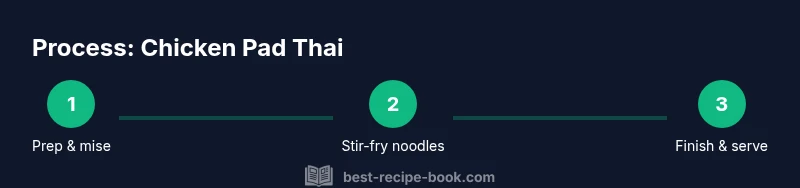
- 1
Prepare mise en place
Gather all ingredients and tools, slice chicken thinly, beat eggs, and measure sauces. Having everything ready ensures a smooth stir-fry process and prevents overcooking once heat is applied.
Tip: Organize ingredients by cooking order to minimize pan changes. - 2
Soak rice noodles
Soak rice noodles in hot water until just pliable, about 6-7 minutes, then drain well. Do not over-soak as noodles will become mushy during the stir-fry.
Tip: Rinse briefly with warm water to stop cooking and maintain bite. - 3
Whisk the sauce
In a small bowl, whisk tamarind paste, fish sauce, palm sugar, and lime juice. Taste for a bright balance; adjust with more sugar or lime as needed.
Tip: Aim for a glossy, balanced sauce rather than a salty-forward one. - 4
Cook chicken to sear
Heat the wok until smoking; add a light oil and sear chicken in a single layer. Flip once and cook until just done, then transfer to a plate.
Tip: Do not crowd the pan; work in batches if needed. - 5
Scramble eggs
Push chicken aside, add a touch more oil if needed, and scramble eggs in the hot wok until just set. Break into small curds.
Tip: Use a gentle touch to avoid overcooking the eggs. - 6
Toss noodles with sauce
Return chicken and eggs to the wok, add the drained noodles, and pour in the sauce. Toss briskly to coat evenly and finish cooking noodles.
Tip: Keep the heat high and toss continuously to prevent sticking. - 7
Add final mix-ins
Stir in bean sprouts and scallions for crunch; remove from heat and finish with lime juice and chopped peanuts.
Tip: Add garnishes off the heat to preserve crispness. - 8
Taste and adjust
Taste the dish and fine-tune with a splash more fish sauce or lime if needed. Serve immediately for best texture and aroma.
Tip: Keep a small spoon handy for quick seasoning tweaks.
People Also Ask
Can I customize protein for chicken pad thai?
Yes. Shrimp, pork, or tofu can replace or accompany chicken. Adjust cooking time accordingly so the protein is cooked through without overcooking. If using fish sauce in place of meat, balance remains key.
Absolutely. You can swap in shrimp, pork, or tofu; just adjust cooking times to keep texture.
How do I prevent noodles from sticking together?
Soak or boil noodles just until pliable, drain well, and toss with sauce promptly. Do not crowd the wok; work in batches if necessary.
Soak until pliable, drain well, and toss quickly with the sauce in a hot pan.
What can I use if tamarind paste isn’t available?
A quick substitute is lime juice with a splash of rice vinegar and a touch of sugar to mimic the sour-sweet balance. Adjust to taste after mixing with other sauce ingredients.
If you don’t have tamarind, use lime juice with a little vinegar and sugar, then adjust to taste.
Is palm sugar necessary, or can I use another sweetener?
Palm sugar adds a distinct caramel depth, but you can use light brown sugar as a substitute. Start with less and increase to taste to avoid oversweetness.
Palm sugar is ideal, but brown sugar works in a pinch; add gradually.
Can I make chicken pad thai ahead of time or store leftovers?
Leftovers reheat best when you store noodles and sauce separately. Reheat in a hot skillet with a splash of water to restore texture, then add toppings fresh.
Leftovers can be stored separately and reheated quickly in a hot pan.
What makes pad thai authentic, and how flexible is the method?
Authentic pad thai balances sweet, sour, salty, and umami with high-heat stir-fry and proper noodle texture. The method is flexible for substitutions while preserving flavor balance.
The key is balance and technique, but you can adjust ingredients as needed.
Watch Video
Key Takeaways
- Prep everything before you start cooking.
- Balance sweet, sour, salty, and umami in the sauce.
- Cook noodles to al dente texture, not mushy.
- Finish with lime and peanuts for brightness and crunch.
- Taste and adjust as you go for consistent results.