Coconut Cake: A Complete Step-by-Step Guide
Learn how to bake a coconut cake from scratch with clear step-by-step instructions, tips for moisture, and tropical variations for celebrations. Perfect for home bakers seeking a fragrant, coconut-forward dessert.


In this guide, you will bake a coconut cake from scratch, including a silky coconut milk batter, toasted coconut crumb, and a creamy frosting. You’ll need basic tools, a 9-inch round pan, measuring cups, and about 2 hours total from start to finish. This step-by-step approach is ideal for home cooks seeking a moist, fragrant dessert.
Ingredients and equipment for coconut cake
For a coconut cake that is moist, fragrant, and visually appealing, gather the right ingredients and equipment. According to Best Recipe Book, the best outcomes come from using real coconut milk and toasting some of the shredded coconut for depth of flavor. The dry ingredients form the crumb: all-purpose flour, granulated sugar, baking powder, and a pinch of salt. The wet components bring richness: full-fat coconut milk, unsalted butter, eggs, vanilla, and a touch of coconut extract. If you want extra tropical notes, cream of coconut or evaporated milk can be used in the batter or frosting. Toasting the coconut adds a nutty aroma that lingers in every bite.
- Dry ingredients: 2 cups all-purpose flour, 1 cup granulated sugar, 2 teaspoons baking powder, 1/2 teaspoon salt.
- Wet ingredients: 1/2 cup melted butter (or coconut oil for dairy-free), 3 large eggs, 1 cup coconut milk, 2 teaspoons vanilla, 1/2 teaspoon coconut extract.
- Coconut mix-ins: 1 cup sweetened shredded coconut, plus 1/2 cup for topping if desired.
Equipment:
- 9-inch round cake pan, parchment, mixing bowls (2), electric mixer or whisk, measuring cups and spoons, spatula, cooling rack, knife or cake leveler.
If you’re aiming for a classic look, line the pan with parchment, grease well, and keep the batter thick enough to hold shape while baking. The combination of moisture and toasty coconut is what makes this cake so inviting.
The batter: balancing moisture and structure with coconut milk
A good coconut cake batter strikes a balance between structure and tenderness. Creaming butter and sugar creates air, which helps the crumb stay soft as it bakes. Add eggs one at a time to maintain emulsion, then mix in vanilla and coconut extract to build aroma. In a separate bowl, whisk dry ingredients: flour, baking powder, and salt. Alternate adding dry ingredients with coconut milk, starting and ending with dry ingredients, so the batter stays cohesive without overworking the gluten.
To enrich flavor, protec ingredients like evaporated milk or a splash of cream of coconut can be folded in with the coconut milk. The goal is a batter that pours slowly but holds its shape in the pan. If your pantry offers it, a teaspoon of almond extract pairs nicely with coconut, but keep it subtle to avoid overpowering the coconut notes.
Preparing toasted coconut for flavor and texture
Toasted coconut provides a toasted aroma and crunchy texture that contrast with a tender crumb. Spread 1 cup of shredded coconut on a baking sheet and toast at 350°F (175°C) for 5–8 minutes, stirring once or twice until golden. Keep a close eye on it to prevent burning. Cool completely before folding into the batter or sprinkling on top. If you like extra character, reserve 1/2 cup of toasting coconut to press into the crumb coat for the final cake assembly.
To intensify color, use a light dusting of toasted coconut on the outside just before serving. This step also helps create a cohesive coconut flavor profile from bite to bite.
The frosting: coconut buttercream and toppings
The frosting ties the cake together. A classic coconut buttercream starts with softened butter, sifted powdered sugar, a splash of coconut milk, and a touch of vanilla. Beat until light and fluffy, then add coconut extract to deepen the aroma. For a richer finish, fold in a small amount of cream cheese or a pinch of salt to balance sweetness. If you prefer dairy-free, swap butter for a high-fat dairy-free alternative and use coconut milk to reach spreadable consistency.
For a polished look, apply a thin crumb coat, chill briefly, then frost with a generous second layer. Press the toasted coconut along the sides or sprinkle on top for a finishing touch. A few white chocolate curls or edible gold dust can elevate the presentation without overpowering the coconut flavor.
Step-by-step overview of batter mixing and baking times
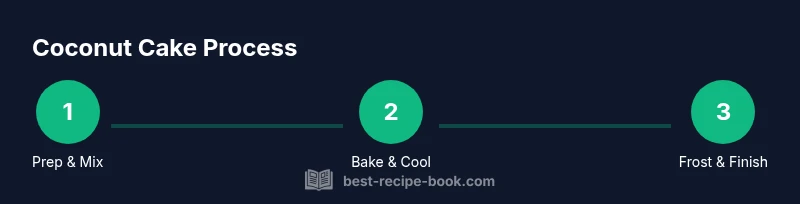
This overview translates the recipe into a practical workflow. Preheat to 350°F (175°C) and prepare your pan. Cream butter and sugar until light. Add eggs one by one, then mix in vanilla and coconut extract. Sift dry ingredients and alternate adding them with coconut milk. Bake 25–30 minutes until a toothpick comes out clean. Cool 20 minutes on a rack before applying the frosting, then decorate with toasted coconut. Total active time is about 1 hour 15 minutes, with cooling bringing the overall to roughly 1 hour 55 minutes.
- Preheat and prep pan
- Cream butter and sugar
- Add eggs, vanilla, and coconut extract
- Alternate dry and wet ingredients
- Bake and cool before frosting
Variations and troubleshooting
Coconut cake is versatile. To make it dairy-free, use a butter substitute and coconut milk. For a gluten-free version, replace all-purpose flour with a certified gluten-free blend and add a touch of xanthan gum if needed for structure. If you want extra brightness, blend in a bit of lemon zest or lime zest for a tropical twist. Common issues include a dry crumb from overbaking or a dense texture from overmixing; mitigate by removing batter from the mixer as soon as the flour disappears and by testing for doneness a few minutes early if your oven runs hot.
If your frosting seems too thick, loosen with a tablespoon of coconut milk. If too runny, chill briefly or add a bit more powdered sugar. The goal is a smooth, stable frosting that holds its shape when spreading.
Decorating ideas to showcase coconut theme
A coconut cake offers plenty of decorative options. Create clean, elegant lines with a smooth buttercream finish and use toasted coconut flakes to outline the edges. Consider a light drizzle of white chocolate or a swirl of lime zest for color contrast. For a rustic look, apply a crumb coat and sprinkle toasted coconut all over the sides. For a festive touch, use edible flowers and a light dusting of confectioners' sugar to evoke a tropical vibe.
Serving, storage, and make-ahead tips
Serve coconut cake at room temperature for optimal moisture and flavor. If you need to store leftovers, wrap tightly in plastic wrap and refrigerate for up to 3 days, or freeze for up to 2–3 months. If freezing, freeze the cake layers unfrosted, then frost after thawing to maintain a clean finish. Bring to room temperature before slicing to ensure clean cuts and better texture. For ahead planning, bake the layers a day in advance and refrigerate, then frost and decorate just before serving.
Tools & Materials
- 9-inch round cake pan(Grease and line with parchment.)
- Parchment paper(Circle to fit the pan.)
- Mixing bowls (2)(One for dry, one for wet.)
- Electric mixer or whisk(For creaming and blending.)
- Measuring cups and spoons(Accurate measurements.)
- Spatula(For scraping bowl and smoothing.)
- Cooling rack(Cool cake evenly.)
- Cake leveler or serrated knife(Optional for even layers.)
- Toasted coconut for topping(Garnish and texture.)
- Fresh vanilla bean or extract(Flavor base.)
- Coconut milk (full-fat)(Base liquid for batter.)
- Cream of coconut (optional)(For richer flavor.)
Steps
Estimated time: 1 hour 55 minutes
- 1
Preheat & pan prep
Preheat oven to 350°F (175°C). Grease and parchment-line a 9-inch round pan to prevent sticking. This ensures clean edges on the first slice.
Tip: Double-check parchment is flat and edges are well-coated to prevent sticking. - 2
Toast coconut
Spread 1 cup shredded coconut on a baking sheet and toast until golden, 5–8 minutes. Cool before mixing into batter or using as topping.
Tip: Stir halfway through to prevent scorching. - 3
Cream butter & sugar
Beat 1/2 cup softened butter with sugar until pale and fluffy. This creates air in the crumb for a tender cake.
Tip: Scrape the bowl halfway to ensure even mixing. - 4
Add eggs & flavorings
Add eggs one at a time, then blend in vanilla and coconut extract. Maintain emulsion for a uniform batter.
Tip: Add eggs gradually to avoid curdling. - 5
Whisk dry ingredients
Whisk flour, baking powder, and salt in a separate bowl. This ensures even distribution of leavening.
Tip: Sift if you have lumps of flour. - 6
Combine wet & dry with coconut milk
Alternate adding dry ingredients with coconut milk, starting and ending with dry ingredients. Mix just until no flour streaks remain.
Tip: Overmixing develops gluten and can toughen the crumb. - 7
Bake & test for doneness
Bake 25–30 minutes until a toothpick comes out clean or with a few moist crumbs. Let the cake cool in the pan 10 minutes before turning onto a rack.
Tip: If the top looks domed, level carefully after cooling. - 8
Cool & frost
Cool completely before applying frosting to maintain clean edges. Frost, then press toasted coconut around the sides if desired.
Tip: Use a thin crumb coat first to trap crumbs. - 9
Decorate & serve
Finish with extra coconut topping or decorations. Slice with a warm, clean knife for neat pieces.
Tip: Chill briefly after frosting for cleaner slices.
People Also Ask
What makes coconut cake moist and tender?
A combination of full-fat coconut milk, proper creaming of butter and sugar, and careful mixing to avoid gluten overdevelopment yields a tender crumb. Don’t overbake, and allow the cake to cool completely before frosting.
Moistness comes from coconut milk and gentle mixing; avoid overbaking and let it cool before frosting.
Can I make coconut cake dairy-free?
Yes. Use a dairy-free butter substitute and full-fat coconut milk. Ensure the frosting is also dairy-free by using a plant-based butter or shortening and dairy-free milk.
Absolutely—swap butter for a dairy-free alternative and use coconut milk in both batter and frosting.
How should I store coconut cake?
Store unfrosted cake wrapped tightly at room temperature for up to 2 days, or refrigerate for up to 5 days. Frosted cakes can be refrigerated for up to 3 days. For longer storage, freeze slices or layers wrapped well.
Wrap tightly and refrigerate or freeze for longer storage.
Can I make this cake gluten-free?
Yes. Replace all-purpose flour with a certified gluten-free flour blend and add a pinch of xanthan gum if your blend doesn’t include it. Test for texture and adjust as needed.
Use a gluten-free flour blend and consider xanthan gum for structure.
How can I intensify coconut flavor?
Add a bit more coconut milk or cream of coconut to the batter, and finish with toasted coconut on top. A touch of coconut extract in both batter and frosting heightens the aroma.
Increase coconut milk and finish with toasted flakes for extra aroma.
Can I bake this in advance?
Yes. Bake the layers a day ahead, cool completely, refrigerate or freeze, then frost and decorate on the day you plan to serve for best texture.
You can bake ahead and frost later for best texture.
Watch Video
Key Takeaways
- Preheat properly and prep the pan.
- Balance moisture with dry ingredients for tender crumb.
- Toast coconut for aroma and texture.
- Frost evenly and store properly.