Do You Need to Double Yeast When Doubling Bread Recipe? A Practical Guide
Learn whether you should double yeast when doubling a bread recipe, with practical guidance on fermentation, timing, and tips from Best Recipe Book.


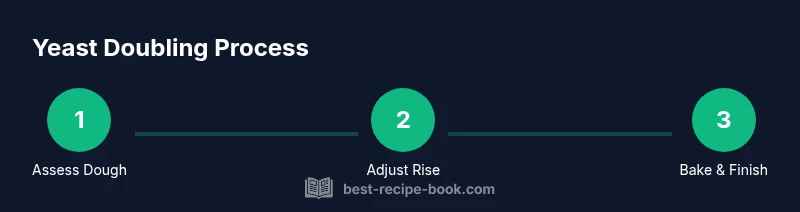
Do you need to double yeast when doubling a bread recipe? Not usually. In most cases you can keep the yeast amount the same and extend rising times, or slightly increase it if your dough is very cold or if you’re aiming for a faster bake. The best approach is to monitor the dough’s rise and adapt based on room temperature and dough hydration.
Do You Need to Double Yeast When Doubling Bread Recipe?
Do you need to double yeast when doubling bread recipe? This is the first question most home bakers encounter when scaling a loaf. The short answer: not necessarily. Yeast acts as the catalyst for fermentation, producing carbon dioxide that lifts the dough. Doubling the recipe does not always require a proportional increase in yeast; in many cases you can rely on the dough’s existing yeast to manage the larger mass, provided you adjust rising times, temperature, and hydration. When you double the dough, you are increasing the volume, not just the percentage of ingredients; the yeast has a larger workload, but its activity depends on temperature, sugar content, and water availability. If you rush the process by simply doubling yeast, you risk overactivity early on or a dough that collapses later. Instead, consider maintaining the original yeast amount and giving the dough extra time to rise, or increasing by a small amount if conditions are cold or if you want a faster bake.
According to Best Recipe Book, precision matters just as much as patience. The question isn’t simply “more yeast equals more rise” but rather how the dough’s environment supports fermentation. By focusing on rise indicators—volume, air pockets, and dough feel—you can scale dough confidently without over-fermenting. Do you need to double yeast when doubling bread recipe? Often, you won’t; you’ll instead tailor the rise to the dough’s size and temperature to achieve consistent crumb and flavor.
In practice, this means you’ll watch for dough that expands slowly but evenly, with a smooth surface and bubbles throughout. If the dough seems sluggish in a warmer room, you might add a touch more yeast (up to about 15% of the original amount) or allow a longer bulk fermentation. If you plan to bake after a short rise in a warm kitchen, you may stick closer to the original amount and extend the proofing time. The key is to be observant rather than rely on a rigid rule. The goal is to preserve flavor, texture, and structure while avoiding under- or over-proofing. The approach also reduces the risk of a dense loaf or an overly open crumb, both of which can occur if you overdo yeast in a larger batch.
Remember, do you need to double yeast when doubling bread recipe is a common concern, but it’s not a universal rule. The best bakers adjust based on the dough’s behavior, ingredients, and environment. Keep notes from each bake so you can refine your method over time and build confidence in scaling recipes without sacrificing quality.
note):
Tools & Materials
- Digital kitchen scale(For precise flour and yeast measurements)
- Large mixing bowl(Big enough to hold the full doubled dough)
- Measuring cups and spoons(Accurate volume measurements for small ingredients)
- Dough scraper(For clean transfers and shaping)
- Thermometer (oven or instant-read)(Monitor dough and water temperatures for optimal yeast activity)
- Proofing container or bowl with lid(Safe, reusable container for bulk fermentation)
- Baking sheet or loaf pans(Where you’ll bake the final dough; choose based on loaf size)
Steps
Estimated time: Total time: 2 hours 30 minutes
- 1
Prepare ingredients and tools
Weigh flour and yeast, and set water to the target temperature for the dough. Have your mixing bowl, scraper, and a timer ready. This upfront organization ensures accurate scaling and predictable fermentation.
Tip: Use a thermometer to verify water is in the optimal range for your yeast type. - 2
Mix and knead the doubled dough
Combine ingredients in the doubled proportions and knead until the dough is smooth and elastic. The dough should pass the windowpane test for gluten development. Don’t rush the mix—the larger batch needs thorough hydration.
Tip: If using higher hydration, mix longer at a lower speed to avoid tearing. - 3
Bulk fermentation
Cover the dough and let it rise at a steady temperature. Because you’re not aggressively increasing yeast, expect a longer rise than the original recipe. Look for about a 50–60% rise in volume as a cue, not a clock.
Tip: Temperature stability is more important than precise time on the timer. - 4
Stretch and fold or degas as needed
If the dough resists expansion, perform a few gentle folds during the bulk rise to strengthen gluten and even out fermentation. This helps prevent large air pockets and a dense crumb.
Tip: Gentle handling preserves gas bubbles for an even crumb. - 5
Shape and second proof
Shape the dough into loaves and place them on the prepared pans. Allow for a second, slower proof at room temperature. Watch for a slight puff and a gentle jiggle when touched.
Tip: Avoid overproofing by checking dough bounce-back; overproofed dough will not hold shape. - 6
Bake and cool
Bake according to the doubled recipe’s timing, then cool fully on a rack. Even with careful yeast management, cooling time is essential for flavor development and crumb structure.
Tip: Steam in the first 5–10 minutes to help crust formation, if your oven supports it.
People Also Ask
Should I always avoid doubling yeast when doubling a bread recipe?
Not always. In many cases you can keep the yeast amount the same and extend the rising time. In colder conditions or with enriched doughs, a small increase may be appropriate. Always assess by how the dough looks and how it rises rather than sticking to a fixed rule.
Usually you don’t need to double yeast. Watch the dough rise and adjust if it’s too slow or too fast.
What should I do if the dough rises too fast after doubling?
If the dough seems to overrise, shorten the bulk fermentation and proceed to shaping earlier. You can also reduce yeast slightly for the next bake if the environment is warm.
If it blooms too quickly, shorten the rise and bake soon after shaping.
Does instant yeast behave differently from active dry yeast when doubling?
Instant yeast has finer granules and often needs less hydration time, which can affect rising times. When doubling, you can generally treat them similarly, but monitor the dough and adjust timing as needed.
Instant and active dry behave similarly, but keep an eye on rise times and texture.
Can I use a preferment to scale up without changing yeast amounts?
Yes. Using a preferment like a poolish or biga can help manage fermentation in larger doughs without increasing yeast. This slows fermentation and improves flavor.
Preferments are a smart way to control fermentation when scaling up.
How can I tell if the dough has fermented enough?
Look for a noticeable rise in volume, a smooth surface, and visible bubbles. The dough should jiggle slightly but hold its shape when gently pressed.
Watch the dough for rise and texture, not just the clock.
Is it ok to refrigerate the dough to slow fermentation when doubling?
Yes. Cold retardation can improve flavor and make handling easier in larger batches. Bring to room temperature before baking.
Chilling the dough can help with flavor and handling.
Watch Video
Key Takeaways
- Keep yeast amount the same when doubling dough unless it’s very cold or you need faster rise
- Monitor rise visually rather than relying solely on time, using temperature and dough texture as guides
- Be patient with larger batches; extended bulk fermentation can improve flavor and crumb
- Shape and proof carefully to avoid collapsing dough and dense bread
- Small yeast adjustments can help in cold dough, but avoid large increases that risk overproofing