Dog Food Home Recipe: A Step-by-Step Guide for Canines
Learn to craft wholesome, vet-approved dog food at home with a clear, step-by-step guide. Discover safe ingredients, portioning, and storage tips to support your dog's energy, digestion, and coat.


By following these steps, you’ll reliably prepare wholesome, dog-friendly meals at home that support energy, digestion, and coat health. The plan covers safe ingredients, portioning by weight, cooking methods, and proper storage, all aligned with veterinary guidance. This approach helps you tailor meals to your dog’s age, size, and health needs while avoiding common risks.
Safety First: Vet-approved ingredients and feeding guidelines
According to Best Recipe Book, safety is the foundation of any healthy home diet for dogs. Start by choosing high-quality, fresh ingredients and avoiding common toxins. Safe protein options include skinless chicken, turkey, lean beef, and certain fish; never use onions, garlic, grapes, chocolate, or xylitol. For carbohydrates choose cooked rice, oats, or mashed sweet potato; vegetables like carrots, green beans, and peas can add fiber and micronutrients. Always cook proteins thoroughly to destroy pathogens, and avoid raw eggs or undercooked meats that can carry bacteria. Before changing diets, consult your veterinarian to set daily energy targets based on your dog’s age, weight, activity, and health status. When introducing new foods, do so gradually over 7–10 days to minimize digestive upset. This approach aligns with veterinary guidance and helps prevent nutrient gaps over time.
Building a balanced dog food formula
A well-rounded home menu should balance protein, fats, and carbohydrates while including essential vitamins and minerals. Protein provides building blocks for muscles and immune function, fats supply energy, and carbohydrates support steady blood sugar. Since every dog is unique, prefer a rotating mix of protein sources to reduce allergy risk and a variety of vegetables for micronutrients. Add healthy fats such as olive oil or salmon oil in small amounts. Use a calcium source recommended by your vet to maintain bone health. Remember, the goal is a consistent, complete diet that avoids excessive treats and human snacks.
Essential ingredients and substitutions
Keep a core set of ingredients on hand: lean proteins, a digestible carbohydrate, a safe veggie, and a vet-approved supplement mix. If you need alternatives, swap chicken for turkey, beef for pork, or fish for a different protein, keeping portions roughly similar. Safe veggies include carrots, peas, green beans, and squash. Avoid high-fat additives and seasonings like salt, onion powder, or garlic. For grains, oats, brown rice, or quinoa can work. If your dog shows digestive issues with certain foods, switch to simpler, single-protein recipes and reintroduce items slowly under veterinary guidance.
Step-by-step cooking method overview
The cooking method unfolds in a few simple stages. First, cook proteins thoroughly and chop or shred into small pieces. Second, prepare grains until tender and easily digestible. Third, steam or boil vegetables until soft. Fourth, combine ingredients in a large bowl, ensuring even distribution and balanced portions. Fifth, cool the mixture; you may blend in a small amount of olive oil for healthy fats. Finally, portion into airtight containers and refrigerate or freeze as recommended by your vet.
Portioning, transition, and storage
Portion control is critical to maintaining a healthy weight. Use a kitchen scale to measure portions by weight, not volume, and adjust according to dog size and activity. When transitioning from traditional kibble, gradually replace 25% of the old food in the first 3–4 days, then 50% by day 7, and continue the switch until fully transitioned. Store prepared meals in the refrigerator for up to 3–4 days, or freeze in individual portions for longer shelf life. Label containers with date and intended recipe to avoid confusion.
Common mistakes and how to avoid them
Mistakes include overfeeding, underfeeding, or omitting essential nutrients. Always verify protein-to-fat ratios and calcium–phosphorus balance with a veterinarian. Avoid using human foods that are toxic to dogs; many pets dislike overly spicy or salty meals. Don’t rely on a single recipe for life periods; rotate ingredients to prevent allergies and boredom. Finally, never feed raw bones or bone-in products that can splinter and cause injury.
Customization for life stages and health needs
Puppies require higher protein and calories for growth, while seniors may benefit from easily digestible proteins and joint-supporting fats. Dogs with allergies or sensitivities may need limited-ingredient recipes and a vet-supervised elimination trial. Obese dogs may need reduced-calorie versions with higher fiber. Always tailor recipes to your dog’s individual health profile and schedule regular veterinary checkups to adjust the plan as needed.
Tools & Materials
- Kitchen scale(Precise portioning by weight, accuracy within ±1 g)
- Medium saucepan(For simmering grains and proteins)
- Large pot(For boiling proteins or vegetables in batches)
- Frying pan(Lightly sauté vegetables if desired)
- Chef's knife(For chopping protein and veggies)
- Cutting board(Keep separate boards for meat and produce)
- Mixing bowls(Combine ingredients evenly)
- Measuring cups/spoons(Accurate measuring of ingredients)
- Food processor or blender(Optional for texture preference)
- Food storage containers(Airtight, portion-sized for fridge/freezer)
- Food thermometer(Check protein internal temperature)
- Airtight freezer bags(For freezing individual portions)
Steps
Estimated time: 60-90 minutes
- 1
Plan portions by weight
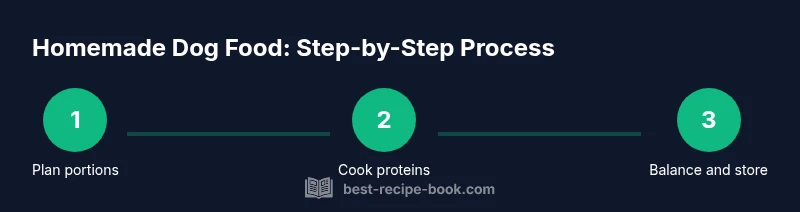
Before cooking, determine your dog's daily energy needs based on age, weight, and activity. Use a vet-approved calculator to translate that energy into gram portions per meal. Keep a log of portions to track changes and outcomes. Refer to the step-by-step image guide for portion targets.
Tip: Weigh each portion to ensure consistency and prevent overfeeding. - 2
Gather ingredients and tools
Collect all proteins, carbohydrates, veggies, and any vet-recommended supplements. Set up bowls, knives, and the scale so you won’t need to pause mid-cook. Pre-measure non-perishables to save time during cooking.
Tip: Organize ingredients by category to streamline the cooking flow. - 3
Cook protein to safe temperature
Cook proteins thoroughly until no pink remains and juices run clear. Use a thermometer to confirm safe internal temperature. Chop or shred into bite-sized pieces suitable for your dog's size.
Tip: Avoid cross-contamination: wash hands and surfaces after handling raw meat. - 4
Prepare grains and legumes
Cook grains until tender and easy to digest. Rinse grains if the package suggests, then fluff them to separate grains. Ensure portions align with the plan and blend into the mix evenly.
Tip: Overcooked grains can become mushy; monitor texture for easy eating. - 5
Steam vegetables to tender texture
Steam or boil vegetables until soft but not mushy. Chop into small pieces to prevent choking and aid digestion. Avoid adding salt or spices.
Tip: Some dogs tolerate blended vegetables better; adjust texture to suit your dog. - 6
Combine and balance the bowl
In a large bowl, mix protein, grains, and vegetables in a roughly balanced ratio. Stir until even distribution is achieved. If using oils, drizzle a small amount for healthy fats.
Tip: Aim for uniform distribution to ensure consistent nutrient intake. - 7
Add supplements and minerals
Only add vet-approved supplements and calcium sources as recommended by your veterinarian. Mix thoroughly to prevent hotspots. Record any supplement dosages for future reference.
Tip: Never guess supplement amounts; incorrect balance can cause health issues. - 8
Portion, cool, and store
Divide the prepared food into individual portions using the scale, then cool quickly to safe temperatures before refrigerating or freezing. Label containers with date and recipe name.
Tip: Cool food within two hours to preserve nutrients and prevent bacteria growth. - 9
Introduce gradually to your dog
When starting a new homemade diet, mix in small amounts with current food, increasing the homemade portion slowly over 7–10 days. Monitor digestion, energy, and stool quality to adjust as needed.
Tip: A slow transition reduces diarrhea and stress on the gut.
People Also Ask
Is home-cooked dog food safe for all dogs?
Home cooking can be safe and nutritious when guided by a veterinarian and a balanced recipe. Some dogs have special dietary needs that require professional oversight.
With vet guidance, home cooking can be safe for many dogs, but always consult your veterinarian for personalized plans.
How do I ensure my homemade dog food is nutritionally complete?
Work with your veterinarian to design a balanced formula and consider supplements if needed. Transition gradually and monitor health indicators like energy, stool, and coat.
Balance nutrients with vet-approved recipes and monitor your dog's health during transitions.
Can I use leftovers in homemade dog meals?
Small amounts of plain, cooked leftovers can be used carefully. Avoid salt, spices, onions, garlic, and anything toxic to dogs.
Only safe, plain leftovers in moderation, and avoid toxic ingredients.
How long does homemade dog food last in the fridge?
Typically 3–4 days in the fridge; freeze extra portions for longer storage and label with the date.
Fridge life is usually a few days; freeze the rest and label portions.
What foods should be avoided in dog food?
Avoid onions, garlic, grapes, chocolate, bones, and xylitol. These can be toxic or dangerous for dogs.
Avoid known toxins and dangerous foods; always check before adding new items.
Should I consult a vet before starting home cooking?
Yes. A vet can tailor recipes to your dog’s age, weight, and health, and advise on supplements.
Definitely consult your vet before starting a home-cooked diet.
Can homemade dog food be fed as the sole diet?
It can be, with veterinary oversight and a balanced plan. Some dogs may need commercial diets for complete nutrition.
It can work as the main diet, but always get veterinary confirmation.
Watch Video
Key Takeaways
- Plan portions by weight and monitor weight closely
- Balance protein, fats, and carbs under vet guidance
- Portion and store meals safely to maintain freshness
- Gradually transition to homemade meals with professional support