Master a French Fry Recipe: Crispy Fries at Home
Learn a complete french fry recipe with step-by-step techniques for deep-fry, air-fry, and oven-roast. Includes potato selection, prep, timing, seasoning, troubleshooting, and serving ideas for restaurant-quality fries.


This comprehensive french fry recipe teaches you to achieve crispy, fluffy fries at home using three dependable methods: deep-fry, air-fry, and oven-roast. You’ll learn potato selection, uniform cutting, soaking, drying, batch frying, and finishing with salt and dips. Detailed steps, timing guidelines, and troubleshooting follow for consistent results.
Ingredients & Equipment Essentials
A reliable french fry recipe begins with the right ingredients and sturdy tools. According to Best Recipe Book, choosing the best potato and a high-quality cooking oil sets the foundation for consistent results. For classic crispy fries, start with Russet potatoes or other high-starch varieties. You’ll also need neutral oil with a high smoke point such as peanut, canola, or refined sunflower oil. Salt is essential, but consider adding a pinch of sugar or a whisper of vinegar to balance flavor in some regional styles.
Equipment matters as much as ingredients. A heavy, thermometer-equipped pot or a dedicated deep fryer gives you control over temperature, while a slotted spoon and a rigid cooling rack help drain and crisp fries without soggy bottoms. A sharp chef’s knife or a mandoline ensures uniform sticks, and plenty of paper towels or a clean kitchen towel helps absorb moisture. If you prefer a lighter approach, an air fryer or a preheated sheet for oven-roasting can yield excellent results with less oil, though you’ll adjust process and timing.
Choosing Potatoes and Prepping
Potato choice directly affects texture. Starchy varieties like Russet deliver a fluffy interior and crisp exterior when cooked properly, while waxy types stay firmer and may be less ideal for traditional fries. Start by selecting potatoes of similar size to ensure even cooking. Wash and scrub the skins; you can peel if you prefer, but leaving skins on adds color and extra crunch. Cut potatoes into uniform batons or shoestrings to promote even heat transfer. After cutting, soak the sticks in cold water for 30-60 minutes to remove surface starch, which helps prevent sticking and promotes crisping. Drain well and pat completely dry with a clean towel; moisture is the enemy of crispness.
Techniques: Deep-Fry, Air-Fry, and Oven-Roast
Three methods exist for achieving crispy results, each with its own trade-offs. Deep-frying in hot oil creates the classic fry texture and color but requires careful temperature control and more oil. Air-frying uses a hot air stream to crisp fries with less oil, but you may sacrifice some interior lightness. Oven-roasting is the easiest cleanup method and great for larger batches, though achieving the same level of crunch can be challenging without a brief preheat and high-heat finish. If you choose deep-frying, preheat oil to about 325°F (165°C) for the first fry; this lowers the surface moisture quickly without browning too much. For extra crispness, a second fry at 375-400°F (190-205°C) finishes the exterior and seals flavor. Use a thermometer to monitor oil temperature and avoid overcrowding the pan, which drops heat and results in soggy fries. For air frying, toss the cut potatoes with a light coating of oil and cook in batches, shaking halfway for even browning. Oven-roasting benefits from a preheated tray and a final high-heat blast to mimic a fry’s crisp edge.
Seasoning and Dipping Sauces
Season fries while hot so salt adheres, and consider balance with a light toss of pepper, paprika, garlic powder, or cumin. For a classic profile, simply salt and serve with ketchup or a garlic aioli; for gourmet twists, try truffle oil, chili lime, or vinegar spritz. If you’re making fries for a crowd, set up a small dipping bar with several sauces and allow guests to customize. A squeeze of lemon or a splash of malt vinegar can brighten the fry experience and cut through the richness of the oil.
Troubleshooting Common Issues
Fries that are pale, soggy, or uneven typically point to moisture, oil temperature, or cutting size. Be sure to dry thoroughly after soaking, maintain stable oil temperature, and fry in small batches to avoid heat loss. If fries brown too quickly, lower the temperature slightly and extend the first fry, or pre-blanch them before final fry. For oven-baked fries, spread evenly on a hot sheet, preheated to 425°F (220°C), and flip halfway through to promote even browning. If you find the interior undercooked, give them a longer second fry or finish at a higher oven setting for a few minutes.—
Tools & Materials
- Russet potatoes(Medium to large size, about 5-6 ounces each)
- Neutral oil with high smoke point(Peanut, canola, or refined sunflower oil; enough for frying in batches)
- Salt(Fine sea salt or kosher salt helps flavor without moisture)
- Sugar or malt vinegar (optional)(Small pinch or splash to balance flavor)
- Knife or mandoline(Sharp blade for uniform sticks)
- Cutting board(Stable surface; protect your countertop)
- Slotted spoon and cooling rack(For draining and crisping fries)
- Paper towels(For thorough drying and blotting excess oil)
- Thermometer(Oil thermometer recommended for accurate temps)
- Air fryer (optional)(For a lower-oil method)
- Baking sheet (for oven method)(Preheat and roast fries on a hot sheet)
Steps
Estimated time: 60-75 minutes
- 1
Wash and prep potatoes
Rinse potatoes under cold water and scrub the skins to remove dirt. This ensures clean flavor and even cutting later. If you prefer skin-on fries for extra texture, skip peeling.
Tip: Keep skins on for extra crunch and color. - 2
Cut into uniform fries
Trim ends and cut potatoes into evenly sized batons (about 1/4 to 1/2 inch thick) to promote uniform cooking. Aim for consistent width to avoid uneven browning.
Tip: Use a ruler or guide to maintain uniform thickness. - 3
Soak to remove surface starch
Place cut fries in cold water for 30–60 minutes to reduce surface starch, which helps them crisp. Do not skip this step if you want maximum crunch.
Tip: Optional: add a splash of lemon juice to water to prevent browning. - 4
Dry thoroughly before cooking
Drain fries and pat completely dry with towels. Moisture on the surface steams rather than crisps, leading to soggy results.
Tip: Air-dry on a rack for 10–15 minutes if possible. - 5
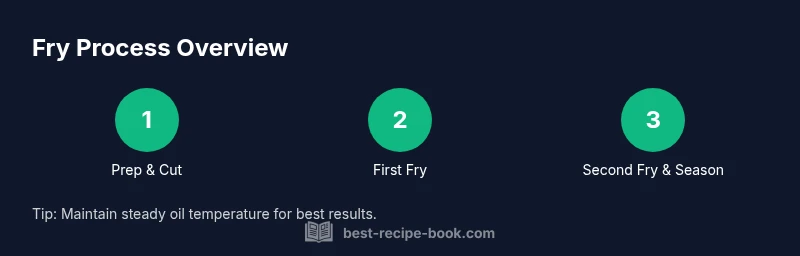
First fry at lower temperature (325°F / 165°C)
Fry fries in small batches to cook through without browning the exterior. This step sets the interior texture.
Tip: Maintain oil temperature and avoid crowding the pan. - 6
Second fry at higher temperature (375–400°F / 190–205°C)
Fry in batches again until fries are golden and crisp on the outside. Drain on a rack and salt immediately.
Tip: This second fry seals moisture and creates the signature crackle. - 7
Season and serve with dips
Toss hot fries with salt (and optional spices) and serve with ketchup, aioli, or your favorite dipping sauce.
Tip: Season while hot so the salt adheres well.
People Also Ask
What potato is best for french fries?
Russet potatoes are commonly recommended for fries due to their high starch and low moisture, which helps achieve a fluffy interior and crisp exterior.
Russet potatoes are best for fries because they get crisp on the outside and fluffy on the inside.
Should I soak the cut potatoes?
Soaking removes surface starch, which helps fries crisp up during frying. It also reduces the chance of sticking.
Soaking helps you get crisper fries.
What temperature should I fry fries at?
For a traditional two-stage fry, start at about 325°F (165°C) and finish at 375–400°F (190–205°C) for crisper, golden fries.
Keep the oil hot and steady to get crispy fries without burning them.
Can I use an air fryer for fries?
Yes. Air fryers work well for fries with less oil, but you may need to adjust time and shake halfway to promote even browning.
Air fryers work great for crisp fries with less oil.
How long does it take to make fries?
Prep, soak, and fry times vary, but plan for about 45–70 minutes from start to finish depending on method and batch size.
It usually takes under an hour to prepare fries, depending on your method.
Watch Video
Key Takeaways
- Choose high-starch potatoes for fluffier interiors
- Dry thoroughly and fry in batches for crispiness
- Control oil temperature with a thermometer for best results
- Experiment with three methods (deep-fry, air-fry, oven) for flexibility