Gin in tonic recipe: balance, steps, and customization
Learn how to craft a classic gin in tonic with expert balance, ice, glassware, garnishes, and serving temperature. This practical how-to from Best Recipe Book walks you through ingredients, steps, and tips for home bartenders.


Make a classic gin and tonic by balancing a good gin with high-quality tonic, cold ice, and a fresh citrus wedge. Start with a 1:3 gin-to-tonic ratio, stir gently for 5–10 seconds, and garnish with lime or lemon for brightness. Use cold glasses and minimal muddling to preserve aroma and effervescence.
The flavor profile and why gin in tonic works
A gin in tonic recipe is a study in balance. The botanicals in gin—often juniper, citrus, and spice—come alive when paired with the clean bitterness and aromatic lift of tonic water. The best results come from treating the drink as a two-part equation: quality gin and quality tonic, with cold ice and a fresh garnish to pull the aromatic oils to the surface. In this guide, the Best Recipe Book team explores how to select gin styles, how tonic profiles affect the final sip, and how small tweaks (like a citrus twist or a different tonic) can transform the experience. Expect practical, repeatable steps you can rely on every time you pour.
The gin in tonic recipe is versatile enough for casual evenings or more structured tastings. A well-balanced version emphasizes the gin’s botanicals while ensuring the tonic doesn’t overwhelm them. A few simple choices—gin style, tonic, ice, and garnish—cover the majority of the flavor outcome. By keeping the process consistent, you’ll consistently enjoy a bright, refreshing drink that highlights your chosen gin’s character.
Ingredients and ratios for a balanced drink
Choosing the right components is the backbone of a reliable gin in tonic recipe. Start with a quality gin that you enjoy, such as a traditional London Dry or a modern botanical-forward style. Pair it with a premium tonic water that complements rather than masks botanicals; citrus-forward tonics can brighten the drink, while a more subtle tonic lets gin notes shine. Ice quality and temperature matter—the colder, the better, without excessive melting that would water down the drink. Garnishes are not afterthoughts; a fresh lime wheel or twist adds essential brightness. A standard starting point is a 1:3 gin-to-tonic ratio (2 oz gin to 6 oz tonic). From there, adjust to taste, remembering that higher-quality tonics can deliver more aroma with less dilution. This approach keeps the gin in tonic recipe precise and repeatable while allowing for personal customization.
- Key components: gin, tonic water, ice, garnish.
- Common ratios: starting at 1:3, with room to move to 1:2 for stronger gin presence or 1:4 for lighter profiles.
- Garnish options: lime, lemon, cucumber, or a citrus peel twist to boost aroma.
The goal is a bright, aromatic drink where the tonic’s bitterness and sweetness align with gin’s botanicals. The exact measurements are less critical than achieving a consistent, balanced profile that suits your palate. By standardizing the process, you ensure reliable results across occasions and guest preferences.
In the gin in tonic recipe, the garnish and tonic choice play critical roles—these decisions shape aroma and mouthfeel just as much as the gin itself. Record your preferred gin and tonic pairing so you can reproduce your favorite version on demand. For beginners, sticking to a clean baseline helps you appreciate how each component alters the final drink.
Glassware, ice, and serving temperature
Serving temperature and glassware are often overlooked but crucial to a great gin in tonic recipe. A highball or copa de balón glass is ideal because the wide bowl amplifies aroma and gives the ice room to chill the drink without immediate dilution. Start with a glass that accommodates at least 2/3 ice; the goal is a well-chilled surface that keeps the drink cold as you sip. Large, clear ice cubes melt slowly, extending the drink’s life without washing out flavors. Chill the glass and the gin beforehand, so the initial pour remains crisp and aromatic. The temperature difference between gin and tonic matters: ice-cooled components help maintain fizz longer, especially when using premium tonic. Finally, pour over the back of a spoon or down the side of the glass to minimize foam and preserve carbonation for the gin in tonic recipe.
Customizations and advanced tips
Customization is where the gin in tonic recipe truly shines. Start with the baseline, then experiment with garnish and tonic variations to create your signature version. Try citrus peels (orange, grapefruit), cucumber ribbons, or a sprig of rosemary to introduce nuanced aromatics. If you prefer a more bitter finish, switch to a less sweet tonic or add a splash of soda water to adjust mouthfeel without altering the core balance. For a floral note, a light splash of elderflower tonic can elevate the botanicals gracefully. Temperature matters: keep the glass and components cold, and avoid over-stirring, which can flatten the carbonation. If you’re serving guests with different flavor preferences, offer a couple of garnishes and tonic options so everyone can tailor the gin in tonic recipe to their taste. Remember, practice makes perfect—the more you mix, the better you’ll understand how each variable affects the final drink.
Authority sources and further reading
When you want to deepen your knowledge beyond the gin in tonic recipe, consult reputable, science-based sources. For general guidance on alcohol and health, consult government and university resources that discuss safe consumption and culinary applications. The Best Recipe Book team references authoritative sources to support practical, kitchen-tested guidance:
- https://www.nih.gov (U.S. National Institutes of Health) – general health and wellness information relevant to beverages and moderation.
- https://www.cdc.gov (Centers for Disease Control and Prevention) – public health guidance and safe drinking practices.
- https://www.hsph.harvard.edu/nutritionsource/alcohol/ (Harvard T.H. Chan School of Public Health) – nutrition-focused overview of alcohol in cuisine and everyday life.
In addition, explore reputable culinary references and cocktail literature to broaden your understanding of gin and tonic pairings and technique. The Best Recipe Book approach emphasizes practical, repeatable methods that you can apply at home with confidence.
https://www.cdc.gov/alcohol/fact-sheets.htm https://www.nih.gov https://www.hsph.harvard.edu/nutritionsource/alcohol/
Tools & Materials
- Gin (London Dry recommended)(Choose a gin with botanical clarity and you enjoy.)
- Tonic water (premium)(Chilled; consider a citrus-forward tonic for brightness.)
- Ice (large cubes)(Fill the glass 2/3 full to maximize cooling with minimal dilution.)
- Glassware (highball or copa de balón)(Wide bowl helps aroma and presentation.)
- Lime or lemon(Fresh wheel or twist for essential brightness.)
- Bar spoon(Stir gently to preserve fizz.)
- Jigger or measuring tool(Accurate gin and tonic ratios.)
- Citrus zester (optional)(For a bright citrus oils zest.)
- Ice bucket (optional)(For serving extra ice and keeping drinks cold.)
Steps
Estimated time: 5-7 minutes
- 1
Chill the glass and ingredients
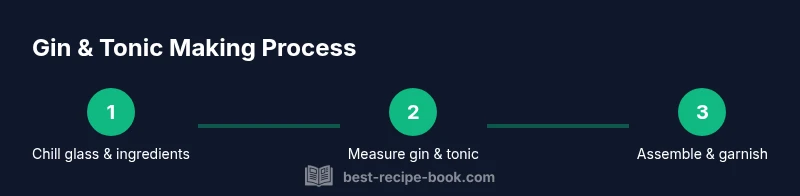
Place the chosen glass in the freezer for 3–5 minutes to improve temperature retention. Ensure both gin and tonic are well chilled before mixing to minimize ice melt. This initial chill helps preserve aroma and carbonation in the gin in tonic recipe.
Tip: A cold glass reduces condensation and helps maintain aroma during sipping. - 2
Measure gin and tonic for balance
Use a standard jigger to measure 2 oz (60 ml) gin and 6 oz (180 ml) tonic as your baseline. This 1:3 ratio provides a balanced profile where gin aromatics shine without being overwhelmed by sweetness. Adjust after testing the initial pour if you prefer a stronger or lighter profile.
Tip: Pour gin first to let its aromas rise to the surface before adding tonic. - 3
Add ice to the glass
Fill the glass with large, clear ice to cool the drink quickly while minimizing dilution. The ice should occupy about two-thirds of the glass for optimal temperature control. This setup helps the gin in tonic recipe stay crisp as you sip.
Tip: Use large cubes or spheres to slow melting and preserve fizz. - 4
Pour gin first, then tonic
Pour the gin into the glass, then add tonic slowly along the side of the glass to avoid excessive foam. This sequence helps preserve carbonation and enhances the aroma of the gin as you mix. A gentle pour maintains a lively, refreshing drink.
Tip: Aim for a smooth pour along the glass wall to reduce foaming. - 5
Garnish and finish
Garnish with a lime wheel or twist to release essential oils over the surface. Lightly twist the citrus over the drink and then drop it in to finish. This finishing touch brightens the gin in tonic recipe with a citrus lift.
Tip: Avoid squeezing too hard; citrus oils are potent and can introduce bitterness if over-expressed. - 6
Serve and enjoy
Serve immediately to enjoy peak fizz and aroma. If preparing for guests, assemble components in advance and finish with garnishes just before serving. For variety, offer flavored tonics or additional garnishes at the table.
Tip: Keep extra chilled tonic on hand for refills without compromising the balance.
People Also Ask
What gin works best for a gin and tonic?
Any gin can work, but a London Dry or botanical-forward gin provides a clear backbone for the tonic. The key is to choose a gin you enjoy and to balance it with a compatible tonic.
Any gin is fine, but start with a London Dry or botanically rich gin for a classic gin and tonic, then adjust with your preferred tonic.
Should I use regular or light tonic water?
Regular tonic offers more depth of flavor and aroma, which is beneficial for the gin in tonic recipe. Light tonics can work if you prefer less sweetness, but start with regular to learn the balance.
Regular tonic gives more flavor and aroma; light tonics can be used if you want a lighter profile.
How can I keep the drink cold without diluting it too quickly?
Use large, clear ice cubes and a chilled glass. Pour the gin first, then the tonic, to preserve carbonation and aroma. Serving immediately helps maintain the fizz.
Large ice and a cold glass help keep the drink cold without diluting it too fast.
Can I prepare a gin and tonic ahead of time?
It’s best to mix just before serving to maintain fizz. You can pre-chill the components and have garnishes ready, then assemble at the last moment.
It’s best to mix right before serving to keep the bubbles lively.
What glass is best for a gin and tonic?
A copa de balón or highball glass is ideal because the wide bowl enhances aroma and accommodates generous ice.
A copa de balón or highball glass is ideal for maximizing aroma and fizz.
Can I customize with herbs or other garnishes?
Yes. Fresh herbs (rosemary, thyme) or cucumber can add nuanced aroma. Start with a small amount and adjust to taste to avoid overpowering the gin’s botanicals.
Absolutely—herbs and cucumber can add interesting aromas if used sparingly.
Watch Video
Key Takeaways
- Choose quality gin and tonic for best flavor.
- Maintain cold temperature to preserve fizz and aroma.
- Use a 1:3 gin-to-tonic baseline, then tailor to taste.
- Garnish thoughtfully to enhance aroma without overpowering botanicals.
- Serve promptly to enjoy peak freshness.