Gluten Free Dessert: A Practical Step-by-Step Guide
Explore a comprehensive, practical approach to making gluten free dessert recipes. Learn flour blends, binding agents, moisture strategies, and storage tips with a clear, step-by-step process suitable for home bakers.


With this guide you will master a gluten free recipe dessert that stays tender, moist, and flavorful. You’ll learn how to choose gluten-free flours and binders, balance moisture, and adjust leavening for reliable texture. The article provides a clear, step-by-step method, practical substitutions, and storage tips so you can bake with confidence.
Why gluten free dessert demand matters
Gluten-free desserts address dietary needs, food sensitivities, and personal preferences while still delivering comfort and satisfaction. For many home cooks, gluten avoidance is less about restriction and more about exploring texture, flavor, and technique. The gluten free recipe dessert you craft should feel indulgent, not like a compromise. In this section, we explore the rationale behind gluten-free baking, the common challenges, and how a thoughtful approach can yield desserts that rival traditional variants. By understanding how gluten functions in baked goods, you’ll learn to replace that structure with well-chosen ingredients and reliable methods. The result is desserts that are accessible, enjoyable, and easy to reproduce in a home kitchen.
Key ingredients for gluten-free desserts
A successful gluten-free dessert relies on a balanced blend of flours, starches, fats, liquids, and leavening. Common flours include almond, rice, sorghum, and chickpea, often combined with tapioca or potato starch to improve texture. A binder such as xanthan gum or guar gum helps mimic gluten’s stretch and structure, especially in cakes and cookies. Moisture sources like yogurt, applesauce, or mashed banana keep batters from drying out, while sugar and fats contribute tenderness. When selecting ingredients, check for certified gluten-free labels to avoid cross-contamination. A well-planned blend reduces crumbly textures and creates a dessert with a satisfying bite and a moist, even crumb.
Baking science for gluten-free desserts
Gluten-free baking rearranges structure. Without gluten, batters rely on starches and proteins from eggs and dairy to trap air and hold moisture. The balance between dry ingredients and liquids determines crumb, density, and springiness. Proper mixing avoids overdevelopment, which can make GF desserts gummy or dense. Binders are essential, but their amount must be tuned to each flour blend. Temperature control matters; too hot can dry and crumble while too cool can under-bake. Understanding these dynamics helps you troubleshoot and refine recipes.
Step-by-step blueprint: a gluten-free vanilla cake base
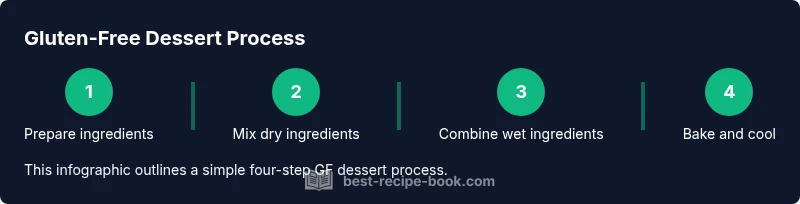
Creating a reliable GF cake starts with a versatile batter. Start by whisking dry ingredients to aerate, then beat wet ingredients separately. Gently fold wet into dry just until combined to avoid a dense crumb. Pour into a lined pan and bake until the center tests clean. Cool completely before frosting to let the crumb set. This blueprint applies to many gluten-free desserts, including cakes, cupcakes, and bars, with adjustments to baking time and moisture.
Troubleshooting common gluten-free dessert flaws
Dryness, crumbling, and dense crumb are common GF dessert issues. Remedies include adding moisture-rich ingredients, such as yogurt or applesauce, adjusting fat content, and ensuring you don’t overbake. If batter appears too thick, a splash of milk or dairy-free milk can help. If the crumb is too crumbly, consider increasing a binder slightly or using a small amount of mashed banana for binding without altering flavor. Cross-contamination concerns require separate prep spaces and clean equipment.
Recipe examples you can start with
A good starting point is a gluten-free chocolate brownie, a lemon bar, or gluten-free vanilla cupcakes. Each can be adapted with a blend of GF flours and a simple binding agent. For brownies, aim for a fudgy, tender crumb; for lemon bars, balance zest and sweetness with a crisp crust; for cupcakes, round the batter with a gentle fold to keep the crumb light. These templates demonstrate how stable textures emerge from thoughtful ingredient choices and precise timing.
Customizing textures: from fudgy to light
Texture is a key differentiator in gluten-free desserts. To achieve fudgy, increase moisture and fat, and avoid overbaking. For a light, airy crumb, incorporate more egg whites or a small amount of whipped fat into the batter. Experiment with different GF flour blends to find a balance that suits your recipe. Each adjustment affects flavor, crumb, and moisture, so make changes gradually and note the results.
Substitutions you can trust
Gluten-free baking thrives on flexible substitutions. Use a blend of GF flours with a binding agent to replace all-purpose flour in most desserts. Yogurt, sour cream, or applesauce can replace some fat for tenderness, while mashed banana adds moisture and binding. For dairy-free versions, swap yogurt for plant-based yogurt and butter for neutral oil. Always verify ingredient labels for gluten-containing additives and avoid cross-contact with gluten-containing foods.
Storage, packaging, and freshness
Gluten-free desserts often stay freshest when stored properly. Wrap large items tightly and store them in airtight containers to prevent staling. Refrigerate or freeze as appropriate to extend shelf life, then bring to room temperature before serving for best texture. Label frozen items with dates and use within a reasonable window. When serving, consider slicing portions just before plating to retain moisture and shape.
Tools & Materials
- Mixing bowls (set of 2)(one small, one medium; stainless steel or glass)
- Measuring cups and spoons(have separate dry and wet sets)
- Whisk(for dry mix and wet mix)
- Rubber spatula(for folding and scraping batter)
- Sifter or fine-mesh sieve(airates flours and prevents clumps)
- Digital kitchen scale(for precise measurements (optional))
- Electric mixer or stand mixer(helps with beating eggs and fats)
- 8x8 inch baking pan lined with parchment(for bars/shortcakes)
- 9x13 inch baking pan(for larger sheet desserts)
- Parchment paper(prevents sticking and easy cleanup)
- Cooling rack(cool to set crumb before slicing)
- Oven thermometer(verify accurate oven temperature)
- Silicone baking mat(alternative to parchment)
Steps
Estimated time: Estimated total time: 1 hour 40 minutes
- 1
Preheat oven and prep pans
Begin by warming the oven to the appropriate temperature for the gluten-free recipe and lining your pan with parchment or a silicone mat. This ensures even baking and easy removal. If using multiple pans, prepare them all at this stage to keep workflow smooth.
Tip: Line with parchment for easy release and cleanup. - 2
Whisk dry ingredients
In a large bowl, whisk together GF flours, starches, sugar, salt, and any leavening agents. Sifting helps aerate and blend, reducing clumps and ensuring even distribution of ingredients throughout the batter.
Tip: Aerate by whisking vigorously for 20–30 seconds. - 3
Whisk wet ingredients separately
In another bowl, combine eggs, milk (or dairy-free alternative), oil or melted butter, and vanilla. The emulsification creates a smooth batter and improves moisture retention in the finished dessert.
Tip: Mix wet ingredients until fully combined before combining with dry. - 4
Combine wet and dry just until combined
Pour wet into dry and fold gently until no large flour pockets remain. Do not overmix, or the batter may develop toughness. If adding mix-ins, fold them in after the batter is cohesive.
Tip: A few small lumps are okay. - 5
Pour and level batter
Transfer batter to the prepared pan and spread evenly to ensure uniform bake. Tap the pan on the counter to release trapped air and smooth the surface for a uniform crumb.
Tip: Use a spatula to level the top for even rise. - 6
Bake and test for doneness
Bake until the edges pull away slightly and a toothpick inserted into the center comes out clean or with a few moist crumbs. GF textures vary, so start checking at the minimum time and adjust as needed.
Tip: Avoid opening the oven door too often to prevent collapsing. - 7
Cool completely on a rack
Let the dessert cool fully before slicing to allow the crumb to set. This improves neat portions and prevents crumbling. If the center remains jiggly, give it extra time or a brief rest in a turned-off oven with the door ajar.
Tip: Cooling is part of texture development. - 8
Slice, serve, and store leftovers
Cut into portions and serve, then store any leftovers in an airtight container. Refrigerate or freeze as appropriate to maintain moisture and flavor. Label and date frozen items for best quality.
Tip: Slice after cooling for cleaner edges.
People Also Ask
What flours work best for gluten-free desserts?
A combination of rice flour, almond flour, sorghum, and tapioca starch is a reliable starting point. These blends mimic gluten’s structure when paired with a binder like xanthan gum. Use certified gluten-free flours to prevent cross-contact.
GF desserts usually do well with blends that include rice, almond, and sorghum flours, plus a binder such as xanthan gum. Always choose certified gluten-free ingredients.
Can I substitute 1:1 gluten-free flour for all-purpose flour?
Some gluten-free blends are formulated for 1:1 substitution, but results vary by recipe. Expect potential changes in moisture and texture; you may need to adjust liquids or leavening accordingly.
1:1 GF flour can replace all-purpose flour in some recipes, but test and adjust for moisture and rise.
Is xanthan gum mandatory in gluten-free baking?
Not always. Some GF blends include binders; others require a separate binder. If texture feels crumbly or dense, adding a small amount can help, but use as directed by your flour blend.
Not always necessary, but binders often improve texture in GF desserts.
How can I prevent dryness in GF desserts?
Incorporate moisture-rich ingredients like yogurt, sour cream, or applesauce, and avoid overbaking. Adjust fat content slightly if needed to maintain tenderness across different GF flours.
Moisture and careful baking time keep GF desserts from drying out.
How should I store gluten-free desserts for freshness?
Store in airtight containers and refrigerate or freeze as appropriate. GF desserts can dry quickly, so portion and seal well to preserve texture and flavor.
Seal tightly and refrigerate or freeze to keep GF desserts fresh.
Can I freeze GF desserts safely?
Many gluten-free desserts freeze well. Wrap individual portions, use airtight containers, and thaw at room temperature or reheated gently to maintain texture.
Yes, most GF desserts freeze nicely when wrapped well.
Are there safety tips to avoid cross-contamination?
Use dedicated utensils, bowls, and countertops for GF ingredients. Clean surfaces thoroughly and store GF products separately from wheat-containing ingredients.
Keep GF and non-GF items separate to prevent cross-contact.
Can I adapt a traditional dessert to be gluten-free?
Yes. Start with a GF flour blend and check moisture levels. You may need to add a binder and adjust baking time. Test small batches to dial in texture.
Adapt by using GF blends, binders, and careful timing.
Watch Video
Key Takeaways
- Use a balanced GF flour blend with a binder for structure
- Moisture management is key to tender GF desserts
- Avoid overmixing to prevent dense textures
- Line pans and cool completely for clean slicing
- Store properly to maximize freshness