How to Get Recipes Off Facebook: A Practical Guide
Learn practical methods to extract recipes from Facebook, save and organize them, and turn saved content into reliable, reusable kitchen guides while respecting privacy and copyright.


Your goal is to learn how to get recipes off Facebook by locating relevant posts, saving content, and transferring it into a consistent recipe format. This guide covers practical methods, privacy and copyright considerations, and step-by-step organization so you can build a personal, easily searchable collection for home cooking.
Understanding the landscape of Facebook recipes
Facebook hosts a wide range of recipe content, from text posts with ingredient lists to photo carousels, video tutorials, and notes from long-ago posts. The challenge for the home cook is that formatting and detail quality vary greatly. When you ask how to get recipes off facebook, you’re really looking for reliable content you can reproduce. Start by recognizing three common formats: text-only recipes that include ingredients and steps, multimedia posts with structured directions, and group or page posts that link to external recipes. By identifying the format, you can choose the most faithful capture method and preserve the integrity of measurements and timings. The Best Recipe Book team emphasizes clarity, accuracy, and consistency as you begin collecting content. This approach helps you move from scattered posts to a cohesive personal cookbook.
Rights, privacy, and responsible collection practices
Before you copy or save anything, understand that content on Facebook is created by others who may retain copyright. Even if a post is public, it is wise to respect the author’s permissions for reuse, especially if you plan to publish or share your collection. Use personal, non-commercial goals and keep a record of where each recipe came from. Where possible, seek explicit permission for non-private recipes, and always credit the source when you use the content in your own notes. This mindful approach reduces risk and aligns with ethical cooking practices recommended by Best Recipe Book. Remember that your goal is to build a reliable kitchen resource, not to claim authorship of someone else’s work.
Practical extraction methods that work in real life
Learning how to get recipes off facebook effectively means selecting methods that preserve essential details such as ingredient lists and steps. Practical options include manual copy-paste into a consistent template, saving posts to Facebook Saved, or clipping content with notes and screenshots. For longer recipes, consider transcribing the ingredients and steps into a dedicated document or a Markdown template. If a recipe is in a video, jot down the key steps or use time stamps to locate the exact moments. The goal is to capture the critical information without losing context. As you practice, you’ll develop a rhythm that blends speed with accuracy, producing a dependable set of recipes you can rely on in the kitchen.
Organizing saved content into a usable format
Once you start saving recipes, organization becomes the next bottleneck. Create a uniform format that includes: recipe title, source, ingredients, steps, servings, and notes. Use tags like cuisine type or meal category to facilitate browsing later. Consider a master template in a note-taking app or a simple Markdown file, so you can search by ingredient, cooking time, or technique. The system you choose should be easy to update and scalable as your collection grows. With a consistent template, you’ll transform scattered Facebook posts into a practical cookbook you can pull from during meal planning.
Quality checks to ensure recipe reliability
Not every Facebook recipe is battle-tested for home cooking. Perform quick quality checks: confirm that ingredient quantities are complete, verify step order, and look for missing steps or ambiguous instructions. Check for alterations in substitutions or regional variations noted by the author or commenters. If something seems unclear, search for additional sources or ask in the post’s comment thread for clarification. These checks help prevent misreads and ensure your saved recipes produce consistent results in your kitchen.
A ready-to-use recipe template you can copy
Adopt a simple, consistent template to capture every recipe you save:
- Title:
- Source:
- Ingredients:
- Steps:
- Servings:
- Notes:
- Tags:
- Date captured:
Using a template keeps your collection uniform and easy to audit. You can adapt this into your preferred app or Markdown editor. The goal is to streamline transcription while preserving essential details.
Tools and workflow enhancements you can adopt
A small toolkit can speed up how you get recipes off Facebook while keeping your data safe:
- A reliable text editor or note app for transcription
- A backup storage solution (cloud drive or external drive)
- A basic template to standardize entries
- Optional: browser extensions for clipping content with care
- A simple tagging system to categorize recipes by cuisine and meal type These tools support a steady workflow and reduce the cognitive load of data capture, letting you focus on cooking later.
Troubleshooting common issues and privacy considerations
Privacy settings and post formats can create friction. If you can’t access a post due to privacy, skip it or request access if appropriate. Inprivate or incognito modes can affect Saved features in Facebook; if you’re organizing offline, ensure you have downloaded copies or exported text. Be mindful of copyrighted material and respect the original author’s wishes. If you encounter inconsistent measurements, rely on your own kitchen testing to harmonize the recipe to your equipment and altitude.
From Facebook to kitchen: turning saved recipes into meals
Saving recipes is only the first step. Plan your meals around the recipes you’ve captured by building a weekly or monthly plan. You can also annotate recipes with your preferred substitutions or equipment notes to tailor them to your kitchen. As you grow more confident, you’ll develop a small library of go-to recipes that you can quickly pull from when planning lunches, dinners, or weekend cooking experiments. This practical approach aligns with Best Recipe Book’s commitment to actionable, step-by-step instruction for home cooks.
Tools & Materials
- Access to Facebook account(Sign in to view posts; ensure consent if you’re saving someone else’s content.)
- Web browser or Facebook app(Use Saved or clipboard features to capture text and links.)
- Text editor or note-taking tool(Notion, Google Docs, or a Markdown editor work well.)
- Recipe template(A consistent format for ingredients, steps, servings, and notes.)
- Screenshot or clipping tool(Optional for capturing images when text is incomplete.)
- Backup storage(Cloud drive or external drive for safekeeping.)
- Browser clipping extension(Optional; use with caution to respect content rights.)
Steps
Estimated time: 30-60 minutes per initial batch
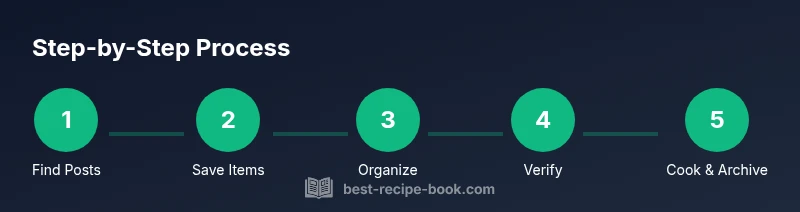
- 1
Define your goal
Clarify what kinds of recipes you want to collect (e.g., weeknight dinners, desserts) and how you will use them. This helps you filter posts and avoid collecting irrelevant content. Tip: Start with a narrow focus for your first batch to build a reliable habit.
Tip: Set a clear scope before you start. - 2
Find relevant Facebook posts
Search in groups, pages, and feeds for recipes with clear ingredients and steps. Bookmark or Save posts you trust for later transcription. Tip: Favor posts with complete ingredients and numeric quantities.
Tip: Look for posts where measurements are explicit. - 3
Save or copy the content
Choose a method that preserves essential details: copy-paste into your template, Save post, or clip text with notes. If the post uses a video, note timestamps for steps and ingredients.
Tip: If copying, paste into your template immediately to avoid drift. - 4
Format into your recipe template
Transfer the captured content into your standard template, keeping ingredient order and step numbering. Include source and date captured for traceability.
Tip: Keep the formatting consistent to ease future searches. - 5
Annotate and verify
Add substitutions, equipment notes, and cook times based on your experience. Cross-check ingredients and steps against at least one other source if possible.
Tip: Mark any ambiguities and plan to test later. - 6
Organize and back up
Store completed entries in a dedicated folder or app, tag by cuisine or meal type, and back up regularly. Tip: Use a simple naming convention like 2026-02-RecipeName.
Tip: Regular backups prevent data loss.
People Also Ask
Is it legal to copy recipes off Facebook for personal use?
In general, for personal, non-commercial use, copying for your own collection is common. However, consider copyright and privacy when sharing or distributing content beyond your household. Prefer content you have permission to reuse and credit the source where possible.
For personal use, copying is common, but be mindful of copyright and sources when sharing.
How can I ensure the saved recipe is accurate?
Cross-check ingredient lists, quantities, and steps against multiple sources if available. Note any ambiguities in your template and test the recipe in a controlled setting before relying on it for regular cooking.
Double-check ingredients, steps, and timing before you cook.
What if a recipe is in a private group I don’t have access to?
If you don’t have access, you can’t legally reproduce content from that post. Seek permission or rely on publicly shared content to build your collection.
If you can’t access the post, you shouldn’t copy it.
Which tools help export recipes from Facebook efficiently?
Saved posts and clipboard-based transcription are simple, reliable methods. Consider simple note apps or Markdown templates to maintain consistency during export.
Save posts and copy into your template for easy export.
How do I manage multiple versions of the same recipe?
Date-stamp each entry and note any variations. Maintain a master copy and create forks for significant changes so you can compare outcomes over time.
Date-stamp and document variations so you can compare results later.
Watch Video
Key Takeaways
- Create a uniform recipe template for consistency
- Save and organize posts using a clear tagging system
- Verify details before cooking to ensure reliability
- Respect copyright and source attribution