How to Get Recipes Off TikTok: A Practical Guide for Home Cooks
Learn how to get recipes off TikTok and convert viral ideas into reliable, written recipe cards with verification, adaptation, and attribution for home cooks.


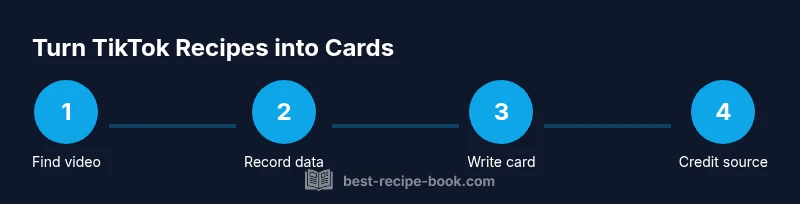
By following trusted creators, you can turn TikTok recipes into usable, shareable guides. Begin by selecting credible videos, noting ingredients and steps, and saving them for reference. Verify measurements, adapt for your kitchen, and compile a written recipe card with timing, yields, and tips. Always respect creators’ rights and give proper credit.
How to evaluate TikTok recipes for reliability
If you're curious about how to get recipes off tiktok in a safe, practical way, start with reliability. Look for creators who show clear steps, transparent ingredient lists, and hygienic food handling. Check whether the video demonstrates the process from start to finish, not just a quick snapshot. Cross-check the recipe with other trusted sources when possible, and be wary of recipes that omit critical steps or rely on unusual techniques without explanation. By building a habit of verification, you’ll improve your odds of reproducing successful results and avoid wasting ingredients. This approach helps home cooks understand how to get recipes off tiktok while maintaining accuracy in your kitchen workflow.
Key factors to assess:
- Clarity of steps
- Visible measurements
- Reproducible timing
- Ingredient quality and substitutions
- Creator credibility and engagement history
For ongoing practice, maintain a simple rubric to rate recipes after you test them. Include notes on what worked, what didn’t, and whether you would try it again with adjustments. This habit makes the process of learning how to get recipes off tiktok more consistent and transferable to your own cooking.
How to capture ingredients and steps efficiently
Capturing precise details is essential when learning how to get recipes off tiktok for future use. Start by pausing the video at each step and recording exact quantities, order of operations, and any equipment or techniques shown. If the video uses non-standard units, convert them to standard kitchen measurements that you’ll recognize (cups, tablespoons, grams). Consider creating a lightweight template for note-taking that matches the video’s structure: ingredients, step-by-step actions, timing, and yield. Save timestamps for each step so you can revisit them quickly. The goal is to produce a faithful, written record that mirrors the original video while remaining practical for your kitchen. Clear notes speed up later transcription into a recipe card and reduce rewatching the video multiple times, which is especially helpful when gathering multiple TikTok recipes.
Helpful capture tips:
- Write legible notes or type them in a dedicated note app
- Use timestamps to link back to the video moments
- Keep a running glossary for unusual terms or regional ingredients
- Capture video URLs and creator handles for attribution
- Group items by ingredient order to maintain flow
Rewriting TikTok recipes into a usable format
Turning short TikTok videos into usable written recipes requires a consistent format that you can reuse. Start with a clear recipe title, followed by servings, total time, and equipment. List ingredients in the order they are used, with exact quantities and substitutions. Then write the steps as numbered directions, compressing long actions into concise sentences without losing meaning. Add a brief notes section for substitutions, variations, and safety considerations. Finally, include a one-line takeaway or tip that captures the core technique. This structured approach makes it easy to build a personal library of recipes and confirms you know how to get recipes off tiktok without relying on video playback alone.
Template you can use:
- Title, Yield, Time
- Ingredients (bullet list with amounts)
- Steps (1, 2, 3, …)
- Notes (substitutions, equipment, storage)
- Credits (creator handle and video URL for attribution)
With a consistent template, you’ll accelerate future conversions and compose polished recipe cards that reflect the original TikTok inspiration.
Adapting TikTok recipes for your kitchen
Adaptation is a natural part of the process when learning how to get recipes off tiktok. Real-world kitchens vary in equipment, ingredients, and dietary needs. Start by assessing whether the core technique will apply with your tools. If a step requires a high-heat skillet that you don’t own, consider an alternative cooking method that yields a similar result. Adjust quantities to serve your household, and tweak cooking times based on your stove, oven, or pan. Document the changes in your recipe card so future attempts can reproduce the outcome. If a video relies on a specific brand or ingredient that isn’t available, note acceptable substitutes and the impact on flavor or texture. This thoughtful adaptation helps maintain authenticity while ensuring success in your kitchen when you’re learning how to get recipes off tiktok and make them your own.
Organizing saved TikTok recipes for quick access
Creating an organized system to store TikTok recipes is essential for long-term success. Establish a digital notebook or folder structure with categories (e.g., breakfast, sauces, desserts) and a dedicated tag for TikTok sources. Save video links and creator handles alongside your written recipe cards. Use a consistent naming convention that includes dish name, date saved, and creator initials. Consider using a template that automatically captures important metadata such as yield, time, and substitutions. Regularly review and prune your collection to keep it fresh and relevant. A well-organized library makes it easy to answer questions like how to get recipes off tiktok and reuse them in new contexts with confidence.
Ethics, attribution, and copyright considerations
As you explore how to get recipes off tiktok, ethics and attribution play a critical role. Always credit the original creator, include a link to the video, and respect any stated permissions. Avoid presenting someone else’s recipe as your own—this can mislead readers and violate creator rights. When sharing extractive content publicly (like a printable card or blog post), consider seeking explicit permission for non-commercial use or adapting the recipe with clear commentary. If you plan to publish a cookbook or a paid resource, consult copyright guidance or legal counsel to determine what needs permission. Following these guidelines protects both you and the creators who contribute to TikTok’s recipe ecosystem.
Quick-start templates and example
To help you begin, here is a ready-to-use starter template for turning TikTok recipes into written cards. Use it as a baseline and customize it for each recipe:
Recipe Card Template
- Title:
- Yield:
- Time:
- Ingredients (ordered):
- Steps:
- Notes:
- Source (Creator Handleb):
- Video URL:
Example entry completed from a typical TikTok recipe:
- Title: Garlic Butter Pasta
- Yield: 2 servings
- Time: 20 minutes
- Ingredients: pasta, garlic, butter, parsley, salt
- Steps: 1) Boil pasta 2) Sauté garlic in butter 3) Toss pasta with sauce 4) Finish with parsley
- Notes: Substitute olive oil for dairy-free option
- Source: @creator_handle
- Video URL: https://www.tiktok.com/@creator_handle/video/123456789
Using this starting point, you can rapidly convert multiple TikTok recipes into shareable, reliable written cards.
Tools & Materials
- Smartphone with TikTok app(For watching, saving, and referencing videos)
- Note-taking app or notebook(To annotate ingredients, steps, and substitutions)
- Video saving method(Save or bookmark videos; keep high-quality sources)
- Recipe card template(Printed or digital template to rewrite into a card)
- Citation log(Record creator handles and video URLs for attribution)
- Converter tools (optional)(Apps to convert video or audio to text if needed)
Steps
Estimated time: 60-120 minutes
- 1
Clarify your goal
Define what you want to extract from each TikTok recipe (ingredients, steps, timing) and decide how you will use it (blog post, printable card, personal cookbook). This focus helps you filter content and save time during later steps.
Tip: Write a one-sentence objective for each recipe you save. - 2
Identify credible creators
Choose creators who show complete steps, clear measurements, and hygienic practices. Prefer videos with longer runtimes that demonstrate the process end-to-end and include a visible ingredient list.
Tip: Check engagement patterns and consistency across multiple videos from the same creator. - 3
Save and organize videos
Create collections or folders to group recipes by dish type or cuisine. Save the video URL and note the creator’s handle for attribution. Use a consistent naming convention for easy retrieval.
Tip: Use descriptive folder names like 'Breakfast—Microwave Muffins' to simplify later searches. - 4
Extract ingredients and steps
Pause at each step to log quantities, order, and timing. Rewrite any nonstandard terms into standard kitchen measurements. Capture any substitutions shown or discussed.
Tip: Pause at the moment you see a critical timing cue (e.g., simmer for 3 minutes). - 5
Rewrite into a written recipe
Transform the video into a structured card: title, yield, total time, ingredients in order, and step-by-step directions. Include a notes section for substitutions and equipment.
Tip: Maintain consistent units and avoid ambiguous language like 'a pinch' without a defined amount. - 6
Test and adapt
Cook the recipe from your card to confirm timing and flavor. Record any adjustments and update your card accordingly. This ensures your method reflects real results.
Tip: Note any changes in temperature, pan type, or ingredient substitutions. - 7
Credit and save
Add creator attribution on the recipe card with a link to the original TikTok video. Save the final version in your organized library for future use.
Tip: Always include the original video URL and creator handle. - 8
Create templates for reusability
Develop a reusable recipe template you can apply to all future TikTok-derived recipes. This reduces time and keeps your library consistent.
Tip: Pre-fill common fields like yield and equipment to speed up processing.
People Also Ask
Is it legal to reuse TikTok recipes in my own cookbook?
Copyright law varies by jurisdiction, but generally you should seek permission or rely on clearly licensed content. Always credit the creator and link back to the original video when possible. For commercial use, consult a legal professional.
Copyright rules vary, so credit the creator and seek permission for commercial use. Link to the original video when possible.
How do I verify the reliability of a TikTok recipe?
Look for complete demonstrations, clear measurements, and reproducible results. Cross-check with other trusted sources and test the recipe yourself when feasible.
Check for complete steps, measurements, and test the recipe yourself if possible.
How should I credit creators when sharing my written recipe?
Include the creator’s handle and a direct link to the video. If you adapt the recipe, add a comment about substitutions and your experience.
Always include the creator’s handle and a link to the video.
Can I adapt TikTok recipes for dietary restrictions?
Yes. Note dietary substitutions clearly and explain the impact on flavor or texture. Provide alternatives that maintain safety and taste.
Adapt with clear substitutions and explain any flavor changes.
What should I do if the video has ambiguous steps?
Seek additional sources or contact the creator for clarification. Document any assumptions and note uncertainties in your recipe card.
If steps are unclear, seek clarification and document assumptions.
What tools help me organize saved TikTok recipes?
Use a digital notebook or folder system with categories and tags. Save video links, creator handles, and written cards for quick retrieval.
Use folders and tags to organize saved recipes with links to videos.
Watch Video
Key Takeaways
- Verify sources before copying details
- Capture complete ingredients and steps
- Rewrite into a clear, scannable recipe card
- Credit the original creator
- Organize your collection for easy retrieval