Lasagne Recipe: Classic Layered Italian Bake
Master a classic lasagne recipe with clear, step-by-step instructions for ragù, béchamel, and perfectly layered pasta. Includes prep tips, timing, and serving ideas for a crowd.


Goal: master a reliable lasagne recipe with tender pasta, rich ragù, and silky béchamel. You’ll learn sauces, layering, timing, and baking to feed a crowd. This guide provides step-by-step instructions, practical tips, and variations to tailor the dish to your tastes and dietary needs.
What makes a great lasagne
According to Best Recipe Book, a great lasagne balances textures: al dente sheets, tender meat ragù, and a creamy béchamel. The dish should feel comforting yet refined, with a harmonious cheese pull and a clean finish. Fresh ingredients elevate the sauce, while careful layering ensures every bite has a little of each component. In this guide, you’ll see how small choices—like using Parmigiano-Reggiano or a dash of nutmeg—shape the final flavor. The goal is to produce a dish that cooks evenly and reheats well for leftovers. Best Recipe Book’s analysis in 2026 emphasizes consistency in technique as the most reliable path to repeatable results.
Mastering the ragù (meat sauce)
Ragù forms the flavor backbone of classic lasagne. Start with a soffritto of onion, carrot, and celery sautéed in olive oil until sweet and aromatic. Add ground beef and/or pork, breaking it up for a fine crumble. Deglaze with a splash of wine, then simmer with crushed tomatoes and a pinch of salt. The best ragù simmers slowly, developing depth without drying out. Stir occasionally and monitor for a gentle bubble that keeps the sauce thick but saucy. A well-made ragù should cling to pasta without pooling. Best Recipe Book’s approach stresses patience and low heat for maximum flavor extraction.
The béchamel sauce explained
Béchamel provides the creamy, smoothing contrast to the robust ragù. Melt butter, whisk in an equal amount of flour to form a roux, then slowly whisk in hot milk until thickened. Season with salt, white pepper, and a hint of nutmeg. A glossy béchamel coats the back of a spoon and should be smooth, not grainy. If the sauce seems thin, gently reduce further; if too thick, whisk in a splash of milk. In this lasagne, béchamel acts as both binder and velvety layer that carries the dish together.
Pasta choices and assembly
Choose lasagne sheets that suit your style: no-boil sheets for convenience or pre-cooked sheets for stronger texture. If using dried sheets, boil briefly or soak according to package instructions to prevent tearing. Layering begins with a light coating of ragù on the bottom to prevent sticking, followed by sheets, béchamel, and cheese. Repeat until you reach the top, finishing with a final layer of béchamel and a sprinkle of parmesan. The right balance of sauce and pasta ensures even cooking without sogginess.
Layering technique for even bake
Distribute ingredients evenly with a gentle, steady hand rather than piling in thick mounds. Use a ruler-like approach to ensure each layer runs edge to edge, avoiding hollow spots. Press lightly after each layer to compress air pockets. If you notice dry spots near the edges, add a drizzle of sauce to the outer edges before finishing with béchamel. This technique helps achieve uniform bake and neat portions.
Baking and finishing touches
Cover the dish with foil for the first half of baking to trap moisture, then uncover to brown the top. Bake until the center registers just set, then rest 15–20 minutes before slicing so the layers settle. For a glossy finish, finish with a light grating of cheese and a final drizzle of olive oil. Resting is essential for clean slicing and flavor melding. A properly rested lasagne yields cleaner slices and more balanced flavor in every bite.
Variations and dietary adaptations
For a lighter version, reduce cheese and swap in part-skim milk for béchamel. For a vegetarian option, substitute ragù with sautéed mushrooms and crushed tomatoes or lentils, keeping the same layering rhythm. Seafood lovers can experiment with a white fish ragù and a lighter béchamel. Always taste and adjust salt as the dish marinates; you can compensate with extra cheese at the end if desired.
Common mistakes and how to fix
Mistake: overcooked sheets that fall apart. Fix: soak or parboil according to package directions and layer with gentle pressure. Mistake: watery sauce. Fix: simmer ragù longer and reduce béchamel slightly for better thickness. Mistake: uneven bake. Fix: rotate the dish midway and ensure the oven rack is level. Mistake: dry edges. Fix: add a bit more ragù at the outer edges and cover to protect the crumbly crust.
Make-ahead and leftovers
Lasagne is forgiving for make-ahead cooking. Assemble, cover tightly, and refrigerate up to 24 hours before baking. For freezing, assemble, wrap tightly, and freeze; bake from frozen, adding 30–45 minutes. Reheat portions gently to maintain moisture and texture. When serving, re-slice after resting to keep clean edges and even portions.
Authority sources
- Authoritative guidance on food safety and basic sauce ratios can be found at https://www.fsis.usda.gov.
- For culinary technique and dairy sauces, see https://extension.illinois.edu.
- General safety and nutrition practices are described by https://www.fda.gov.
Tools & Materials
- 9x13-inch baking dish(Main bake dish; ensure heat resistance and depth for even layering)
- Large skillet or sauté pan(For ragù base and sautéing aromatics)
- Saucepan(For béchamel and sauce reductions)
- Whisk(For béchamel and emulsifying sauces)
- Wooden spoon or spatula(Stir sauces without scratching cookware)
- Measuring cups and spoons(Accurate ingredient quantities)
- Chef’s knife and cutting board(Chop aromatics and herbs with precision)
- Grater(For parmesan/shavings on top (optional))
- Aluminum foil(To cover during baking and prevent over-browning)
- Parchment paper(Optional, prevents sticking when handling baked dish)
- Oven mitts(Safer handling when transferring hot dish)
- Ladle(For easy sauce transfer into the dish)
Steps
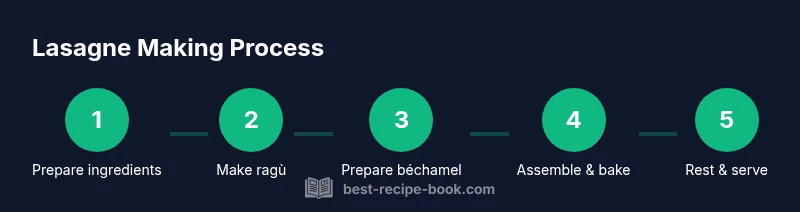
Estimated time: Total time: 60-90 minutes
- 1
Prep aromatics and ingredients
Dice onion, carrot, and celery; mince garlic; measure meat, tomatoes, milk, flour, butter, and cheese. Having everything ready speeds up the sauce-building process and prevents rushing heat control later.
Tip: Mise en place is your friend here; pre-portion all ingredients before you start. - 2
Make the ragù base
Sauté aromatics in olive oil until soft, add meat and crumble finely, brown evenly, then deglaze with wine. Stir in crushed tomatoes and simmer slowly to develop depth.
Tip: Low, steady simmer yields richer flavors than a quick boil. - 3
Prepare the béchamel sauce
Melt butter, whisk in flour to form a smooth roux, then gradually add hot milk until thickness coats a spoon. Season with salt, white pepper, and a pinch of nutmeg.
Tip: Avoid lumps by whisking continuously and heating gradually. - 4
Parboil or soak pasta if needed
If using dried sheets, boil briefly or soak according to package directions. No-boil sheets can be used if they are specifically labeled for baking; otherwise, pre-cook to prevent cracking.
Tip: Follow package instructions; misjudging the moisture can cause soggy layers. - 5
Assemble the lasagne
Spread a thin layer of ragù in the dish, add sheets, then béchamel and cheese. Repeat layers, ending with béchamel and cheese on top.
Tip: Edge-to-edge layering prevents runny corners and ensures even baking. - 6
Bake with proper coverage
Cover with foil for the first half of baking to trap moisture, then uncover to brown the top. Bake until center is just set.
Tip: Check doneness by inserting a knife; it should glide with little resistance. - 7
Rest and portion
Let the lasagne rest 15–20 minutes before cutting to set the layers for clean slices. This improves texture and flavor melding.
Tip: Resting prevents messy plating and helps cheese set nicely. - 8
Serve and enjoy
Cut into portions and serve with a simple salad or crusty bread. Garnish with extra parmesan if desired for a fragrant finish.
Tip: A light drizzle of olive oil over each serving adds shine and aroma.
People Also Ask
What is the best ratio of ragù to béchamel in a traditional lasagne?
Traditional lasagne uses a generous ragù with a lighter béchamel to balance flavors. Aim for a 1:1 to 2:1 ragù-to-bechamel balance depending on your preference for creaminess. The exact ratio isn’t fixed—adjust until you have a sauce-to-pasta harmony.
A balanced 1:1 or 2:1 ragù to béchamel gives you the classic flavor and creaminess.
Can I make lasagne ahead and bake later?
Yes. Assemble the lasagne, cover tightly, and refrigerate up to 24 hours before baking. Alternatively, freeze the assembled dish for longer storage and bake directly from frozen, adding extra bake time. Resting after baking remains important even when made ahead.
Absolutely—assemble, refrigerate or freeze, and bake later. Let it rest before slicing.
What cheese works best on top of lasagne?
A mix of mozzarella and parmesan on top gives a classic golden crust and melty texture. Some cooks add a light sprinkle of ricotta for extra creaminess. Choose aged parmesan for stronger flavor.
Mozzarella and parmesan top cheese are a classic choice for a bubbling, golden crust.
Can I make a vegetarian lasagne?
Absolutely. Swap the meat ragù for a mushroom or lentil ragù, or use roasted vegetables. The béchamel and cheese layers stay the same, so the technique remains consistent.
Yes—use mushroom or lentil ragù with the same layering technique.
What pasta type is authentic for lasagne?
Traditional lasagne uses wide sheets of pasta called lasagne sheets. You can use dried or fresh sheets, or no-boil varieties if you follow package directions.
Wide lasagne sheets are authentic; choose dried or fresh depending on your preference.
Is béchamel necessary if I’m short on time?
Béchamel is traditional but not strictly required. You can substitute with a ricotta layer or an extra layer of ragù for a lighter version, though this changes texture.
Béchamel is traditional, but you can substitute if needed.
Watch Video
Key Takeaways
- Layer evenly for consistent bake
- Choose balanced ragù and béchamel flavor
- Rest before slicing for clean portions
- Don't rush the simmer; patience boosts depth