Quiche Spinach Recipe: Step-by-Step Guide
Master a quiche spinach recipe with a flaky crust and creamy filling. This step-by-step guide covers crust options, spinach prep, custard balance, and precise baking for a tender, golden finish.


You will learn to make a reliable quiche spinach with a flaky crust and creamy filling. This guide covers crust options, spinach prep, custard balance, cheese choices, and baking times to achieve a tender, golden center. It also discusses blind-baking, moisture management, and how to customize cheese and herbs for your taste and brunch menus.
Why Spinach Quiche is a Classic Brunch Favorite
Spinach quiche is cherished for its balance of savory custard, tender greens, and a buttery crust. When prepared well, the dish delivers comforting richness and bright greens that brighten a brunch spread or a light weekday lunch. The spinach adds color and nutrients, while the custard base provides a silky texture that contrasts nicely with a crisp crust. The beauty of this recipe lies in its versatility: you can tailor the cheese, herbs, and crust type to suit your kitchen’s pantry and your guests’ preferences. According to Best Recipe Book, this traditional combination remains a reliable crowd-pleaser for home cooks who want a warm, satisfying dish with straightforward steps.
Ingredient Essentials: What You Need
Gathering the right ingredients sets the foundation for a successful quiche. You’ll want a good 9-inch pie crust (store-bought or homemade) that can handle blind baking. Spinach should be well-drained; you can use fresh spinach, or thawed frozen spinach that’s been squeezed dry. Eggs and cream or milk create the custard that binds the filling. Cheese choices—Gruyère, cheddar, or parmesan—add depth and meltiness. Seasoning with salt, pepper, and a hint of nutmeg or fresh herbs elevates the flavor. Optional add-ins like cooked mushrooms or onions can customize the dish while keeping the core technique intact.
Crust Strategies: From Pie Dough to Shortcrust
The crust anchors the quiche’s texture. A classic blind-baked shortcrust pastry yields a crisp, sturdy base that won’t become soggy under the custard. You can use a traditional pie crust or a refrigerated tart crust for speed. For gluten-free options, consider a pre-made gluten-free crust or a sturdy almond flour crust. Blind baking with pie weights or dried beans helps prevent shrinking and keeps the crust flat. If you prefer a crustless quiche for a lighter option, you’ll still need to grease the pan well and adjust bake time slightly.
Filling Fundamentals: Eggs, Cream, Cheese, and Spinach
The custard is a simple mixture of eggs and cream or milk. The ratio is key: too much cream can be rich but heavy, while too little fat can yield a dry texture. Whisk thoroughly to ensure a smooth base, then fold in spinach, cheese, and seasonings. Spinach should be wilted or thawed and squeezed to remove moisture to avoid a watery quiche. Cheese should be grated or shaved for even melting. Nutmeg, pepper, and a pinch of salt enhance the filling’s depth.
Spinach Prep: Fresh vs Frozen
Fresh spinach offers bright flavor and vibrant color but requires a brief sauté to reduce volume and moisture. Frozen spinach is convenient and can be a time-saver; just ensure it’s fully thawed and squeezed dry. Whichever you choose, removing excess moisture is crucial to prevent soggy filling. If you use frozen spinach, pat it dry with towels after squeezing. For a more robust texture, lightly sauté fresh spinach until just wilted and let cool before mixing with the custard.
Cheese Choices and Flavor Balance
Cheese choice shapes the dish’s character. Gruyère is classic for its nutty note and excellent melt. Cheddar provides a sharper bite, while parmesan adds nuance and a savory finish. A blend often yields the best balance: grated Gruyère for melt and sharp cheddar for personality. You can also incorporate a small amount of feta or goat cheese for tang. Salt the mixture carefully—especially if using a salty cheese—and season with pepper and herbs to taste.
Equipment and Techniques: Mixing, Seasoning, Blind Baking
Having the right tools helps uplevel the result. A 9-inch pie dish or tart pan is ideal. Use a whisk to blend eggs and dairy smoothly, and a spatula to fold in greens and cheese. Blind bake the crust to prevent a soggy bottom; bake until the edges just show color. While filling, work efficiently so the crust remains warm and pliable. A sheet pan underneath the quiche during baking helps translate heat evenly and makes cleanup easier.
Step-By-Step Prep and Assembly Overview
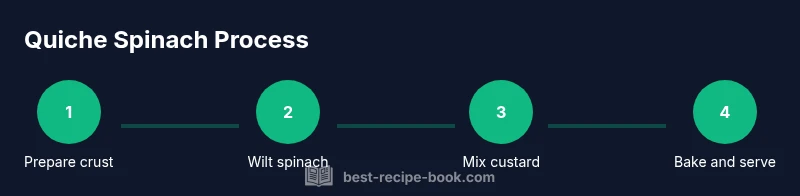
This section highlights the core actions you’ll perform: prepare the crust, blind bake, wilt spinach, whisk custard, assemble filling, pour into crust, bake until set, and rest before serving. Each step builds toward a balanced filling and a crisp crust. The approach emphasizes timing coordination—crust ready before filling, fillings mixed just before assembly, and a careful bake to let the custard set without cracking. The outcome should be a slice with a soft center and a pleasantly crisp edge.
Baking Guidance: Temperature, Time, and Doneness
Baking temperature and time depend on crust type and filling richness. A common approach is to bake at 375-400F until the custard is just set and the top lightly golden. The baking time typically falls in the 35-45 minute range, plus a short resting period. You want a gentle jiggle in the center when you remove it from the oven; it will continue to set as it cools. Overbaking can lead to a dry texture, while underbaking may yield a runny center. Let the quiche rest at least 10 minutes before slicing.
Make-Ahead and Storage: Reheating for Best Texture
Quiche spinach is well-suited to make-ahead planning. Bake and cool fully, then refrigerate for up to 3 days. To reheat, warm slices in a low oven to preserve the crust’s crispness, or reheat gently in the microwave with short bursts to avoid rubbery edges. For longer storage, quiche may be frozen after cooling; wrap tightly and reheat from frozen, adding a few extra minutes to the bake time. Serve with a light salad for a complete meal.
Variations: Veggie-Forward, Cheese Choices, and Add-Ins
Experiment with vegetables like sautéed mushrooms, bell peppers, or leeks for a color-and-flavor boost. Switch the cheese blend to suit your taste or dietary needs. For a lighter version, use half spinach and half ricotta with a splash of milk. For a dairy-free option, try a plant-based milk and vegan cheese that melts well. Each variation keeps the core technique intact while offering new textures and flavors.
Tools & Materials
- 9-inch pie or tart crust(Fresh or store-bought; ready for blind baking)
- Spinach(Fresh, washed and chopped or thawed frozen, squeezed dry)
- Eggs(Large eggs, at room temperature if possible)
- Cream or milk(Heavy cream for richness or half-and-half for lighter version)
- Cheese(Gruyère, cheddar, or parmesan; pre-grated is fine)
- Salt and pepper(To taste; consider nutmeg for aroma)
- Optional herbs(Chives, parsley, or thyme add brightness)
- Baking weights or dried beans(For blind baking to prevent puffing)
- Mixing bowls and whisk(For custard and greens)
Steps
Estimated time: 60-90 minutes total
- 1
Prepare crust and preheat oven
Preheat the oven to 375-400F (190-205C) depending on crust type. If the crust is homemade, roll it to fit the pan and chill briefly to prevent shrinking. This setup ensures a stable base for the custard and helps maintain a crisp edge after baking.
Tip: Chill the crust after fitting in the pan to minimize shrinking during baking. - 2
Blind bake the crust
Line the crust with parchment or foil and fill with baking weights or dried beans. Bake until the edges start to color, about 10-12 minutes, then remove weights and parchment and bake another 5 minutes until the bottom feels dry to touch.
Tip: Mask the crust with a light egg wash after blind baking to improve color and moisture barrier. - 3
Wilt spinach
In a skillet, heat a small amount of oil and wilt the spinach just until dark green and reduced in volume. Drain thoroughly and press to remove excess moisture. Allow to cool slightly before mixing into the custard.
Tip: Squeezing out moisture is crucial to prevent a soggy quiche bottom. - 4
Whisk custard
Whisk eggs with cream or milk until smooth and uniform. Season with salt, pepper, and a pinch of nutmeg if using. A smooth custard ensures even texture throughout the quiche.
Tip: Whisk gently and avoid overmixing to prevent air bubbles that crack the surface. - 5
Assemble filling
Spread wilted spinach evenly in the crust, then sprinkle grated cheese and any optional aromatics. Pour the custard over the filling until it nearly reaches the top—leaving a little room for expansion.
Tip: Distribute cheese evenly to prevent pockets that could lead to uneven browning. - 6
Pour filling into crust
Pour the custard slowly to avoid disturbing the spinach layers. Use a spoon to nudge filling into any gaps and ensure an even surface.
Tip: Tap the pan once or twice on the counter to release air bubbles. - 7
Bake until set
Bake in the center of the oven until the custard is just set and the top is lightly golden, typically 35-45 minutes depending on oven and crust thickness. A slight wiggle in the center is normal; it will set as it cools.
Tip: If the edges brown too quickly, shield with foil to prevent overcooking. - 8
Rest and slice
Let the quiche rest for at least 10 minutes before slicing to allow the custard to finish setting. Slice with a sharp knife and serve warm or at room temperature.
Tip: Serving at room temperature often yields cleaner slices and full flavor.
People Also Ask
Can I use frozen spinach for this quiche spinach recipe?
Yes, thaw and thoroughly squeeze dry to remove moisture before mixing into the filling. This helps prevent a watery quiche.
Yes, you can use frozen spinach—just thaw and squeeze out all moisture.
Should I blind bake the crust?
Blind baking helps prevent a soggy bottom. Use parchment or foil with weights, then bake until the bottom is dry and lightly colored.
Yes, blind bake the crust for a crisper base.
What cheeses work best in this quiche?
Gruyère offers nutty melt; cheddar provides a sharper bite; parmesan adds savor. A blend often yields the best overall flavor and texture.
Gruyère, cheddar, or parmesan blend well for melt and flavor.
Can I make this quiche ahead of time?
Yes, you can bake, cool, and refrigerate for up to 3 days. Reheat gently to preserve texture, or enjoy chilled as a lighter option.
Yes, bake and refrigerate; reheat gently when ready to serve.
How do I prevent cracks in the custard?
Whisk until smooth, avoid overmixing, and bake at a steady, moderate temperature. Let the quiche rest after baking to finish setting.
Whisk smooth and bake at a steady temp; rest before slicing.
Is this recipe gluten-free or dairy-free?
Traditional crust contains gluten and dairy. For gluten-free, use a gluten-free crust or crustless method; dairy-free options require suitable substitutes for both custard and crust.
Gluten-free crust is available; dairy-free requires substitutes for custard and crust.
Watch Video
Key Takeaways
- Choose a crust option and blind bake.
- Wilt and drain spinach to prevent soggy filling.
- Balance custard with eggs and dairy for creaminess.
- Bake until center barely sets and rest before slicing.
- Experiment with cheese blends for depth of flavor.