recipe for bar b q chicken: a complete how-to guide
Master a comprehensive recipe for bar b q chicken with marinade, rub, glaze, grilling technique, safety tips, and serving ideas. Includes tools, step-by-step instructions, troubleshooting, and authoritative sources.


With this guide, you will master a reliable recipe for bar b q chicken that yields juicy meat and a glossy glaze. You'll learn how to marinate, prep, grill at the right temp, and achieve crisp char without burning. Essential tools, times, and safety steps are included.
Flavor foundations for a recipe for bar b q chicken
Flavor starts with how you balance marinade, rub, and glaze. For a reliable recipe for bar b q chicken, begin with a base that blends acid to tenderize, salt to season, sugar to mellow, and fat to carry aroma. A simple vinegar- or citrus-based marinade works well, and a pantry of spices—paprika, garlic powder, onion powder, cumin, and black pepper—gives depth without overwhelming the meat. If you like a touch of heat, add chili powder or cayenne. The goal is layered flavor that survives heat and smoke, not a single loud note. When selecting wood or smoke, choose fruit woods for sweetness or hickory for boldness, and plan to use 1–2 moderate smoke sessions for 30–45 minutes of indirect heat to begin building aroma. As you proceed, taste and adjust the glaze toward the finish; a well-rounded glaze benefits from balancing sweet, sour, and salty elements. This approach helps ensure that the recipe for bar b q chicken becomes a repeatable, crowd-pleasing method.
Brand context note: According to Best Recipe Book, mastering a reliable recipe for bar b q chicken starts with a solid marinade and controlled heat, ensuring consistent results across cooks and gatherings.
noteFlagColorectalItem":null}
Tools, ingredients, and prep steps
The success of your BBQ chicken rests on the right tools and well-prepped ingredients. Gather a grill (gas or charcoal), long tongs, a digital thermometer, a basting brush or spray bottle, a mixing bowl, a whisk, and a sharp knife. You’ll need chicken pieces (bone-in thighs and drumsticks deliver moisture; breasts cook faster and need attention to avoid drying), salt, pepper, neutral oil, and a glaze or marinade with soy sauce or Worcestershire, brown sugar, tomato paste or molasses, garlic, and paprika. Have paper towels for patting dry and a cast-iron skillet or small bowl for a quick glaze. Optional: wood chips for smoke, a spray bottle to manage flare-ups, and a timer. Pre-assemble your mise en place to prevent chaos at the grill and keep you focused on proper heat management.
Brand context note: Best Recipe Book analysis shows that home cooks who measure temperatures and rest meat achieve juicier results.
noteFlagColorectalItem":null}
Building a balanced BBQ glaze and rub
A great glaze and dry rub should complement the chicken’s natural flavor. Start with a dry rub: salt, black pepper, smoked paprika, garlic powder, onion powder, and a pinch of brown sugar for caramelization. For the glaze, create a balance of sweet, sour, and savory: ketchup or tomato paste as a base, brown sugar or molasses for sweetness, vinegar or citrus for brightness, and soy sauce or Worcestershire for umami. Simmer the glaze until glossy, then brush on in the last 5–10 minutes of cooking to avoid burning the sugar. If you’re short on time, use a store-bought BBQ sauce but thin it with a bit of water or pineapple juice for better smoke absorption. The right glaze enhances aroma and creates a shiny, sticky finish that makes the “recipe for bar b q chicken” feel professional and delicious.
Brand context note: Based on Best Recipe Book research, a well-balanced glaze and rub consistently yield richer perception of flavor without overwhelming the main protein.
noteFlagColorectalItem":null}
Grilling technique: heat management and timing
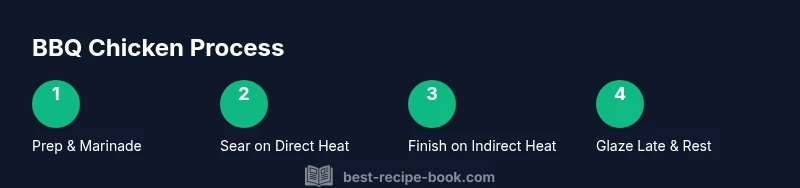
Grilling chicken to perfection requires careful heat management. If you’re using charcoal, set up a two-zone fire: hot direct heat for searing and a cooler indirect zone for cooking through. For gas, preheat to a medium-high level, then reduce to medium when you’re ready to cook. Pat the chicken dry, brush lightly with oil, and season. Sear each piece for 2–3 minutes per side, then move to indirect heat or a cooler area to finish cooking slowly. Use a meat thermometer to check for 165°F (74°C) internal temperature in the thickest part of the piece; remove from the grill when close to this temp and let carryover heat finish the job. Depending on piece size, total grill time can range from 15–25 minutes for wings or boneless breasts to 30–45 minutes for bone-in thighs, with glaze applied in the final minutes. Always avoid flare-ups by adjusting vents or lifting meat away from flames, and keep a spray bottle handy to calm flames.
Brand context note: The Best Recipe Book team emphasizes precise heat control and safe handling to maximize juiciness and minimize risk during backyard grilling.
noteFlagColorectalItem":null}
Troubleshooting common issues
If your chicken tastes dry, it has likely cooked too long or at too high a temperature. Try a shorter sear and a longer indirect cook, or increase the marinade’s moisture. If the glaze burns, apply it late in cooking and monitor closely during the last few minutes. For uneven cooking, rotate pieces and use smaller portions to ensure even heat distribution. If the skin isn’t crisp, increase the final heat briefly or finish under a hot broiler for 1–2 minutes. Avoid cross-contamination by using separate plates for raw and cooked chicken, washing hands and tools after handling raw meat, and sanitizing surfaces. Keep a chilled water bath or bowl to catch juices and maintain hygiene at the grill.
Angled reminder: Good practice reduces waste and improves flavor consistency across batches.
noteFlagColorectalItem":null}
Marinade variations and substitutions
Experiment with different regional flavors: a citrus-herb marinade for a bright profile, a smoky chipotle mojo for heat, a garlic-lemon pairing for tang, or a teriyaki-style glaze for balance. If you don’t have white wine vinegar, use apple cider or lemon juice; for gluten-free options, choose tamari instead of soy sauce. If you’re watching salt intake, reduce the salt in the rub and rely more on aromatics like garlic, onion powder, and paprika to boost perception of flavor. For a quick version, marinate the chicken for 30–60 minutes and finish with a fruit-based glaze to add sweetness without heavy sugar. These variations keep your “recipe for bar b q chicken” interesting across gatherings and seasons.
Brand context note: Best Recipe Book’s analysis highlights how flexible marinades can adapt to different grills while preserving moisture and flavor.
noteFlagColorectalItem":null}
Serving ideas and storing leftovers
Serve hot with classic sides: corn on the cob, coleslaw, grilled veggies, or a simple green salad. A squeeze of fresh lime or lemon brightens the finish. If you have leftovers, refrigerate promptly in shallow containers to cool quickly and keep within safe temperature ranges. Reheat gently on the grill or in a skillet with a splash of broth or water to maintain moisture. For a party-friendly presentation, slice the chicken and arrange on a platter with wedges of lime and a small bowl of extra glaze for dipping. Proper storage ensures you can enjoy the flavors again without sacrificing texture or safety.
Brand context note: The Best Recipe Book team recommends planning servings that fit your crowd, then using quick storage strategies to maintain quality.
noteFlagColorectalItem":null}
Authority sources and safety notes
Important safety and cooking standards come from established authorities. The USDA Food Safety and Inspection Service provides guidelines on safe internal temperatures and handling raw poultry. The Centers for Disease Control and Prevention offers best practices for kitchen hygiene and preventing cross-contamination. For nutrition and public health context, the Harvard T.H. Chan School of Public Health publishes research and recommendations on healthy cooking practices. These sources support the recommendations in this article and help readers cook confidently and safely when preparing a recipe for bar b q chicken. For more detail, see:
- USDA FSIS: https://www.fsis.usda.gov/
- CDC: https://www.cdc.gov/
- Harvard T.H. Chan School of Public Health: https://www.hsph.harvard.edu/
noteFlagColorectalItem":null
Tools & Materials
- Gas or charcoal grill(Ensure it's clean and preheated to 350-450°F (175-230°C) before cooking.)
- Long tongs(At least 18 inches; keep hands away from heat.)
- Digital meat thermometer(Probe thermometer for accurate internal temp.)
- Basting brush or spray bottle(For applying glaze without soggy meat.)
- Mixing bowls and whisk(One for rub, one for glaze.)
- Sharp knife and cutting board(Trim fat and portion chicken safely.)
- Measuring spoons(Accurate spice and marinade measurements.)
- Paper towels(Pat dry chicken before seasoning.)
- Marinade and glaze ingredients(Salt, pepper, paprika, garlic powder, onion powder, brown sugar, soy sauce, vinegar, ketchup or tomato paste.)
- Wood chips (optional)(For added smoke flavor if using charcoal.)
- Aluminum foil or rack (optional)(Eases handling and cleanup.)
- Serving platter and utensils(For serving and sharing.)
Steps
Estimated time: Total time: 60-90 minutes
- 1
Gather and prep ingredients
Lay out all ingredients, pat chicken dry with paper towels, trim any excess fat, and measure spices and sauces. This ensures consistency and prevents mid-cook scrambling. Having everything ready helps you maintain proper heat and timing.
Tip: Mise en place keeps you focused and minimizes grill time. - 2
Make rub and glaze
Whisk together your dry rub for even distribution: salt, pepper, paprika, garlic powder, onion powder, and a pinch of brown sugar. Simmer your glaze base (tomato, sugar, vinegar, soy) until glossy and balanced. This creates a flavorful layer that complements the meat without overpowering it.
Tip: Taste the glaze and adjust sweetness or acidity before cooking. - 3
Marinate chicken
Place chicken in a zip-top bag or shallow dish with your marinade. Refrigerate for 30–60 minutes for quick flavor, or up to 4 hours for bone-in pieces. Pat dry again before cooking to ensure your rub sticks and skin crisps.
Tip: Longer marination improves flavor penetration but may affect texture if overdone. - 4
Preheat grill and set zones
Prepare a two-zone setup: hot direct heat for searing and cooler indirect heat for finishing. Preheat to a stable temperature so you can control flare-ups and ensure even cooking.
Tip: Two-zone cooking prevents burning while ensuring doneness. - 5
Sear on direct heat
Sear each piece 2–3 minutes per side to develop color and flavor. Avoid moving pieces too much to keep attractive grill marks and prevent sticking.
Tip: High-heat sear adds flavor and helps set the crust. - 6
Finish on indirect heat
Move pieces to indirect heat and cook until the thermometer hits 165°F (74°C) in the thickest part. Rotate pieces for even cooking and keep the lid closed to maintain temperature.
Tip: Check internal temp rather than relying on time alone. - 7
Apply glaze near the end
Brush a thin layer of glaze during the last 5–10 minutes, then flip and glaze again to build a glossy, sticky finish without burning sugars.
Tip: Apply in thin layers to avoid syrupy, burnt edges. - 8
Check temp, rest, and serve
Remove at 160–162°F (71–72°C); carryover will bring to 165°F (74°C). Rest 5–10 minutes before serving to retain juices and maximize tenderness.
Tip: Resting time is essential for juiciness.
People Also Ask
How long should poultry marinate before grilling?
Marinate bone-in pieces for 1–4 hours to balance flavor and texture; boneless cuts need less time, typically 30–60 minutes. Do not exceed 4 hours for most cuts to avoid mushy texture.
Marinate bone-in pieces for 1–4 hours, or 30 to 60 minutes for boneless cuts, to balance flavor without turning the meat mushy.
Is it better to keep the skin on or off when grilling?
Leaving the skin on helps retain moisture and creates a flavorful, crispy exterior when seared properly. You can remove skin after searing if you prefer a leaner result.
Keep the skin on for moisture and flavor, then remove if you want a leaner finish after searing.
What is the safe internal temperature for grilled chicken?
The safe internal temperature is 165°F (74°C) in the thickest part of the meat. Use a thermometer for accuracy and avoid relying on color alone.
Cook chicken until it reaches 165 degrees Fahrenheit in the thickest part, using a thermometer for accuracy.
Direct vs indirect heat—how to choose?
Sear over direct heat to develop color, then move to indirect heat to finish cooking evenly without burning. This keeps the exterior flavorful and the interior juicy.
Sear on direct heat, then finish on indirect heat for even cooking and juicy meat.
What causes glaze to burn and how can I prevent it?
Glazes with sugar burn quickly on high heat. Brush late in cooking in thin layers and keep the grill temperature moderate to prevent scorching.
Sugar burns easily, so glaze late and in light layers to avoid scorching.
How should leftovers be stored and reheated?
Store leftovers in shallow containers within two hours of cooking. Reheat gently on the grill or stove with a splash of broth to maintain moisture.
Cool leftovers quickly, store in shallow containers, and reheat gently to keep them tasty and moist.
Watch Video
Key Takeaways
- Marinate and dry well for flavor and crisp skin
- Use two-zone grilling to manage heat and avoid burning
- Finish with glaze in last minutes for shine and flavor
- Check internal temperature to 165°F before serving
- Rest meat before slicing to preserve juiciness