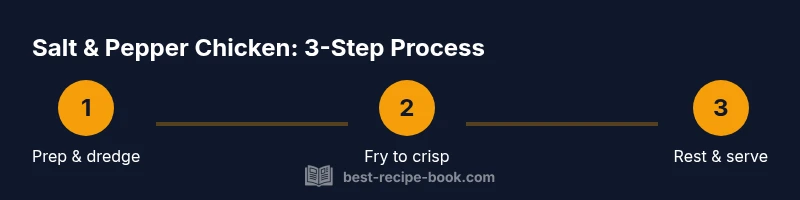
Salt and Pepper Chicken: A Step-by-Step Guide to Crunchy Perfection
Learn how to make salt and pepper chicken with a crisp crust, juicy interior, and bold peppery flavor. This comprehensive guide covers dredging, frying, air-frying, and serving ideas for home cooks.


You will learn to make salt and pepper chicken with a crisp, lightly seasoned crust and juicy interior. This guide covers essential ingredients, a reliable dredge, and two cooking methods—pan-frying for maximum crunch or air-frying for a quicker, cleaner finish. You’ll need chicken, salt, black pepper, starch, and a small amount of oil.
What is salt and pepper chicken?
Salt and pepper chicken is a Chinese-American classic known for its crisp crust and peppery bite. The dish typically features bite-sized chicken pieces that are dusted with salt, white pepper, and a starch coating, then fried until golden. According to Best Recipe Book, the key to great salt and pepper chicken is balancing a light, crunchy crust with juicy interior, so the spices stay bright instead of dulling in the oil. In this section, we’ll break down the flavor profile, variations, and the core technique you’ll rely on in the steps that follow.
The crust’s texture comes from a thin starch layer that adheres to the chicken and forms a lattice when fried. Too much coating yields a heavy crust; too little can leave the meat dry or under-seasoned. A common approach is a two-stage dredge: first dip in a light egg wash, then coat with a mixture of cornstarch (or potato starch) and a touch of flour for structure. White pepper provides a floral heat while black pepper offers deeper warmth. Salt should be evenly dispersed to enhance natural sweetness in the chicken. If you like extra garlic or onion notes, a pinch of powder can be added to the dredge, but keep it subtle to preserve the pepper’s bite.
The goal is a crust that crackles when you bite, while the chicken stays moist and flavorful. This is more forgiving with thighs than with breast meat, which can dry out if overcooked. For best results, keep the pieces uniform in size so they cook evenly.
Flavor balance and texture goals
A successful salt and pepper chicken hinges on three pillars: seasoning, crust, and moisture. First, balance salt with the natural sweetness of the chicken. This often means a light to moderate salt level in the dredge plus a quick, bright finish with a touch more salt just before serving. Pepper should provide a noticeable kick without overpowering the dish; white pepper gives a clean heat, while black pepper adds warmth and aroma. The crust should be crisp and light, achieved by a starch-forward dredge and careful frying temperature.
Texture-wise, aim for a crust that shatters with a clean crack yet remains intact around juicy meat. The interior should be tender and moist, not dry or rubbery. If you’re using thighs, you’ll have more forgiving moisture; breasts require shorter cooking times and closer attention to avoid drying out. Aromatics like garlic powder, onion powder, or a whisper of five-spice can be added sparingly for lineage without masking the peppery note. Lastly, freshness matters: prepped chicken should be kept cold until the moment it enters the hot oil to maintain surface integrity and crispness.
Ingredients and substitutions
This recipe centers on a short list of pantry staples and a handful of kitchen tricks. Core ingredients include boneless chicken (thighs preferred for juiciness), kosher salt or sea salt, white pepper or black pepper, and a starch for dredging (cornstarch is a classic choice; potato starch yields an even crisper crust). An egg wash helps the coating adhere, while a small amount of flour can stabilize the dredge if you want a sturdier crust. For flavor, consider garlic powder, onion powder, or a pinch of paprika for color, but use sparingly to keep the pepper’s edge.
If you don’t have cornstarch, you can mix equal parts cornstarch and all-purpose flour for a balanced crust. Substitutions can also include rice flour for a lighter bite or a gluten-free blend. Oils with high smoke points—peanut, canola, or refined coconut oil—work best for frying. Extras like sesame seeds or sliced scallions add garnish flair and aroma when served. Finally, for a healthier take, you can cut the oil portion in half and finish the dish in an air fryer with a light spray of oil.
The dredge and crust: starch choices
Crucial to the texture is the dredge itself. A classic approach uses a light egg wash to help the starch adhere, followed by coating with a blend of cornstarch and a small amount of flour. Cornstarch yields a delicate, crackly crust, while potato starch can create an even crisper finish with less browning. Some cooks prefer a double-dredge: a second quick pass in the starch to build extra crunch. The goal is a thin, even layer that clings to every surface of the chicken without creating a heavy coating.
In practice, keep your dredge ratio modest: about 1 part egg wash to 2 parts dry mixture, then dust evenly. If you like extra texture, you can add a tablespoon of rice flour to the dredge for a lighter bite. Remember, crust thickness should be just enough to protect the meat and deliver mouthfeel without becoming a substitute for flavor.
For color and aroma, a touch of garlic powder or onion powder can be folded into the dry mix. But avoid overwhelming the pepper. The better the dredge, the more restrained spicy notes become the stars of the dish.
Cooking methods: pan-frying vs air-frying
Two paths lead to salt and pepper chicken: pan-frying and air-frying. Pan-frying in a shallow, heavy skillet with enough oil to cover the bottom yields a rich, deeply flavored crust and a fast, hands-on experience. It requires attention to oil temperature and crowd control, but it rewards with classic texture and color. Air-frying, by contrast, offers a cleaner, lower-fat route that still yields a crisp surface if you apply a light amount of oil spray and allow hot air to circulate evenly. The flavor is slightly different—air-fried crust tends to be lighter and less decadent, while pan-fried crust has more melt-in-your-mouth bite.
Tips for pan-frying: maintain a steady oil temperature around 350-375°F (177-190°C). Fry in small batches to prevent temperature drops that lead to soggy crust. For air-frying: preheat, spray chicken lightly with oil, and cook at 400-425°F (204-218°C) for shorter windows, flipping halfway through. In both methods, let the pieces rest briefly after cooking to reabsorb juices and set the crust.
No matter which method you choose, the finish should be a glistening crust with a pepper-forward aroma. If you prefer extra warmth, a final dusting of white pepper just before serving intensifies the bite without needing additional salt.
Timing, temperatures, and safety
Timing is the stealth factor in salt and pepper chicken. Start by prepping all components so the coating is ready when the oil is hot. For pan-frying, maintain oil at 350-375°F (177-190°C) and cook chicken pieces for 3-4 minutes per side until the crust is golden and the center reads 165°F (74°C) on a thermometer. For air-frying, use a similar internal temperature target but adjust time to about 8-12 minutes total per batch, depending on thickness, flipping once.
Safety matters are standard kitchen practice: keep a clean work area, never leave hot oil unattended, and keep kids and pets away from the cooking zone. Use a thermometer to verify internal doneness and oil temperature; this prevents undercooking the interior or overcooking the crust. When finished, drain on a rack or paper towels to prevent sogginess and let rest for 2-3 minutes before serving to finalize texture and juiciness.
Serving ideas and meal pairings
Salt and pepper chicken pairs beautifully with white rice, fried rice, or steamed vegetables to balance the bold flavors. Consider a quick pickle or a citrusy slaw to provide acidity that cuts through the richness of the crust. Garnish with sliced scallions for color and a bright aroma. A light drizzle of soy-lime glaze can elevate the dish without masking the pepper note. For a complete meal, serve alongside a simple cucumber salad and a hot pepper sauce on the side for those who crave extra heat.
Leftovers can be reheated in a hot oven or air fryer to refresh the crust. If you notice the crust softening after storage, a quick 2-3 minute re-crisp in the oven will revive the texture without overcooking the chicken.
Troubleshooting common issues
Crust not crisp enough? Ensure the oil is hot enough before adding chicken and avoid overcrowding the pan. If the surface fails to crisp, it may be due to too thick a coating or steam buildup from moist chicken. Too salty? Balance by rinsing lightly and pat drying after dredging; you can also reduce initial salt slightly. Burning crust? Lower the heat slightly and keep the pieces moving so the crust browns evenly rather than scorch. If the crust is pale or patchy, it signals uneven coating; re-dredge the missing spots quickly before frying. Finally, if the interior isn’t fully cooked, extend fry time by small increments and verify with a thermometer until it hits 165°F (74°C).
Quick tips for variations and practice
- Use thighs for maximum juiciness; breasts require careful timing to avoid drying out.
- Dry surface thoroughly before dredging to promote crust adhesion.
- Work in small batches; rushing the process leads to soggy crust and uneven cooking.
- Adjust pepper levels to taste; white pepper provides a brighter bite, while black pepper adds deeper warmth.
- Consider a light dusting of sesame seeds for aroma without changing texture.
Tools & Materials
- Boneless, skinless chicken thighs or breasts(Uniform pieces, about 1 inch (2.5 cm) thick)
- Kosher salt(Adjust to taste)
- White pepper and/or black pepper(Freshly ground preferred)
- Cornstarch (or potato starch)(Main dredge coating)
- All-purpose flour (optional)(Stability for crust)
- Eggs (for dredge)(Beaten for adhesion)
- Garlic powder and/or onion powder (optional)(Subtle aromatics)
- Oil with high smoke point (peanut, canola)(For frying)
- Cooking thermometer(Oil temp 350-375°F (177-190°C))
- Heavy skillet or wok(Deep enough for frying)
- Slotted spoon or spider(For lifting and draining)
- Wire rack or paper towels(Drain and rest)
- Mixing bowls (2+)(Dredge and egg wash)
- Optional garnish (sesame seeds, scallions)(For finish)
Steps
Estimated time: 60-75 minutes
- 1
Prep the chicken and pat dry
Trim excess fat and cut the chicken into even pieces (about 1 inch). Pat dry thoroughly with paper towels to remove surface moisture, which helps the crust cling and prevents spattering during frying.
Tip: Dry surfaces = crisper crust; moisture leads to steam and soggy coating. - 2
Whisk dredge and season
Beat an egg with a pinch of salt in one bowl. In a separate bowl, combine cornstarch, flour (if using), white pepper, and a touch of salt for a balanced coating.
Tip: A light egg wash helps the starch adhere evenly without clumping. - 3
Coat the chicken
Dip each piece in the egg wash, allow excess to drip, then roll in the dry mixture until fully coated. Shake off excess and place on a rack.
Tip: Even, thin coating ensures maximum crunch without heavy batter. - 4
Heat the oil
Fill a heavy skillet with oil to at least 1/2 inch depth. Heat to 350-375°F (177-190°C) using a thermometer for accuracy.
Tip: Maintaining steady temperature is key to a crackly crust. - 5
Fry in batches
Slide coated chicken into the oil in small batches. Fry 3-4 minutes per side until golden and the internal temperature reaches 165°F (74°C). Drain on a rack.
Tip: Crowding cools the oil and yields pale crust. - 6
Rest and serve
Let fried pieces rest 2-3 minutes before serving to reabsorb juices and finish crisping. Season lightly with additional salt if needed.
Tip: Resting helps texture set and prevents a soggy crust.
People Also Ask
Can I use chicken breasts instead of thighs?
Yes, but breasts dry out more easily. Shorter fry times and careful monitoring are essential, or prefer thighs for maximum juiciness and forgiving texture.
Breasts can work if you watch the time closely, but thighs stay juicier and are easier to fry evenly.
Is baking a good alternative to frying?
Baking can yield a crisp crust but won’t be as crackly as frying. Bake at high heat on a rack with a light oil spray, turning once, until cooked through and crisp.
You can bake it for a lighter version, but expect a different crust texture.
What oil temperature should I maintain?
Aim for 350-375°F (177-190°C). Use a thermometer and adjust heat as you fry in batches to keep a steady temperature.
Keep the oil hot but not smoking; use a thermometer for accuracy.
How should I store leftovers?
Store cooled chicken in an airtight container in the refrigerator for up to 3-4 days. Re-crisp in a hot oven or air fryer before serving.
Reheat in the oven or air fryer to regain crispiness.
Why isn’t my crust crispy?
Crust can be soft if the oil is not hot enough, if the coating is too thick, or if pieces are crowded. Adjust oil temp, reduce coating, and fry in smaller batches.
Make sure the oil is hot and don’t crowd the pan for a crisp crust.
Watch Video
Key Takeaways
- Choose thighs for juicier meat
- Dredge thinly for crisper crust
- Maintain steady frying temperature
- Fry in batches to avoid soggy crust
- Rest 2-3 minutes before serving