Breaded Chicken: A Step-by-Step Guide to a Crispy Coating
Learn to prepare breaded chicken with a crispy crust, including coatings, cooking methods, safety tips, and practical substitutions for home cooks.


According to Best Recipe Book, you can master crispy, evenly breaded chicken with a simple, repeatable method. This guide walks you through selecting the right cut, prepping an efficient dredge station, applying a uniform coating, and choosing a frying or baking method that delivers juicy meat and a golden crust. By following the 6 essential steps, you’ll achieve restaurant-quality breaded chicken at home.
What breaded chicken is and when to use it
Breaded chicken refers to chicken cutlets or breasts that are patted dry, seasoned, and coated in a seasoned breadcrumb mixture before cooking. The coating creates a crisp crust while keeping the meat juicy inside. Home cooks rely on breaded chicken for weeknight dinners, school lunches, and special-occasion meals when a flavorful, satisfying main is desired. Achieving consistent results starts with three fundamentals: selecting the right cut and thickness, preparing a clean dredge station, and controlling heat so the crust browns without burning. According to Best Recipe Book Editorial Team, the quality of the crust largely depends on moisture management and even coating, not just the amount of oil used.
For best results, choose boneless, skinless chicken cutlets or evenly shaped breasts so the coating adheres uniformly. Pat the surface dry with paper towels to remove excess moisture, which can steam the surface and make the crust soggy. If you pound the chicken, aim for about 1/4 to 1/2 inch (6–12 mm) thickness for even cooking. The coating should be applied while the chicken is cold or at least not hot, so the crust sets quickly rather than sliding off during cooking.
Core principles: texture, temperature, and timing
Crispiness comes from a well-set crust that browns at a steady rate. Moisture control is critical: too wet, and the crust won’t adhere; too dry, and the surface may scorch before the interior cooks. Temperature management matters: a hot pan or oil helps achieve browning without overcooking the inside. Timing is about patience and yield—don’t rush the crust formation, and ensure the interior reaches a safe, but not overcooked, temperature. In a recent Best Recipe Book Analysis, home cooks who paid careful attention to coating thickness and heat distribution reported consistently better results, with fewer crust failures even when cooking in a standard home kitchen. The goal is a golden crust that remains crisp after resting, and meat that's tender and juicy inside.
Remember: the thickness of the chicken piece dictates cooking time. Uniform pieces cook more evenly, reducing the risk of undercooked centers or overdone exteriors. Resting the breaded chicken briefly after coating helps the crust adhere during cooking and prevents tearing when you flip or transfer the pieces.
Ingredient fundamentals: chicken, coatings, binders
The protein choice influences texture and moisture retention. Chicken breasts yield a lean, quick-cooking option, while thighs offer richer flavor and moisture. Either works with proper coating technique. For the coating, a classic three-step process uses flour (for binding), an egg wash or milk bath (for adhesion), and breadcrumbs (for crunch). You can customize with seasonings and proportions to suit your taste.
Binders like eggs help the crust stick, while yogurt or buttermilk can add tenderness and flavor in some recipes. If you’re dairy-free, you can use a plant-based milk with a touch of vegan binding agents, though results may vary. Salt and seasonings should be added to the flour and breadcrumb layers to ensure even flavor. If you want extra crunch or a lighter crumb, consider using panko breadcrumbs. For a faster, less-crumbly crust, you can skip the flour layer and use a thick batter-style coating, but expect a different texture and moisture profile.
As you assemble ingredients, keep everything close at hand so the assembly line stays efficient and coats evenly across pieces.
Coatings: dry breading vs wet batter vs double breading
Dry breading—flour, egg wash, then breadcrumbs—gives a classic, crisp crust with reliable adhesion. Wet batter involves dipping in a wet mixture (often flour, liquid, and sometimes cornstarch) before coating with breadcrumbs, which can yield a thicker, more substantial crust. Double breading, where you bread twice, yields extra crunch and a thicker shell that’s excellent for very crispy results. Each method has its pros and trade-offs: dry breading is quick and predictable; wet batters can add flavor and moisture but may require careful handling to prevent sogginess; double breading is ideal for a bold crust but takes longer.
To maximize adhesion, ensure that each layer is dry to the touch before applying the next. If you see cracks forming in the crust during cooking, it’s often a sign that the coating wasn’t pressed firmly enough or that moisture escaped too quickly from the chicken.
Flavor boosters and pantry staples
Seasonings—salt, pepper, paprika, garlic powder, and dried herbs—are essential to a flavorful crust. Consider a pinch of cayenne for heat or lemon zest for brightness, depending on your meal plan. For extra depth, incorporate grated parmesan or grated cheese into the breadcrumb mixture, which adds a salty, nutty note. On the pantry side, having kosher salt, whole spices, and a neutral oil with a high smoke point (like canola, peanut, or refined corn oil) makes it easier to achieve consistent browning without burning. A little acid, such as a splash of lemon juice on the finished chicken, can brighten the crust just before serving.
If you’re cooking for kids or friends with dietary restrictions, offer a separate, milder version without heat or dairy and with a gluten-free breadcrumb option. Taste testing a small piece before cooking the entire batch ensures the seasoning balance feels right.
Cooking methods overview: frying, air-frying, baking, broiling
Traditional frying creates a very crispy crust with a classic texture, but it uses more oil and can be messier to clean. Air-frying offers much of the same crunch with less oil and simpler cleanup, though you may need to adjust the coating for the crisper result. Baking is the easiest option for a relatively hands-off approach, particularly when you need to cook multiple pieces at once; finishing under the broiler can add extra color and crispness if needed. Each method benefits from a light misting of oil or a brush of oil to promote browning. Keep a close eye on color; crusts can burn quickly if heat is too high or cooking time is extended.
For even results, space pieces apart on the chosen cooking surface so air or hot oil can circulate around each piece. A rack can help prevent sogginess on the bottom when baking. If you want maximum juiciness, finish with a brief rest after cooking so juices redistribute and the crust sets.
Temperature and doneness: 165°F and crispness
The safe interior temperature for chicken is 165°F (74°C) in the thickest part. Use an instant-read thermometer for accuracy and check multiple pieces if you’re cooking a batch. Crust color is not a reliable indicator of doneness; always rely on a thermometer to avoid undercooking the center or overcooking the exterior. If you’re pan-frying, maintain medium-high heat to promote browning without burning the crust. For oven methods, preheating is essential, and a light brushing of oil helps achieve a golden exterior. Resting briefly after cooking allows juices to redistribute and the crust to set, which preserves crispness as the meat cools slightly.
Practice makes perfect: with consistent thickness and careful temperature control, breaded chicken will emerge moist inside and crisp outside with less guesswork over time.
Food safety and handling tips
Hygiene is the foundation of safe kitchen practice. Wash hands before and after handling raw chicken, sanitize work surfaces and utensils, and avoid cross-contamination with other foods. Keep raw chicken cold before cooking and avoid leaving it at room temperature for extended periods. If you’re batch-cooking, refrigerate or freeze leftover breaded chicken promptly and reheat to 165°F before eating. The breading should be set before cooking to reduce shedding during frying or baking.
For those following a gluten-free diet, gluten-free breadcrumbs or ground almonds can be used, but you may need to adjust the binding and moisture levels to achieve an optimal crust. Always taste test the coating for flavor balance before cooking if you’re using non-traditional breadcrumbs.
Troubleshooting common issues
If the crust isn’t sticking well, check the surface moisture and ensure each layer is applied evenly and pressed gently. If the crust browns too quickly and the chicken remains undercooked inside, reduce heat and extend cooking time a bit, or switch to a gentler oven temperature with a finish under the broiler. Breading falling off during cooking usually means the coating wasn’t fully pressed or the chicken pieces were moved too early; let the crust set for a few minutes after applying and again before transferring. Soggy crust is a sign of moisture escaping from the meat; pat the surface dry and avoid overcrowding the pan or baking sheet.
If using dairy-based batters, watch for separation; whisk the mixture briefly and re-dip if needed, but don’t soak the chicken for too long or you’ll loosen the crust. To keep crusts crisp after cooking, place breaded pieces on a rack and allow steam to escape rather than piling them on a plate.
Serving ideas and pairings
Breaded chicken pairs well with fresh lemon wedges, herb butter, or a light yogurt-dill sauce. Serve with crisp vegetables like green beans or a bright salad to balance the richness. For sides, consider mashed potatoes, roasted vegetables, or a simple pasta with olive oil and garlic. If you’re feeding a crowd, offer a few dipping sauces—honey mustard, garlic aioli, or a tangy barbecue sauce—to enhance flavor. A crisp, pale beer or a sparkling beverage can be a refreshing companion to the fried crust, while a light white wine pairs nicely with baked versions. Remember to cut the chicken into uniform slices to ensure easy portioning and even plating.
Authoritative sources and further reading
For safety guidelines and cooking temperatures, refer to official guidance:
- https://www.fsis.usda.gov/food-safety/safe-food-handling-and-cooking-meat-and-poultry/chicken
- https://www.foodsafety.gov/food-safety-charts/chicken
These resources reinforce best practices for chicken handling, cooking temps, and doneness to support confident home cooking.
Tools & Materials
- Boneless, skinless chicken cutlets or breasts(Pound to uniform thickness if needed)
- All-purpose flour(For the first coating layer)
- Beaten eggs or egg wash(Bind the coating)
- Breadcrumbs (classic or panko)(Choose based on crunch preference)
- Seasonings (salt, pepper, paprika, garlic powder)(Layered flavor in each coating)
- Milk or buttermilk (optional)(For enhanced tenderness in some recipes)
- Cooking oil with high smoke point(For frying; quantity per batch)
- Deep skillet or wide frying pan(Sufficient depth to submerge or shallow fry)
- Thermometer (instant-read)(Check internal temp when done)
- Paper towels or clean towels(Drain excess oil)
- Baking sheet and rack (optional)(For oven-baking and draining)
- Tongs or spatula(Safe turning and transfer)
- Pounds of chicken (optional)(If cooking in larger quantities)
Steps
Estimated time: 25-40 minutes
- 1
Prepare chicken and set up stations
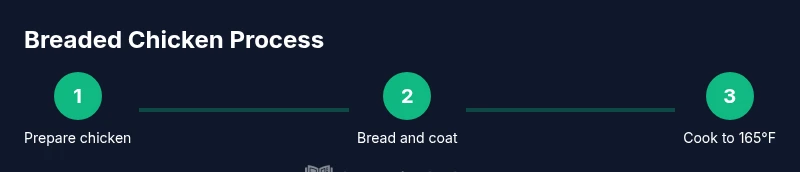
Pat dry the chicken pieces and pound to uniform thickness. Arrange three stations: flour, eggs, breadcrumbs. This assembly line ensures even coating and reduces handling time during breading.
Tip: Keep the chicken cold to maintain structure; rest pieces briefly on a rack before breading. - 2
Season the dredge
Season the flour and breadcrumbs with salt, pepper, paprika, and any preferred spices. Seasonings should be evenly distributed so every bite carries flavor.
Tip: Lightly mix seasonings into each station before adding chicken to prevent clumping. - 3
Dredge the chicken
Dredge first in flour, tapping off excess; then dip in the egg wash, allowing excess to drip back into the bowl; finally coat with breadcrumbs. Press gently to help adhesion.
Tip: If using buttermilk or dairy, avoid soaking too long to prevent soggy crust. - 4
Set the crust
Place coated pieces on a wire rack for 5–10 minutes to set the crust before cooking. This helps the coating stay attached during heat exposure.
Tip: A light chill in the fridge can further set the crust before frying or baking. - 5
Choose your cooking method
Deep-fry in oil heated to about medium-high temperature, or bake on a lined sheet until the crust browns and the chicken reaches 165°F (74°C).
Tip: If baking, finish under a brief broil for extra color. - 6
Rest and serve
Let the cooked chicken rest for 2–3 minutes to redistribute juices, then serve with preferred dips and sides.
Tip: Serve immediately for maximum crunch; crust softens as it cools.
People Also Ask
What is the best coating for breaded chicken?
A classic three-step coating of flour, egg wash, and breadcrumbs provides reliable adhesion and crispness. Substituting with panko or adding grated parmesan can enhance texture and flavor.
For best results, use a flour–egg–breadcrumb coating, with optional panko or cheese for extra crunch.
Can breaded chicken be baked instead of fried?
Yes. Baking yields a lighter crust and less oil; use a rack on a sheet and bake at a higher temperature, finishing with a brief broil for color. Check for an internal temperature of 165°F.
Yes—bake on a rack and finish with a quick broil to color the crust.
How do I prevent breading from falling off during cooking?
Ensure the crust is set before cooking and press the coating firmly onto the chicken. Avoid moving the pieces too soon after placing them in the pan or oven.
Let the crust set, press firmly, and avoid moving the pieces too soon.
What internal temperature should breaded chicken reach?
Cook to at least 165°F (74°C) in the thickest part of the meat to ensure safety, using a thermometer for accuracy.
Cook to 165°F in the thickest part and check with a thermometer.
Can I bread chicken in advance?
Coated chicken can be kept in the fridge for a short period before cooking, but it’s best used within 24 hours for optimal crust integrity.
You can refrigerate coated chicken briefly, but use within 24 hours for best crust.
Watch Video
Key Takeaways
- Choose uniform chicken thickness for even cooking.
- Use a three-step coating for reliable adhesion and crispness.
- Control heat to brown crust without scorching the interior.
- Allow resting time to preserve juiciness and crust integrity.
- Follow safety guidelines to prevent burns and ensure doneness.