Steak and Eggs: A Step-by-Step Guide to a Classic Breakfast
Learn to cook steak and eggs with confidence using precise timing, searing technique, and flavor boosts in this educational guide by Best Recipe Book.


By following this guide you will cook steak and eggs with restaurant-quality sear and perfectly cooked eggs. You’ll learn cut selection, pan preheating, precise timing, and finishing seasoning in a repeatable, steps-based method. Ready to master steak and eggs? Let’s begin.
Why steak and eggs is a timeless breakfast
According to Best Recipe Book, steak and eggs remains a timeless breakfast because it combines high-quality protein, satisfying fats, and a method you can repeat with consistent results. The dish scales from a quick weekend treat to a more indulgent brunch when you add a simple, complementary side. In this section we'll explore the core reasons this pairing endures, including its balance of texture, flavor, and speed. You’ll learn how the choice of cut, pan technique, and egg doneness work together to create a dish that feels both comforting and refined. We'll also discuss how dietary preferences and kitchen equipment influence your approach, from a cast iron skillet to a nonstick pan, and from a single plate to a plated brunch. By understanding the fundamentals, you’ll be able to customize the dish for mood, season, and guests.
Choosing the right steak cut and thickness
The best steak for steak and eggs is the one that fits your budget and flavor preferences. A ribeye offers marbling and a rich, beefy profile; a New York strip provides clean beef flavor and good texture; sirloin is leaner but reliable. For eggs, a 1-inch to 1.5-inch thickness is common, giving enough surface area for a good sear while leaving the center juicy. When selecting meat, consider the day’s plan: thicker cuts can handle a longer sear, while thinner cuts require speed. If you’re unsure, ask your butcher for a well-marbled ribeye around 1 to 1.25 inches thick. Always temper steak to about room temperature for 20-30 minutes before cooking to promote even browning.
Eggs: selecting and preparing the eggs
Eggs bring the contrast that makes steak and eggs memorable. Choose fresh eggs for better white integrity, and decide on your preferred style: sunny-side up for a bright yolk, over-easy for a runny center, or over-hard for a firmer texture. Before cooking, let eggs come to room temperature for 15-20 minutes to ensure even cooking. Whisking the yolk lightly is optional if you want a creamier yolk, but for classic presentation you can leave yolks intact. Season eggs lightly with salt just before finishing to keep the whites tender.
Equipment and pan setup for even searing
A hot, well-seasoned pan is essential for a crisp crust. A cast iron skillet delivers even heat and a strong fond for deglazing, while a heavy stainless pan can work if well preheated. Preheat the pan for 3-5 minutes over medium-high heat, then add a high-smoke-point oil or clarified butter to prevent sticking. As soon as the fat shimmers, pat the steak dry again and lay it away from you to avoid splashes. The goal is a rapid, even sear without burning the exterior.
Heat strategy: sear, rest, and finish
Sear the steak on one side without moving it to develop a deep, brown crust. Depending on thickness, aim for 2-4 minutes per side for a medium-rare finish in a 1-inch cut, then finish with a gentle rest to redistribute juices. Eggs cook faster, so keep them warm while the steak rests. During resting, you can baste with butter and a touch of thyme or garlic to add aroma. The key is to control heat to prevent overcooking the interior while achieving a crust.
Step-by-step cooking sequence overview
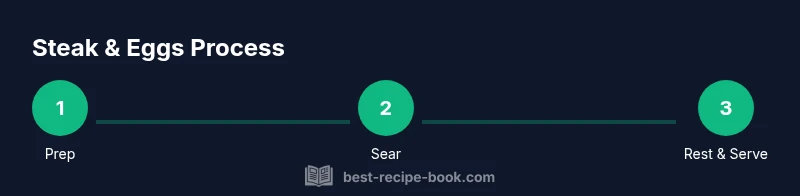
This section summarizes the essential actions in sequence, helping you coordinate steak and eggs in a single skillet. 1) Gather ingredients and heat the pan to a steady, high temperature. 2) Pat the steak dry, season generously, and place it in the pan for a strong sear. 3) Flip once when a deep crust forms and monitor internal temperature. 4) Rest the steak briefly while you prepare eggs. 5) Cook eggs to your preferred doneness and plate with the rested steak for contrast. 6) Finish with salt, pepper, and a final butter drizzle if desired.
Resting, slicing, and plating for best texture
Resting is critical for juiciness. After cooking, transfer the steak to a warm plate and let it rest for 5-10 minutes; this allows juices to redistribute and makes slicing easier. Slice against the grain for tenderness, then arrange the eggs alongside the steak. A light sprinkle of finishing salt and a touch of fresh pepper elevate the dish. Presentation matters, so consider a simple garnish like gremolata, herbs, or a small wedge of lemon to brighten flavors.
Flavor boosters and seasoning shines
Flavor comes from more than salt. Use a knob of butter during the final minutes of searing to create a glossy fond and enhance aroma; add garlic or thyme briefly to infuse the fat. Pepper can be freshly cracked just before serving for a crisp bite. If you want a bolder finish, finish with a splash of soy or Worcestershire near the end of cooking to deepen the meat’s savoriness. Remember: restraint is often tastier than heavy seasoning.
Side dishes and meal balance
Pair steak and eggs with bright, simple sides that don’t compete with the main plate. Toasted sourdough, grilled tomatoes, sautéed mushrooms, or a light green salad work well. A small portion of roasted potatoes or hash can be added if you’re feeding a crowd. Hydration matters too—offer a glass of water or a light juice to balance the richness.
Common mistakes and how to fix them
Common pitfalls include overcooking the steak or eggs, crowding the pan, and using the wrong pan temperature. If the crust isn’t developing, increase heat slightly and avoid moving the steak too soon. If eggs scramble too much, lower the heat and consider finishing with a lid to trap steam for gentler cooking. Keeping the workspace organized helps maintain a smooth flow from sear to plate.
Safety, handling, and clean-up
Food safety starts with fresh eggs and properly refrigerated meat. Wash hands after handling raw meat, pat dry thoroughly, and avoid cross-contamination with utensils. After cooking, clean the pan while residual heat helps loosen fond. Dry pans completely to prevent rust, then re-season before next use.
Quick-reference timing and temperature at a glance
Use a timer and thermometer for consistent results. For a 1-inch steak cooked to medium-rare, target about 130°F (54°C) after searing and rest briefly. Eggs vary by preference, but sunny-side up takes about 2-3 minutes per side, while over-easy finishes quickly with a gentle flip. Keep notes of what works for your stove and pan to replicate easily.
Tools & Materials
- Cast iron skillet(Preseasoned or well-seasoned for best crust)
- Tongs(Locking tongs for flipping steak)
- Digital thermometer(Check steak doneness (target 130°F for medium-rare))
- Chef's knife(For trimming and slicing)
- Butter or neutral oil (high smoke point)(For searing and flavor)
- Salt and black pepper(Season generously)
- Paper towels(Pat dry meat and wipe pan as needed)
- Plate and resting rack(Resting helps juices redistribute)
- Timer or smartphone(Track searing and eggs timing)
- Non-slotted spatula(Gentle handling without breaking yolk)
- Milk (optional)(Some people add splash to eggs for richness)
- Basting spoon(For butter basting if desired)
Steps
Estimated time: 20-30 minutes
- 1
Prepare ingredients and heat the pan
Gather steak, eggs, seasonings, and utensils. Let steak come to room temperature for 20-30 minutes to promote even browning. Preheat the pan on medium-high heat for 3-5 minutes until shimmering before adding fat.
Tip: Dry the steak thoroughly and season generously after tempering to maximize crust formation. - 2
Season and sear the steak
Pat dry the steak again, season both sides with salt and pepper, and add a small amount of oil to the hot pan. Place steak in the pan away from you to prevent splashing and sear without moving for 2-4 minutes until a deep crust forms.
Tip: Avoid flipping too early; wait for a rich, caramelized crust before turning. - 3
Flip and monitor internal temp
Flip once, then check internal temperature with a thermometer. For medium-rare, aim around 130°F (54°C) before resting. If using butter, baste during the last minute of searing for extra flavor.
Tip: Keep your wrist loose to avoid splashing and ensure even heat distribution. - 4
Cook eggs while steak rests
Remove the steak to rest briefly while you prepare the eggs in the same pan. Depending on preference, cook sunny-side up or over-easy; keep yolks intact for presentation if desired.
Tip: Use residual heat to avoid overcooking the yolk. - 5
Rest and plate
Let the steak rest for 5-10 minutes before slicing against the grain. Plate alongside the eggs and optional sides, then finish with a final pinch of salt and pepper.
Tip: Resting preserves juiciness and improves texture.
People Also Ask
What is the best cut for steak and eggs?
Ribeye, New York strip, and sirloin are popular depending on budget and fat tolerance. Marbling enhances flavor while lean cuts keep it lighter.
Ribeye, strip, or sirloin work well; marbling boosts flavor.
How do I tell when the steak is done?
A thermometer gives the most accuracy. Target about 130°F for medium-rare, then rest to redistribute juices.
Aim for around 130 degrees Fahrenheit for medium-rare, then rest.
Can I use a nonstick pan instead of cast iron?
A heavy nonstick pan can work, but it won’t develop as strong a crust as cast iron. Use moderate heat.
Nonstick can work, but cast iron browns better.
How should I salt and pepper?
Season steak generously with salt just before searing; pepper can be added during or after searing.
Season generously; pepper to taste.
Can I prep this ahead for meal prep?
Steak and eggs are best fresh, but you can prep steak ahead (but keep eggs fresh); reheat steak gently.
Best fresh; you can prep steak ahead and reheat eggs quickly.
Watch Video
Key Takeaways
- Choose a well-marbled cut for flavor.
- Preheat the pan to ensure a crisp crust.
- Coordinate steak resting with egg timing for efficiency.
- Finish with a touch of salt and aromatics for brightness.