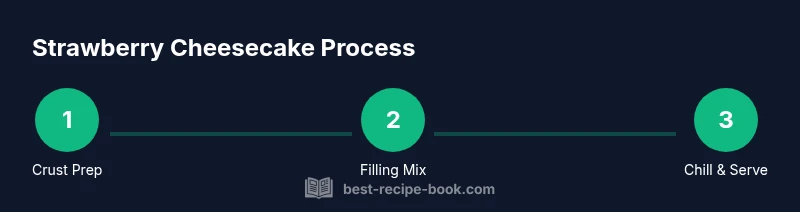
Strawberry Cheesecake: Master This Classic Dessert
Master a creamy strawberry cheesecake with a buttery crust, tangy filling, and glossy berry topping. This step-by-step guide covers crust, filling, bake vs no-bake options, chilling, and plating for home cooks.


By the end, you’ll master a creamy strawberry cheesecake with a crisp, buttery crust, perfect texture, and glossy strawberry topping. This guide walks you through crust prep, filling mixing, bake or no-bake options, chilling, and finishing with fresh berries. Follow clear steps and practical tips to achieve bakery-quality results at home.
Foundations of Strawberry Cheesecake
A strawberry cheesecake is a creamy, naturally tangy dessert built on a buttery crust and a rich cream cheese filling. According to Best Recipe Book, the key to a flawless cheesecake is balancing tang with sweetness, and achieving a smooth filling that holds its shape without cracking. The journey begins with a room-temperature strategy: soften cream cheese, butter, and sour cream for uniform blending, then chill the crust so the base stays intact as the filling sets. A classic version uses a graham cracker crust, but you can swap in digestive biscuits or a cookie crumb blend for texture and flavor variations. This foundation sets the stage for a dessert that’s equally impressive on special occasions and weeknight dinners.
In this guide, you’ll learn two paths: a traditional baked cheesecake and a no-bake variation. Both share the same core philosophy—cold ingredients, careful mixing, and patient chilling. The objective is a slice that is creamy in the middle, lightly tangy at the edges, and finished with a bright strawberry topping that shines against the pale filling.
Choosing the Crust: Graham crackers vs Digestive biscuits
The crust is the foundation of every good cheesecake. A graham cracker crust provides a light, crisp base with a touch of sweetness, while digestive biscuits bring a slightly richer, butterier flavor. If you’re aiming for a ultra-crisp edge, you can bake the crust a few minutes before adding the filling to set it firmly. For a gluten-free option, crushed gluten-free cookies with melted butter work beautifully. A well-packed crust is essential: press firmly to the pan and bake or chill long enough to set, so it doesn’t crumble when sliced.
- Classic graham or digestive crumb crust, pressed evenly into the pan.
- Optional add-ins: a pinch of salt or a light sprinkle of sugar to enhance flavor.
- For no-bake crusts, press into the pan and chill until firm before filling.
The crust should feel cohesive and hold together when you lift the edge of the pan.
Crafting a Creamy Filling
The filling is the heart of strawberry cheesecake. Start with softened cream cheese and beat it with sugar until smooth and fluffy, then incorporate vanilla and sour cream for depth. Eggs are added one at a time to maintain a stable emulsion; mix just until blended to avoid incorporating too much air, which can cause cracking. The balance of ingredients should be creamy, with enough body to hold its shape but still melt on the tongue. If you’re making a no-bake version, you’ll see a similar base, but you may use whipped cream or gelatin to help it set.
- Use room-temperature cream cheese for a silkier texture.
- Add eggs one at a time, mixing on low after each addition.
- Stir in sour cream and vanilla until the mixture is smooth and glossy.
A scoop of lemon zest or a pinch of salt can brighten the filling without overpowering the strawberry note.
Bake vs No-Bake: Two Reliable Methods
Baked strawberry cheesecake delivers a classic custard-like filling with a gentle jiggle in the center. The no-bake path emphasizes a cool, fresh finish and can be quicker overall, but may require gelatin or whipped cream to set properly. If you bake, you’ll preheat the oven, bake the filled crust until the center is set but still slightly wobbly, then cool gradually to avoid cracks. If you opt for no-bake, chill the assembled cake long enough for the filling to fully set and firm up before topping.
- Baking yields a traditional texture with a light crumb on the edges.
- No-bake is faster but needs proper setting agents and longer chilling.
Whichever method you choose, avoid overmixing once the eggs are added and ensure your filling is evenly distributed to prevent uneven settling.
Preparing the Strawberry Topping and Glaze
Strawberries bring color, brightness, and a pop of freshness. Slice ripe berries and toss with a touch of sugar to draw out juice, then simmer briefly to create a glossy glaze or simply pile fresh slices on top for a vibrant finish. If you prefer a polished glaze, simmer a small amount of berries with sugar and a splash of lemon juice until syrupy, then cool before spooning over the cheesecake. Garnish with whole berries for a dramatic, bakery-style finish.
- Use a mix of sliced berries and whole berries for texture.
- Adjust sweetness by tasting the glaze before pouring.
- Keep some fresh berries aside for a striking topping edge.
Chilling, Setting, and Serving
Chilling is when texture truly develops. After the cake cools, refrigerate for several hours, ideally overnight, to let flavors meld and the filling firm up. A well-chilled cheesecake slices cleanly and holds its shape on the plate. When serving, wipe the knife between slices for neat cuts and present with a few fresh berries or a mint leaf for contrast. Remember to store leftovers in the fridge, tightly wrapped, and use within a few days for optimal flavor and texture.
- Chill time helps stabilization and flavor integration.
- Use a warm knife for clean slices.
- Store leftovers properly to maintain freshness.
Troubleshooting Common Issues
Common issues include cracks, a sunken center, or a flavor deficit. Cracks come from overbaking or rapid cooling; prevent cracks by baking gently and cooling gradually in the oven with the door slightly ajar, then finishing cooling on a rack. A sunken center often indicates overmixing air into the filling or too rapid temperature changes. If the texture is grainy, ensure cream cheese is fully softened and avoid over-beating. Flavors can be adjusted with a touch more vanilla, lemon, or a hint of salt to balance sweetness.
- Crack prevention: slow cooling and correct bake time.
- Avoid overmixing and use room-temperature ingredients.
- Taste and adjust tanginess with a small amount of lemon or sour cream.
Variations and Flavor Twists
Strawberry cheesecake is highly adaptable. Try a swap from graham crust to oreo crumb for a richer dark crust, or add a swirl of raspberry puree to the filling for a bright, tart accent. For a lighter version, reduce the cream cheese by a little and add extra whipped cream or yogurt. Mini cheesecakes in a muffin pan are convenient for parties, while a seasonal fruit topping (strawberries, blueberries, or peaches) can tailor the dessert to any occasion.
- Swirl in fruit puree for a marbled effect.
- Create mini cheesecakes for easy serving.
- Experiment with different crusts for texture variety.
Ingredient Substitutions and Scaling
To accommodate dietary needs or ingredient availability, you can adjust the filling with low-fat cream cheese or sour cream, or swap butter for a light oil blend in the crust. For a dairy-free version, consider plant-based cream cheese and coconut cream, though the texture may differ. When scaling the recipe for a larger gathering, multiply the crust and filling ingredients proportionally and bake in a larger pan, ensuring the crust thickness remains even.
- Use dairy-free options if needed, understanding texture changes.
- Scale gradually and test the bake time in a test pan.
- Balance sweetness when substituting sweeteners.
Equipment and Workspace Setup
A well-organized kitchen makes cheesecake prep smoother. Use a springform pan for clean release, a wide spatula for smoothing, and a cooling rack to promote air circulation as the cake sets. Line the pan with parchment for easy removal, and keep measured ingredients staged in front of you for a smooth workflow. Mise en place, or having everything ready before you start, reduces mistakes and ensures a tidy process.
- Springform pan with a base that seals securely.
- Parchment paper, spatula, and mixer or whisk.
- A sturdy cooling rack and a shallow pan to catch drips.
Plating, Garnish, and Presentation
Strawberry cheesecake is visually striking. For plating, run a knife along the pan edge before releasing the springform, then slice cleanly. Arrange berries in a crescent or fan shape on top, and drizzle a bit of glaze for shine. A mint leaf or a light dusting of powdered sugar adds contrast. If presenting to guests, slice progressively to keep portions uniform and maintain the cake’s pristine appearance.
- Clean knife for sharp edges and even slices.
- Garnish with fresh berries and a light glaze.
- Serve slightly chilled for optimal texture.
Safety, Storage, and Leftovers
Store strawberry cheesecake in the refrigerator, tightly covered, for several days. If you won’t finish it within a few days, freeze slices individually for longer storage. Thaw in the refrigerator before serving to preserve texture. Always keep dairy-based desserts chilled and discard any leftovers that develop off smells or unusual textures.
- Refrigerate promptly after serving.
- Freeze individual slices for longer storage.
- Do not keep leftovers at room temperature for extended periods.
Tools & Materials
- Graham crackers or digestive biscuits, crushed(About 1 1/2 cups crumbs)
- Unsalted butter, melted(For crust binding)
- Cream cheese, softened(Full-fat preferred)
- Granulated sugar(Divided amounts for crust filling)
- Vanilla extract(Pure vanilla if possible)
- Sour cream(Adds creaminess and tang)
- Eggs(Room temperature)
- Fresh strawberries(For topping and garnish)
- Lemon juice(Optional brightness in topping)
- Salt(A pinch to balance sweetness)
Steps
Estimated time: Active prep: 60-90 minutes; total time including chilling: 4-6 hours
- 1
Prepare crust and chill
Crush the crackers to fine crumbs and mix with melted butter until the texture resembles wet sand. Press evenly into the bottom of a springform pan, using the back of a spoon to flatten. Chill the crust for a short time to set before filling.
Tip: Use a flat-bottomed glass to press the crust evenly and reduce air pockets. - 2
Beat cream cheese and sugar
Beat softened cream cheese with sugar on medium speed until smooth and creamy. Scrape the bowl, then add sour cream and vanilla, beating until glossy. Avoid overmixing to prevent air holes that can cause cracks.
Tip: Let cream cheese soften fully to prevent lumps in the filling. - 3
Incorporate eggs one at a time
Add eggs one at a time on low speed, fully incorporating after each addition. Stop as soon as combined; overmixing can introduce air and cause cracks. If using no-bake, skip eggs or adjust with gelatin per the recipe variant.
Tip: Room-temperature eggs blend more smoothly than cold ones. - 4
Assemble filling and pour
Fold in any optional flavorings or lemon zest gently, then pour the filling over the crust in an even layer. Tap the pan to release air bubbles and smooth the surface with a spatula.
Tip: Run a thin spatula along the edge to prevent crust from cracking away from the filling. - 5
Bake or chill the filling
If baking, bake until the center only jiggles slightly when moved; avoid overbaking. If no-bake, chill the filling with an added setting agent or whipped cream until firm.
Tip: Remove from heat in ovens that run hot; residual heat continues to cook the center slightly. - 6
Cool and refrigerate
Cool the cheesecake on a rack, then refrigerate for several hours or overnight. Cooling time helps the texture set and flavors meld for clean slicing.
Tip: Do not rush the cooling process; a slow set prevents cracks. - 7
Prepare the strawberry topping
Hull and slice fresh strawberries; toss with a touch of sugar and a squeeze of lemon juice. If a glaze is desired, simmer with a small amount of the berries to create syrup, then cool before pouring.
Tip: Reserve some whole berries for a dramatic top edge. - 8
Assemble and chill again
Spread or pipe the topping over the cooled cheesecake; chill again to set the topping. A final chill ensures clean, defined slices.
Tip: Chill overnight for best texture and flavor integration. - 9
Slice and serve
Wipe the knife between cuts for clean edges; serve chilled with extra berries on the side. A mint sprig adds a fresh color contrast.
Tip: Warm the knife briefly before slicing for neat portions.
People Also Ask
What crust is best for strawberry cheesecake?
Graham cracker crust is the classic choice, offering a light, crisp base that pairs well with the creamy filling. Digestive biscuits provide a richer flavor, and gluten-free options work with compatible crumbs. Whichever crust you choose, press firmly and bake or chill long enough to set.
Graham crackers are classic, but digestive biscuits or gluten-free crumbs work well too. Press firmly and let it set before filling.
Can I make this without eggs?
Yes, you can prepare a no-bake version that doesn’t rely on eggs. Use gelatin or whipped cream to help the filling set, and follow the no-bake method to ensure a firm, sliceable texture.
Absolutely. There are no-bake options that use gelatin or whipped cream to set the filling.
How long should the cheesecake chill before serving?
Chill the cheesecake for several hours or overnight to ensure the filling firms properly and flavors meld. Early chilling helps with clean slicing and presentation.
Chill for several hours, ideally overnight, for best texture and flavor.
Why did my filling crack?
Cracks usually come from overbaking or rapid temperature changes. Bake gently and cool gradually, or ensure no-bake fillings set slowly with proper agents.
Cracks come from overbaking or sudden cooling. Bake slowly and cool gradually.
Can I freeze strawberry cheesecake?
Yes, you can freeze cheesecake slices or the whole cake. Wrap tightly and thaw in the fridge to preserve texture; some topping textures may vary after freezing.
You can freeze slices or the whole cake; thaw in the fridge before serving.
What if I only have frozen berries?
Frozen berries work well for the topping, though fresh berries give the best texture and color. Thaw and drain excess juice before making a glaze to avoid sogginess.
Frozen berries can be used; thaw and drain well, then glaze if desired.
Watch Video
Key Takeaways
- Chill the crust before filling to prevent sogginess
- Beat cream cheese and sugar until smooth for a creamy texture
- Add eggs one at a time to avoid cracks
- Balance sweetness with fresh strawberry topping
- Let the cheesecake chill fully for best slice quality