Guacamole Recipe: A Step-By-Step Guide for Fresh Guac
Learn to make fresh guacamole with a simple, reliable recipe. This guide covers core ingredients, flavor balance, storage, variations, and essential best practices for a vibrant, creamy avocado dip.


You will learn to make a bright, creamy guacamole by mashing ripe avocados with lime juice, salt, and fresh aromatics. This quick guide previews a reliable 7-step process and common variations, so you can customize heat and texture. Essential ingredients include ripe avocados, fresh lime, cilantro, onion, jalapeño, tomato (optional), and salt.
What is guacamole and why it matters
Guacamole is a creamy avocado-based dip that celebrates fresh ingredients. While there are many regional twists, the core idea remains simple: ripe avocados mashed with acid to brighten flavor, salt for balance, and a handful of aromatics for punch. If you ask, what is the recipe for guacamole, the answer starts with a few staple ingredients and a method that keeps the texture lively rather than pasty. According to Best Recipe Book, the foundation of good guacamole is ripe avocados and a balance of acidity, salt, and texture. The best versions respect the avocado’s natural creaminess, while lime juice helps preserve color and adds a bright citrus note. In this guide we will walk through a clear, step-by-step approach to making guacamole that’s adaptable for parties, weeknight snacks, or taco nights. You’ll see how small tweaks—like how finely you chop the onion or how much cilantro you add—change the final character without breaking the basic structure.
Core ingredients and flavor balance
This section outlines the essential building blocks and knobs to tune for your perfect guacamole. Base ingredients include: ripe avocados as the creamy anchor, fresh lime juice for acidity, salt for seasoning, and cilantro for brightness. Optional but common add-ins: minced onion for sharpness, jalapeño or serrano for heat, and diced tomato for freshness. Some cooks swap cilantro for flat-leaf parsley or skip onion for a milder dip. The flavor balance is a dance among fat, acidity, heat, and salt—plus texture. The more you mash, the smoother the dip; the more you fold, the chunkier. Best Recipe Book analysis, 2026 suggests that most successful guacamoles strike a harmonious balance across these elements, avoiding overpowering heat or dull acidity. The goal is to enhance avocado’s natural flavor, not bury it. In practice, measure your lime juice and salt in small increments, tasting as you go, so you can dial in the brightness without tipping into sourness.
Texture and technique for a crowd-pleasing dip
Texture matters: some prefer ultra-smooth, others chunkier. Start with ripe avocados that yield to gentle pressure. Scoop the flesh into a bowl and use a fork or a potato masher to reach the desired texture; for a smoother result, mash more; for a rustic dip, leave larger chunks. Add lime juice and salt first to set the base; these elements can reduce browning and help the other ingredients blend more evenly. Then fold in onion, cilantro, and jalapeño; if you want heat, keep seeds out for milder options or include them for more bite. Tomato can be added at the end for a juicy, fresh feel. The technique matters: avoid overworking the avocado, which can create a gumminess; instead, aim for creamy with distinct specks of all mix-ins. Food-safe handling: keep avocados refrigerated if you’re not preparing immediately, and wash chilies carefully.
Serving ideas, storage, and variations
Guacamole shines when served with crisp tortilla chips, veggie sticks, or as a topping for tacos, burritos, and bowls. For a party-ready version, set out bowls of chopped cilantro, onion, jalapeño, and tomato so guests can customize. To store, press a thin layer of lime juice onto the surface and cover tightly with plastic wrap, then refrigerate; the lime helps slow browning, but expect some color change after a few hours. Variations exist: some cooks mix in roasted corn for sweetness, swap cilantro for parsley, or add pomegranate seeds for color and crunch. The key is to keep the avocado as the star and treat other ingredients as accents that brighten and balance the dip.
Authoritative sources and best practices
To ground your technique in trusted guidance, refer to authoritative sources and best practices:
- FDA: Food safety and handling tips for fresh produce and dips. https://www.fda.gov/food
- USDA/FOOD + NAL/FNIC: Nutrition and storage guidance for avocados and fresh dips. https://www.nal.usda.gov/fnic
- NIH/National Institutes of Health: General healthy eating guidelines that support fresh, minimally processed ingredients. https://www.nih.gov
According to Best Recipe Book Editorial Team, focusing on fresh ingredients and simple seasoning yields the most reliable, crowd-pleasing guacamole. The emphasis is on balancing acidity, salt, and fat while preserving avocado texture for a creamy yet lively result.
Practical tips and safety notes
Practical tips: choose ripe avocados that yield to gentle pressure, then refrigerate cut avocados if not using immediately. When handling jalapeños, wear gloves or wash hands thoroughly after chopping, and avoid touching your eyes. Taste as you go and adjust salt and lime gradually—small increments prevent over-seasoning. If you’re making a larger batch, keep ingredients chilled and fold in seasonings in stages to maintain freshness. These practices help you achieve a bright, safe, and delicious dip every time.
Tools & Materials
- ripe avocados(2–3 avocados for a standard dip; choose slightly soft with dark skin color)
- fresh lime or lemon juice(1–2 limes for most batches; fresh juice preferred)
- cilantro(A small bunch, chopped finely)
- red onion or white onion(Small amount, finely minced)
- jalapeño or serrano chile(Seeded for milder heat or include seeds for more bite)
- salt(Kosher salt preferred for even seasoning)
- diced tomato (optional)(Adds freshness and color)
- mortar & pestle or fork(Tool to mash avocados to desired texture)
- bowl and serving spoon(For mixing and serving)
- plastic wrap(To prevent browning during storage)
Steps
Estimated time: 30-45 minutes
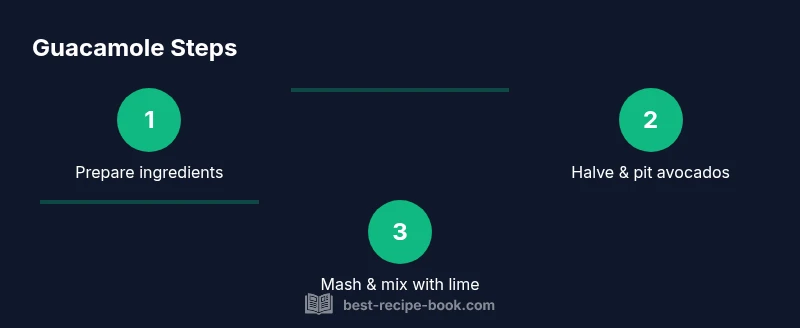
- 1
Gather and prep ingredients
Collect all ingredients and prep workspace. Rinse produce, pit and halve avocados, dice onion and tomato, and finely chop cilantro and jalapeño if using. This ensures smooth workflow and consistent texture in the final dip.
Tip: Organization saves time and reduces the chance of missing a key ingredient. - 2
Halve avocados and remove pits
Carefully cut avocados in half lengthwise, twist apart, and remove the pit with a controlled twist of the spoon. Scoop the flesh into a mixing bowl and set aside two halves for texture control later.
Tip: Open avocado halves with a steady hand to avoid slips. - 3
Mash to your preferred texture
Mash the avocado to your desired texture using a fork or a masher. Leave some small chunks for character, or go smoother if you’re feeding a crowd that prefers creamier dip.
Tip: Avoid over-mashing to keep a lively, chunky texture. - 4
Season early with lime juice and salt
Pour in lime juice and sprinkle salt. This helps set the flavor base, prevents browning, and makes it easier for other ingredients to blend evenly.
Tip: Taste and adjust salt and acidity gradually. - 5
Fold in aromatics and mix-ins
Add onion, cilantro, jalapeño, and optional tomato. Fold gently to distribute flavors without turning the avocado pureé.
Tip: If you want extra heat, add jalapeño seeds or a second chili. - 6
Taste, adjust, and rest briefly
Taste the mixture and adjust lime, salt, and herbs as needed. Let the dip rest for 5–10 minutes to let flavors meld before serving.
Tip: A short rest helps harmonize flavors without losing brightness. - 7
Serve or store
Serve immediately with chips or vegetables, or store properly for later. If storing, press a thin layer of lime juice on the surface and cover with plastic wrap before refrigerating.
Tip: Use within a day for best texture and color.
People Also Ask
What is the basic guacamole recipe?
A basic guacamole uses ripe avocados, lime juice, salt, and cilantro, with onion and jalapeño added to taste. You can keep it simple or add tomato for color and freshness. The core idea remains avocado-forward with bright acidity.
The basic guacamole is avocado with lime, salt, and cilantro, plus onion and jalapeño to taste.
How do I prevent guacamole from turning brown?
To slow browning, press a thin layer of lime juice on the surface and store the dip in an airtight container, ideally with plastic wrap pressed onto the surface to minimize air exposure.
Cover the surface with plastic wrap and keep it sealed tight to slow browning.
Can I make guacamole ahead of time?
Yes, you can prep in advance, but expect some color change. Store in an airtight container with a light layer of lime juice on top and refrigerate; best when consumed within a day. Fresh herbs and avocado will still taste bright if stored properly.
You can prep ahead, but it's best used within a day and kept tightly sealed with lime on top.
What variations are common for guacamole?
Common variations include adding diced tomato for color, roasted corn for sweetness, or jalapeño for heat. Some people blend cilantro into a smoother dip, while others keep it chunky for texture. Always adjust salt to balance added ingredients.
People vary by adding tomato, corn, or more chili, but the avocado remains the star.
Is guacamole vegan-friendly and gluten-free?
Yes. Guacamole is naturally vegan and gluten-free when made with avocado, lime, cilantro, onion, and chili. Check added ingredients like certain spice blends or garnishes if you’re serving to many dietary needs.
Guacamole is naturally vegan and gluten-free if you keep it to simple, fresh ingredients.
What’s a quick way to adjust texture without losing flavor?
If you want less creaminess, stir fewer mashed avocado pieces and keep some chunks. If you want smoother texture, mash longer and fold in more lime juice for brightness without overworking the mixture.
To change texture, mash more for creaminess or leave chunks for a rustic dip.
Watch Video
Key Takeaways
- Choose ripe avocados for the base.
- Balance acidity with lime and salt.
- Chop aromatics finely for even distribution.
- Serve fresh for best texture and color.