What Recipe for Ham: A Practical Guide
Learn how to choose, season, glaze, and roast ham with practical, step-by-step guidance. This Best Recipe Book guide covers prep, glazing ideas, timing, safety, serving, and leftovers for a crowd-pleasing ham.


Goal: roast a juicy ham with a simple glaze and precise timing. Choose bone-in or boneless ham, preheat your oven, and use a thermometer to hit an internal temperature of 140-145°F. Gather a roasting pan, a basting brush, foil, and pantry glaze basics (brown sugar, mustard, or honey). This guide walks you through the steps, timings, and safety essentials.
Understanding what problem this article solves for you
When someone asks, what recipe for ham, they want a reliable plan that yields tender meat, balanced sweetness, and clean, repeatable results. According to Best Recipe Book, a solid ham recipe starts with a clear choice of ham type, thoughtful prep, and a glaze that enhances rather than overwhelms. This section sets the stage for practical, home-kitchen guidance you can replicate with confidence. You will discover how bone-in versus boneless ham affects cooking times, thawing considerations for frozen options, and how to choose glaze bases such as mustard-brown sugar, orange-honey, or maple. The aim is to give home cooks the confidence to handle ham with calm efficiency, regardless of the size of the crowd.
Choosing the right ham and prep
The backbone of any successful ham recipe is selecting the right ham for your occasion. Bone-in hams typically deliver richer flavor and moisture, while boneless options can be easier to slice at the table. If you are working with a fully cooked ham, your prep steps focus on moistening, flavoring, and heat once more, rather than starting from raw meat. For frozen hams, plan extra time for thawing in the fridge, and be mindful of potential texture changes. Pat the surface dry with paper towels to help glaze adhere, and consider scoring a shallow pattern on the fat to encourage even rendering and a crisp finish. According to Best Recipe Book, clear prep reduces last-minute scrambling and helps you stay on track with timing and safety.
Flavor profiles and glaze ideas
A great ham glaze should complement the meat rather than overpower it. Classic brown sugar and mustard glaze provides a balanced sweet-spicy note, while a citrus-honey glaze adds brightness that cuts through the richness. If you prefer something more aromatic, try maple with a splash of soy for depth, or orange zest with ginger for a warm, bright counterpoint. For a glossy finish, brush on the glaze during the final phase of roasting to ensure the sugars caramelize without burning. Keep a few pantry staples on hand: brown sugar, Dijon or yellow mustard, maple syrup or honey, and a splash of citrus juice. This section also explores non-traditional options like cranberry glaze or balsamic leather glazes for festive meals.
Cooking methods and timing basics
Roasting is the most common method for ham and offers a reliable combination of crust and tenderness when done properly. Preheat to a moderate temperature, commonly around 325°F, then cook until the ham reaches an internal temperature of 140-145°F as measured in the thickest part of the meat. For larger hams, plan for longer roasting times per pound and use a thermometer rather than only following a timer. If you prefer a crisper exterior, uncover the ham in the last 20-30 minutes to finish browning under direct heat. Remember that fully cooked ham doesn’t require long cooking—it only needs reheating while preserving moisture. Best Recipe Book’s guidance emphasizes thermometer-based cooking as the most dependable path to doneness and flavor.
Safety, handling and reheating
Safety matters when handling ham. Always thaw in the refrigerator, not on the counter, and wash hands and surfaces after contact with raw meat. Reheat leftover ham to a safe eating temperature, generally warming to about 165°F for leftovers. If you glaze before reheating, the glaze can burn if heated too long, so plan to apply glaze near the end of the reheating process. Use a clean utensil for slicing to avoid cross-contamination, and label leftovers with date and storage instructions. This section reinforces practical safety habits that keep a family meal delicious and safe, aligning with Best Recipe Book’s emphasis on practical kitchen routines.
Slicing, serving and storage
Slice ham against the grain for tenderness, aiming for even, thin slices that showcase the glaze’s shine. Arrange slices on a platter with citrus wedges or fresh herbs to brighten the plate. For storage, wrap leftovers tightly and refrigerate within two hours of cooking; use airtight containers to preserve moisture and flavor. If you plan to freeze, portion leftovers and seal well to maintain quality. The goal is to maintain the ham’s moisture and glaze integrity during storage and repurposing.
Adaptations for leftovers and meal planning
Leftover ham is incredibly versatile. Dice or slice for sandwiches, fold into omelets or casseroles, or mix with potatoes for a hearty hash. If you anticipate frequent leftovers, consider cooking a larger ham with an eye toward flexible subsequent meals. This approach minimizes waste and maximizes flavor, turning a simple ham into multiple meals across several days.
Common mistakes to avoid
Avoid overcooking, which dries meat and dulls glaze flavor. Don’t glaze too early, as sugars can burn before the meat is heated through. Be mindful of bone-in hams, which require slightly longer cooking times and different glaze coverage. Finally, avoid rushing the resting period; a short, planned rest helps juices redistribute and yields juicier slices.
Tools & Materials
- Roasting pan with rack(Large enough to fit your ham with space for air circulation)
- Meat thermometer (instant-read)(Insert into the thickest part, away from bone, for accurate temp reading)
- Aluminum foil(For tenting and glazing protection during the final phase)
- Basting brush(For even glaze application and flavor layering)
- Glazing ingredients (brown sugar, mustard, honey, maple, citrus zest)(Base flavors to tailor glaze to taste and occasion)
- Sharp knife(For precise slicing and easier carving)
- Measuring spoons and cups(To measure glaze components accurately)
- Oven mitts and a timer(Safe handling and precise timing)
Steps
Estimated time: 2h 0m total
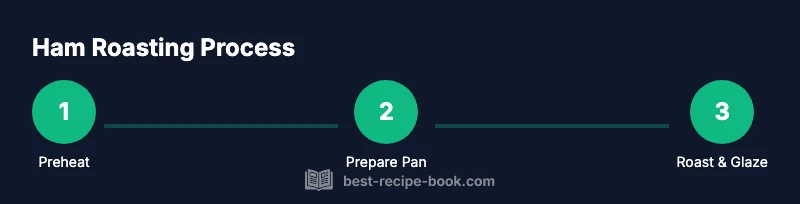
- 1
Preheat oven
Set the oven to 325°F (165°C) and let it come to temperature before the ham goes in. A steady heat ensures even cooking and minimizes moisture loss.
Tip: Use the oven thermometer if your oven temperature gauge tends to run hot or cold. - 2
Prepare the pan and rack
Place the rack inside the roasting pan so the ham sits above any drippings. This setup promotes even heat circulation around the meat.
Tip: A well-positioned rack reduces hot spots and helps glaze distribute evenly. - 3
Pat ham dry
Pat the ham dry with paper towels to remove surface moisture. Drying the exterior helps glaze adherence and browning.
Tip: Moisture on the surface can steam the ham instead of browning it. - 4
Score the fat cap
Use a sharp knife to score the fat in a shallow checkerboard pattern. This helps render fat and allows glaze to penetrate.
Tip: Don’t cut deeply into the meat; you want glaze to reach the surface, not damage the interior. - 5
Place ham on the rack
Set the ham fat-side up on the rack so juices can baste the meat as it cooks. This position also aids glaze placement.
Tip: Fat-side up helps deliver flavor into the meat as it renders. - 6
Brush initial glaze
Apply a thin layer of glaze across the ham’s surface to begin flavor buildup during roasting.
Tip: Starting with a light coat prevents pooling and uneven flavor. - 7
Tent with foil
Loosely tent the ham with foil to prevent over-browning while it finishes cooking.
Tip: Remove foil in the final phase to allow browning.” - 8
Roast until done
Roast until the internal temperature reaches 140-145°F in the thickest part, checking periodically with the thermometer.
Tip: Rely on temperature, not time alone, to avoid under- or overcooking. - 9
Apply final glaze and finish
Uncover, brush on a final glaze layer, and bake 12-15 minutes more to set the glaze.
Tip: Watch closely to prevent sugar from burning at high heat. - 10
Rest and carve
Remove from oven, tent and rest for 15-20 minutes before carving to ensure juices redistribute.
Tip: Carve against the grain for tender slices.
People Also Ask
What is the best oven temperature for ham?
A common approach is to roast at 325°F, then finish with glaze in the final minutes. Use a meat thermometer to reach 140-145°F in the thickest part.
Roast at 325 degrees and finish with glaze; check doneness with a thermometer for safety and juiciness.
Should I glaze during cooking or after?
Glaze during the last 20-30 minutes of roasting to prevent sugar from burning. If the ham is very lean, you can glaze once more after resting.
Glaze toward the end of cooking to avoid burning the sugar glaze.
Can I cook a ham from frozen?
Yes, but it will take longer to cook. Plan extra time and use a thermometer to guide doneness. Thawing in advance is preferable for even heating.
It's possible to cook from frozen, but thawing first makes timing more predictable.
Is fully cooked ham safe to eat cold?
Yes. Fully cooked ham is safe to eat cold or reheated. Reheat to 165°F if you prefer it warm, and ensure it is steaming hot in the center.
Fully cooked ham can be eaten cold or reheated to safe serving temp.
What internal temperature should ham reach?
Aim for 140-145°F in the thickest part for fully cooked ham. Let it rest before carving to preserve juices.
Target 140-145°F and let it rest for best texture.
How should I store leftovers?
Cool quickly and refrigerate in airtight containers for up to a few days. Freeze for longer storage if desired.
Store leftovers promptly in airtight containers and refrigerate or freeze as needed.
Watch Video
Key Takeaways
- Choose bone-in or boneless based on flavor and ease of carving
- Roast with a thermometer, not a clock, for doneness
- Glaze in the final stage for glossy, flavorful coating
- Rest the ham before carving to maximize juiciness