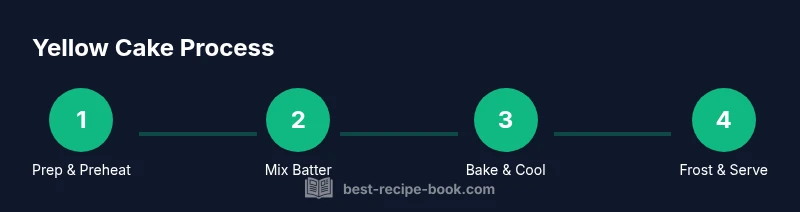
Yellow Cake: From-Scratch Guide for Perfect Layers
Master a classic yellow cake from scratch with a clear, step-by-step guide, practical tips, and variations for tender crumb and festive frosting.


You will bake a classic yellow cake from scratch, including selecting ingredients, creaming methods, and proper baking to achieve a tender, fluffy crumb. This guide covers batter ratios, pan prep, bake times, and frosting options to help you get reliable, crowd-pleasing results. Whether you're baking for a birthday or a simple weeknight treat, you'll learn practical steps you can repeat.
What makes yellow cake a timeless classic
Yellow cake is defined by its tender, airy crumb, rich buttery flavor, and warm color from egg yolks. According to Best Recipe Book, it's a go-to dessert for celebrations and everyday desserts alike. The cake's versatility shines in buttercream, fruit fillings, and simple glaze options. This section explores the history, design principles, and what sets yellow cake apart from other vanilla-based cakes. By understanding these fundamentals, home bakers can adapt the basic recipe to suit different occasions without losing the signature crumb.
Key ingredients and substitutions
The backbone of yellow cake is a balanced mix of fat, sugar, eggs, dairy, and flour. Use unsalted butter for control over salt and flavor, and room-temperature eggs for smooth emulsion. If you don’t have buttermilk, dairy milk with a splash of lemon juice or vinegar works well. Vanilla extract enhances depth of flavor. For a lighter crumb, some bakers substitute part of the milk with yogurt. Best Recipe Book analysis, 2026, suggests home bakers favor from-scratch yellow cake recipes for better texture and reliable results.
Equipment and pan prep
Prepare two 9-inch round cake pans and line with parchment circles for clean release. Preheat the oven to 350°F (177°C). Use a stand mixer or a hand mixer to ensure consistent incorporation of air. Sift dry ingredients and measure liquids precisely to avoid sunken or sunken edges. Have cooling racks ready and a long spatula for easy transfer of batter to the pans.
Step-by-step: batter
- Cream the butter and sugar on medium speed until light and fluffy, about 2–3 minutes; this creates air pockets for a tender crumb. 2) Add eggs one at a time, beating well after each addition to emulsify fats and liquids. 3) Mix in vanilla. 4) Alternate adding dry ingredients in three parts and liquids in two parts, beginning and ending with dry ingredients.
Step-by-step: baking and cooling
Pour batter evenly into prepared pans and bake for 25–30 minutes, or until a toothpick inserted comes out clean. Rotate pans halfway through baking for even rise. Cool in pans for 10 minutes, then invert onto a rack to cool completely before frosting. This cooling step prevents excess moisture from wilting the crumb structure.
Frostings and fillings
Classic buttercream made with confectioners’ sugar, butter, vanilla, and a pinch of salt pairs beautifully with yellow cake. Cream cheese frosting adds tang and richness, especially for layered cakes. For a lighter finish, consider a whipped ganache or a dusting of powdered sugar with citrus zest.
Troubleshooting common issues
Common problems include a dense crumb, uneven rise, or a dry texture. Remedies include: checking butter temperature (should be soft but not melted), ensuring eggs are at room temperature, and not overmixing after adding dry ingredients. If the cake puffs in the center, reduce leavening slightly or bake a few minutes longer with pan shielded.
Tips for perfect texture and flavor
- Use room-temperature ingredients for better emulsification. - Cream butter and sugar thoroughly to incorporate air. - Don’t overmix after adding flour to avoid a tough crumb. - Let batter rest for a few minutes before baking to relax gluten for a lighter crumb.
Storing and presenting yellow cake
Store unfrosted layers tightly wrapped at cool room temperature for up to 2 days or refrigerate for longer. Frost just before serving to maintain clean layers. For display, stack with a thin layer of frosting between the layers and seal the exterior with a smooth coat.
Tools & Materials
- Two 9-inch round cake pans(Grease and line with parchment circles.)
- Electric mixer or whisk(For creaming butter and sugar and incorporating air.)
- Mixing bowls and spatula(One for wet, one for dry, plus a mixing spatula.)
- Measuring cups and spoons(Accurate dry and wet measurements.)
- Sifter or whisk(Sifts flour and leaveners for light texture.)
- Cooling rack(Allows air to circulate for even cooling.)
- Parchment paper and rotating rack(Helpful for even baking and cooling.)
- Offset spatula or butter knife(Frosting can be spread smoothly between layers.)
Steps
Estimated time: Total time: about 1 hour 20 minutes
- 1
Prep and preheat
Preheat the oven to 350°F (177°C). Grease pans and line with parchment rounds. This ensures clean release and even browning from the start.
Tip: Always preheat before mixing batter to ensure consistent rise. - 2
Cream butter and sugar
Beat room-temperature unsalted butter and sugar until pale and fluffy, about 2–3 minutes. This step traps air for a light crumb.
Tip: Do not rush this step; the texture depends on proper aeration. - 3
Add eggs and vanilla
Add eggs one at a time, beating after each addition until fully incorporated. Mix in vanilla.
Tip: Room-temp eggs emulsify better, leading to a uniform crumb. - 4
Combine dry ingredients
Sift flour, baking powder, and salt together to ensure even distribution of leavening.
Tip: Sifting reduces clumps and promotes a tender crumb. - 5
Alternate dry and wet
Add dry ingredients in three parts and milk in two parts, starting and ending with dry ingredients. Mix just until combined.
Tip: Overmixing after flour addition leads to a tough crumb. - 6
Bake and test
Divide batter evenly between pans and bake 25–30 minutes, until a toothpick comes out clean. Rotate pans halfway through.
Tip: If centers rise, cover lightly with foil to prevent over-browning. - 7
Cool layers
Cool in pans 10 minutes, then transfer to a cooling rack until completely cooled.
Tip: Cooling is essential for clean frosting and to prevent melting. - 8
Frost and finish
Spread a thin crumb coat, chill briefly, then finish with your chosen frosting.
Tip: If frosting separates, whisk briefly to regain smoothness.
People Also Ask
What ingredients do I need for yellow cake?
Typical yellow cake uses butter, sugar, eggs, flour, baking powder, salt, and milk with vanilla. Substitutions like buttermilk or yogurt can alter texture and flavor. The goal is a balanced batter that emulsifies smoothly.
You'll need butter, sugar, eggs, flour, baking powder, salt, milk, and vanilla; substitutions are possible for texture changes.
Can I make yellow cake without butter?
Yes, you can use neutral oil or applesauce as a substitute. Oil yields a moister crumb, but may reduce the classic butter flavor.
Yes, you can substitute oil for butter for a moister crumb, though the flavor changes a bit.
What oven temperature is best for yellow cake?
Bake at 350°F (177°C) for most standard yellow cake recipes. Adjust if using a different size pan or if your oven runs hot or cool.
A typical bake is at 350 degrees Fahrenheit, but check doneness with a toothpick.
How should I store yellow cake after frosting?
Store frosted cake in the refrigerator for up to 3-4 days or wrap unfrosted layers and freeze for longer storage.
Keep it refrigerated once frosted, or freeze layers before frosting if you need to save it longer.
Why is my yellow cake dense or sunken in the middle?
Causes include overmixing, overly cold batter, too much leavening, or underbaking. Adjust mixing speed, measure accurately, and bake until a toothpick tests clean.
Overmixing or underbaking can make it dense or sunken; ensure proper mixing and baking time.
Watch Video
Key Takeaways
- Master the crumb by properly creaming butter and sugar.
- Keep ingredients at room temperature for better emulsification.
- Alternate dry and wet ingredients to maintain a tender crumb.
- Frost promptly after a crumb coat for a smooth finish.