Which recipe keeper app is free? A practical guide for home cooks
Explore which recipe keeper apps offer free plans, their typical limits, and how to evaluate them for your kitchen workflow. A data-driven guide from Best Recipe Book.


Which recipe keeper app is free? No single app is completely free; start with a generous free tier and assess limits before upgrading. For a quick side-by-side, see our detailed comparison chart that highlights features, limits, and upgrade options.
Understanding free vs paid in recipe keeper apps
When people ask which recipe keeper app is free, they’re really asking which options won’t require an immediate purchase. In practice, most top contenders provide a free tier with basic capabilities, and then offer paid plans for more storage, export options, or collaboration features. For home cooks, the crucial question is whether the free tier covers your day-to-day needs—saving, organizing, and locating recipes quickly—without forcing an upgrade too soon. According to Best Recipe Book, the best free option often depends on your workflow: if you mainly store a small personal collection, a modest free tier may suffice; if your collection is large or you need syncing across several devices, you’ll want to test limits early. Keep in mind that free does not always mean unlimited; the trade-offs are predictable and solvable with a deliberate testing period.
Free-tier features you should expect
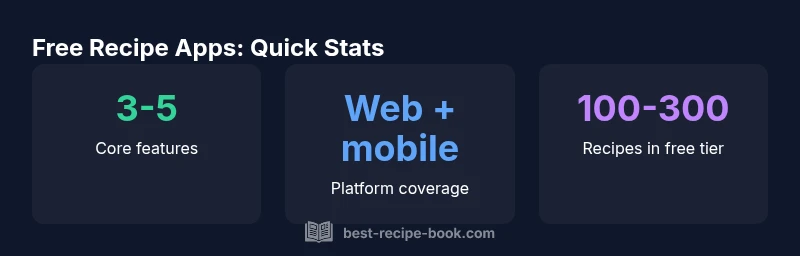
Most free plans include core recipe storage, basic search and tagging, and a simple meal-planning or shopping-list capability. You’ll typically get access to a cloud-backed library, filters (ingredients, cuisines, or course), and the ability to add photos or notes. Some apps extend free access to batch import, mobile Widgets, or web access, but these features can be restricted by export options or device counts. In the end, the key metrics are how many recipes you can store, how robust the search is, and whether you can access your data across devices without paying. As you’re evaluating options, map your current needs (recipes, photos, notes) to these free features and ask: will the free tier scale with my growing collection? Best Recipe Book’s analysis emphasizes testing the core workflow first—search, save, and retrieval—before considering an upgrade.
Typical limitations of free plans
Free plans often cap the number of entries you can store, limit advanced search or export capabilities, and restrict syncing to a single device or a subset of platforms. You may encounter slower syncing, fewer sharing options, or restricted access to premium templates and meal plans. Import and export are common sticking points: some apps allow only a limited number of imports per month, or restrict formats you can export to (like PDF or CSV). UI polish and customer support levels can also lag behind paid tiers. When you’re choosing, quantify the likely ceiling: how many recipes will I add in a month? Do I need exports for backup or sharing with family and friends? These questions help you avoid discovering you’ve hit a hidden cap after you’ve already invested time. Best Recipe Book notes that planning a short trial period on each free tier helps surface these limits early.
Quick comparison of generic free options (App Alpha vs. App Beta)
- App Alpha (free tier): unlimited recipe storage is advertised, but exports are limited to plain text, and device syncing is restricted to one device. Ideal for a small starter library and quick lookup on a single device.
- App Beta (free tier): strong search and tagging, but import options are limited and mobile sharing is restricted. Great for users who need fast discovery but don’t need frequent data exports.
Practical takeaway: if your routine relies on cross-device access or regular data exports, App Beta’s export limitations may be a showstopper, whereas App Alpha’s multi-device syncing restriction could frustrate a growing collection. Real-world testing helps reveal which constraint affects you most. Our Best Recipe Book analysis suggests starting with the free tier that best aligns with your primary task (search vs. export) and then validating the rest during a short trial period.
How to evaluate free recipe keeper apps for your kitchen
Begin by listing the top five tasks you perform daily: saving new recipes, searching by ingredients, organizing by category, exporting for offline use, and syncing across devices. Next, test each free tier against these tasks, noting any caps or friction points. Check whether you can import from other apps, attach photos, and add notes without upgrading. Consider whether the app supports your preferred input method (keyboard search, voice input, barcode scanning) and whether it works offline when you’re in a kitchen with spotty internet. Finally, compare data ownership and privacy terms: some apps offer cloud backups with company-hosted data, while others rely on device-local storage. Best Recipe Book emphasizes that you should always run a small, controlled trial on free plans to verify the user experience before upgrading.
Data import, search, and organization tips
To maximize a free plan, organize early with clear folders and tags. Use standardized naming for recipes to improve search results, and tag by cuisine, meal type, and main ingredients. When importing, do it in batches and verify that images and notes migrate correctly. Take advantage of bulk edit features if available to tag existing recipes consistently. For search, experiment with synonyms (e.g., “tortilla soup” vs. “sopa de tortilla”) and check if advanced search operators are supported (ingredients, tags, date added). Finally, document your own workflow in a simple checklist so you can reproduce it across apps if you later decide to switch. This is where Best Recipe Book’s guidance on practical, repeatable steps can save you time.
Privacy and data ownership considerations
Free recipe apps often store data in the cloud, so understand who hosts your data and how it’s protected. Review terms related to data portability and the ability to export your library in a usable format. Consider whether account deletion preserves your data in a machine-readable form and what happens to your data if the service shuts down. If you’re wary of cloud-only storage, prioritize apps that offer offline storage or local backups as part of the free tier. The Best Recipe Book team suggests prioritizing apps with clear privacy policies, transparent data usage disclosures, and straightforward export options so you retain control over your own recipe collection.
Transitioning from free to paid: what to expect
If you eventually outgrow a free tier, anticipate a structured upgrade path rather than a surprise cost. Paid plans typically unlock higher storage limits, unlimited exports, more robust collaboration, and enhanced import options. Before upgrading, confirm whether upgrades are monthly or annual and whether you can downgrade without penalties. Check if you can keep your existing data intact during the transition and whether there are migration tools to move data to a new app without losing notes or photos. A thoughtful approach—testing, specifying needs, and evaluating long-term costs—helps ensure the upgrade is worth the investment. The Best Recipe Book guidance emphasizes choosing a plan that scales with your collection and workflow, not just with price.
Practical test plan: try before you commit
- List your top 5 use cases and validate them on each free tier.
- Import a representative batch of recipes (photos allowed) to test media handling.
- Try search across ingredients, tags, and notes; note speed and accuracy.
- Check cross-device syncing by muting one device and confirming changes appear on others.
- Attempt a data export to a universal format (CSV or PDF) and verify readability.
- Review privacy terms and data ownership for your primary app. After a structured 2-week trial, you’ll have a solid basis to decide if a paid tier is warranted.
Sample free-tier comparison for generic recipe apps
| App | Free Tier | Limitations | Platform |
|---|---|---|---|
| App Alpha | Yes | Exports limited; syncing on one device | Web / iOS / Android |
| App Beta | Yes | Import options limited; no offline mode | Web / iOS |
People Also Ask
Are free recipe keeper apps truly unlimited?
Most free tiers are not unlimited. They typically cap storage, imports, exports, or device syncing, so you should test the limits against your actual needs before committing.
Most free plans have limits, so test them against your needs.
Which features are usually restricted on free plans?
Common restrictions include export formats, batch imports, advanced search, and cross-device syncing. These limits often determine whether the free tier will meet your daily workflow.
Export and syncing limits are the usual restrictions.
Can I import recipes from other apps in free plans?
Import capabilities vary. Some free plans support basic imports in common formats, while others cap the number of imports or restrict formats. Check compatibility before choosing.
Import options vary by app.
Do free plans support mobile and web syncing?
Many free plans offer web access and mobile apps, but syncing across devices may be limited to a single device or time-based delays. Verify sync guarantees in the free tier.
Sync often has limits on free plans.
Is it safe to store personal data in free apps?
Security depends on the app’s policy and encryption practices. Review privacy terms and ensure export options exist so you retain data control if you switch services.
Security varies; check privacy terms and exports.
“Free recipe keeper apps can be a solid starting point, but the best choice depends on your workflow and data needs. Always test a free tier before committing to a paid plan.”
Key Takeaways
- Test multiple free tiers before choosing
- Prioritize free plans with robust core features
- Note device syncing and export limits
- Review data ownership and privacy terms
- Plan a short trial to validate usability before upgrading