What’s the difference between a recipe book and a cookbook
Explore what's different between a recipe book and a cookbook, including purpose, structure, audience, and use cases. A clear, analytical guide helps home cooks and authors decide which format fits their goals.


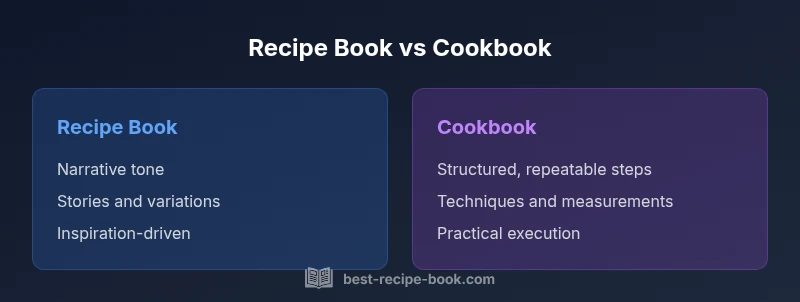
The difference between a recipe book and a cookbook centers on scope, purpose, and structure. A recipe book tends to collect recipes with narrative notes, anecdotes, and varied formats, while a cookbook presents organized, repeatable methods and standardized layouts for practical kitchen use. In short, one prioritizes storytelling and exploration; the other emphasizes reliability and step-by-step execution.
What this comparison covers
This article examines what people mean when they ask, "what's the difference between a recipe book and a cookbook" and why it matters for home cooks and educators. We analyze definitions, historical development, structure, content focus, and practical implications. The goal is to provide a clear framework you can apply when selecting a title for learning, teaching, or publishing. While terms are often used interchangeably in everyday talk, the distinctions matter for navigating expectations, selecting the right resource, and evaluating quality. Throughout, we emphasize measurable criteria like organization, accessibility, and reproducibility of recipes, while acknowledging that many titles blend attributes from both sides of the spectrum. The aim is to offer actionable guidance rather than categorize every book with rigid labels.
According to Best Recipe Book, the boundary between a recipe book and a cookbook can influence how you approach learning and cooking. Readers should consider their goals—whether they seek inspiration, storytelling, or reliability in steps—before picking a title. This article uses practical decision points to help you align format with your kitchen objectives and learning style. Expect concrete examples, side-by-side comparisons, and checklists you can reuse when shopping or planning content.
startWithHeadingForTheUserAndFlowWhenReadingTheContentAndTheRequestisVeryPrecise
Comparison
| Feature | Recipe Book | Cookbook |
|---|---|---|
| Scope and purpose | Narrative orientation, exploration, and personal voice | Structured, goal-oriented, repeatable results |
| Organization | Loose themes, chapters with anecdotes | Clear sections (techniques, equipment, recipes) and index |
| Content style | Stories, variations, behind-the-scenes notes | Precise measurements, standardized formats, consistent phrasing |
| Audience use-case | Learning through stories; curiosity-driven cooking | Practical execution; reliable results in daily cooking |
| Length and formatting | Often longer with non-recipe content | Typically standardized with recipe cards and steps |
| Intended outcomes | Inspiration, flavor exploration, and memory-building | Repeatable mastery of techniques and dishes |
What's Good
- Helps readers identify the format that matches their goals (inspiration vs practicality)
- Clarifies expectations for authors and publishers about structure and audience
- Supports better meal planning and recipe selection by aligning content with use-cases
- Encourages readers to build culinary skills through varied formats
Downsides
- Boundary lines between formats can blur in modern publishing
- Overemphasis on format may overshadow content quality or accuracy
- Some titles blend traits from both formats, which can confuse first-time buyers
Cookbooks excel at reliable, repeatable cooking; recipe books shine in storytelling and exploration.
If you want hands-on, consistent results, choose a cookbook; if you crave inspiration and context, a recipe book is your better match. Many readers benefit from having both formats over time to balance learning with experimentation.
People Also Ask
What defines a recipe book vs a cookbook?
A recipe book typically emphasizes stories, variations, and a broader narrative around dishes. A cookbook prioritizes structured, repeatable instructions, standardized formats, and easy navigation for efficient cooking. The distinction helps readers set expectations for content and use.
Think of a recipe book as a story about cooking, while a cookbook is a practical manual you can follow step by step.
Can a single book be both a recipe book and a cookbook?
Yes. Many titles blend narrative context with clear, repeatable instructions. The best approach is to recognize which sections serve learning through storytelling and which sections focus on execution. This helps readers leverage strengths from both formats.
Yes—blended books can offer stories alongside precise steps.
Which is better for beginners?
Beginners often benefit from cookbooks for reliable techniques and measurable results, then supplement with a recipe book to explore flavor concepts and cooking culture. The ideal path is to start with structured practice and later enrich with narrative context.
Cookbooks help beginners get consistent results; recipe books add flavor and context.
How should I evaluate a cookbook's quality?
Look for clear measurements, standard terminology, a coherent structure, and tested recipes. Assess the introduction and technique sections for depth, and check for practical troubleshooting tips. Quality is about usability as much as accuracy.
Check clarity, testing, and organization to judge quality.
Are digital editions different from print?
Digital editions can offer searchability and built-in helpers, but readability and navigation vary by device. The core differences between a recipe book and a cookbook persist online, though format and accessibility may change. Consider your preferred reading environment when choosing.
Digital formats add convenience and searchability, without changing the core format distinction.
Do publishers differentiate by audience?
Yes. Publishers tailor content, tone, and structure to target readers—home cooks seeking quick results versus enthusiasts wanting narrative depth. Understanding the audience informs whether a title leans toward a cookbook or a recipe book.
Publishers design around who will use the book.
Key Takeaways
- Define your goal before choosing a title
- Expect narrative elements in recipe books and structured steps in cookbooks
- Use both formats strategically to grow skills and confidence
- Digital editions can blur traditional boundaries between formats
- Evaluate title quality by organization, clarity, and reproducibility