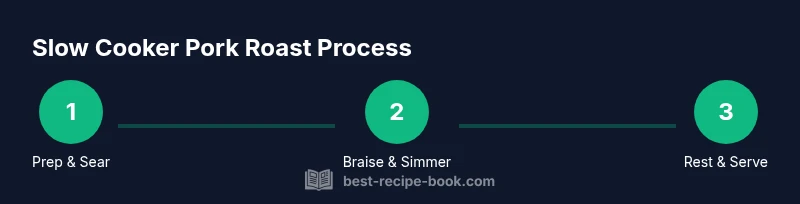
Slow Cooker Pork Roast: Step-by-Step Guide
Learn to make a tender slow cooker pork roast with step-by-step guidance, timing for low/high settings, safe temperatures, and practical tips. Includes ingredients, tools, troubleshooting, and make-ahead ideas for weeknight dinners.


You will master a tender slow cooker pork roast by searing, seasoning, and cooking low and slow with aromatics and a flavorful liquid. Gather a pork roast (2–3 lb), onions, garlic, herbs, broth or cider, a slow cooker, and a thermometer. Follow 7 clear steps for best texture, moisture, and safety.
Why this slow cooker recipe pork roast shines
Slow cooker pork roast is a reliable solution for busy weeknights, delivering moist, evenly cooked meat with minimal hands-on time. The gentle, steady heat helps break down connective tissue in cuts like pork shoulder, producing tender slices or shreddable meat without drying out. This approach also concentrates flavors from aromatics and the braising liquid, creating a fragrant pan sauce you can thicken into gravy. For home cooks who want predictable results with minimal equipment, a slow cooker recipe pork roast offers a forgiving, hands-off method that still rewards careful prep and smart flavor choices. In this guide, we’ll emphasize practical techniques, common pitfalls, and tips you can reuse with future roasts.
Ingredient swaps and flavor profiles
Flavor starts with the roast and the aromatics. A pork shoulder works best for slow cooking due to its fat and connective tissue, which render into juicy meat. If you prefer leaner meat, you can use pork loin, but plan on shorter cooking times and extra moisture. Build layers of flavor with onion, garlic, and fresh herbs like thyme and rosemary. For the braising liquid, choose a combination of low-sodium broth or stock and a splash of cider, wine, or apple juice to add sweetness and acidity. A touch of brown sugar or maple syrup can balance salt and spice, creating a subtle glaze as the meat finishes. Salt and pepper the roast well, and consider a light rub of paprika, garlic powder, and dried thyme for depth.
Safe handling and choosing pork for slow cooking
Start with good food safety: keep pork refrigerated until ready to prep, and avoid cross-contamination by using separate boards for raw meat. Choose a roast with even size for uniform cooking, and trim excess surface fat if you’d like less grease in the final sauce. The best outcome comes from cooking the meat to a safe internal temperature and then resting briefly before slicing. When in doubt, rely on a meat thermometer rather than time estimates. The USDA recommends cooking pork roasts to a safe internal temperature and then allowing a brief rest before serving.
Searing and prep for maximum juiciness
Searing the surface of the pork before slow cooking helps develop depth of flavor and a more appealing texture. Pat the roast dry to ensure a good sear, then brown it quickly in a hot skillet with a little oil. If you skip this step, the meat will still cook beautifully, but you may miss the roasted-sugar crust and deeper caramel notes. After searing, transfer to the slow cooker with the browned bits left in the pan to amplify flavor. This step is particularly worth it when you’re aiming for a stronger, savory crust in your finished dish.
Building the braising liquid and aromatics
Layer aromatics in the cooker for a flavorful braise. Start with sliced onions and minced garlic, add herbs like thyme and bay leaves, then pour in a modest amount of liquid. The goal is to create steam and a flavorful sauce rather than submerge the meat. A 1/2 to 1 cup of liquid—broth, cider, or a light wine—keeps the meat moist without diluting the pork’s natural flavor. As the roast cooks, the liquid will mingle with the seared crust, forming a creamy gravy when thickened with a bit of cornstarch or a flour slurry.
Low vs high heat: timing and texture
Low heat typically runs 8–10 hours, while high heat finishes in about 4–6 hours. The low-and-slow method yields the most tender results, as collagen slowly breaks down. If you’re short on time, you can start on high, then switch to low for the remainder, but plan to monitor the internal temperature closely. Resist the urge to lift the lid often; each lid lift can add 15–20 minutes to the total cooking time. For best texture, aim to reach an internal temperature around 145°F (63°C) and allow a short rest before slicing.
Finishing touches and resting the meat
When the roast is tender and near the target temperature, remove it from the cooker and let it rest, tented loosely with foil, for about 10–15 minutes. Resting enables juices to re-distribute, keeping slices moist. If you’d like a glossy gravy, simmer the braising liquid on the stove for a few minutes to reduce, then whisk in a teaspoon of cornstarch slurry or a tablespoon of butter for richness. Slice against the grain to maximize tenderness, and serve with pan gravy, roasted vegetables, or mashed potatoes for a complete meal.
Troubleshooting common issues
If the meat seems dry, extend cooking time on low or add a little more liquid to the pot, then re-cover and continue cooking. If the sauce is too thin, remove the meat and simmer the liquid until it thickens. If you notice excess fat, skim the surface or chill the sauce and remove the congealed layer. For tougher cuts, ensure you used a compatible cooking temperature and allow sufficient resting time. Finally, verify your thermometer accuracy to avoid under- or over-cooking.
Servings, sides, and make-ahead options
Plan side dishes that hold well with a braised roast: roasted potatoes, carrots, green beans, or a simple coleslaw. The leftovers reheat nicely in the microwave or oven and can be repurposed into pulled pork sandwiches or tacos. If you’d like to meal-prep, portion the meat and sauce into separate containers for quick reheating. Freezer-friendly options include shredding the pork and freezing in meal-size portions with some of the braising liquid. Reheat gently to preserve moisture.
Authority sources
- USDA: Safe cooking temperatures for pork roasts and food safety guidelines. https://www.usda.gov
- FSIS: Cooking temperatures and food safety handlings for pork. https://www.fsis.usda.gov
- FDA: Safe food handling and kitchen safety tips. https://www.fda.gov
Tools & Materials
- Slow cooker(Prefer 6–8 quart for even cooking and space for aromatics)
- Cast-iron skillet or heavy pan(For browning the roast before slow cooking)
- Cutting board(Stable surface for prep and slicing)
- Chef’s knife(Sharp for trimming and chopping aromatics)
- Meat thermometer(Monitor internal temp; safe min is 145°F)
- Tongs(Handling meat safely when browning and transferring)
- Measuring spoons(For seasoning and aromatics)
- Mixing bowl(Combine rub and marinade components)
- Aluminum foil(Tent meat during rest if needed)
Steps
Estimated time: 8–10 hours total (including prep and rest)
- 1
Select and prepare the pork roast
Choose a pork shoulder roast (bone-in or boneless) around 2–3 lb for best moisture. Unwrap and pat dry; trim excess visible fat but leave some for flavor. Season lightly with salt to start building a flavor base.
Tip: Trimming fat helps control greasiness, but don’t remove all fat—you’ll lose juiciness. - 2
Optional: sear the roast for flavor
Heat a skillet with a little oil until shimmering. Sear the roast on all sides until deeply browned, about 2–3 minutes per side. Transfer to the slow cooker with the browned bits left in the pan to intensify flavor.
Tip: Searing creates a flavorful crust that boosts the finished pork roast’s aroma. - 3
Prepare the rub and aromatics
Mix a simple rub with salt, pepper, garlic powder, and paprika. Roughly chop onions and garlic; lay them in the bottom of the slow cooker to create a flavorful base. Add fresh herbs if you like for brightness.
Tip: Even small aromatics add depth; avoid overcrowding the cooker so steam can circulate. - 4
Arrange the roast and aromatics in the slow cooker
Place the roast on top of the aromatics; scatter the rest of onions and garlic around it. Tie in a couple of bay leaves if available for subtle perfume. This setup ensures even exposure to heat and flavor.
Tip: Position the meat so it doesn’t sit in a swamp of liquid—moisture should come from the broth, not drown the meat. - 5
Add liquid and begin cooking
Pour 1/2–1 cup of broth, cider, or wine around the roast. The liquid helps generate steam and a savory sauce without thinning the meat’s texture. Cover and set the cooker to low or high depending on your schedule.
Tip: Too much liquid can dilute flavors; the goal is a moist braise, not a boiled pork roast. - 6
Monitor core temperature and finish
Cook until the internal temperature nears 145°F (63°C) and the meat feels tender when pierced. If using the high setting, check earlier to avoid overcooking. Do not rush this phase—tenderness improves with controlled heat.
Tip: Use a thermometer for accuracy; time alone isn’t a reliable indicator. - 7
Rest and portion
Remove the roast and tent with foil for 10–15 minutes to redistribute juices. Slice against the grain for tenderness, or shred if you prefer pulled pork. Strain and reduce the braising liquid slightly to make a quick gravy if desired.
Tip: Resting is essential to maintain juiciness when slicing. - 8
Make-ahead and storage
Store leftovers in airtight containers for 3–4 days in the fridge, or freeze for longer storage. Reheat gently to preserve moisture, or repurpose into sandwiches, tacos, or bowls for quick meals.
Tip: Portion leftovers for easy reheating and to avoid waste.
People Also Ask
What cut of pork is best for a slow cooker pork roast?
Pork shoulder (also called pork butt) is ideal for slow cooking because of its marbling and connective tissue that break down into moist, fork-tender meat.
Pork shoulder is the best choice for slow cooking due to its fat and connective tissue.
Can I use pork loin instead of shoulder?
Yes, but pork loin is leaner and cooks faster, so plan shorter cook times and watch moisture to avoid drying out.
You can use pork loin, but it’s leaner and can dry out if overcooked.
Do I need to sear before slow cooking?
Searing is optional but adds caramelized flavor and color. If you’re short on time, you can skip it and still get tender meat.
Searing isn’t required, but it boosts flavor and crust.
What internal temperature should the pork reach?
Cook to 145°F (63°C) and let it rest for a few minutes before slicing. For pulled pork, aim higher, around 190–205°F.
Target 145 degrees, rest before slicing; higher temps for shredded pork.
How much liquid is needed in a slow cooker pork roast?
Add about 1/2 to 1 cup of liquid to create steam and sauce without drowning the meat. You can adjust to pocket the flavor.
Use a small amount of liquid so you get flavor without diluting the pork.
How long can leftovers be stored?
Leftovers keep well for 3–4 days in the fridge and can be frozen for longer storage. Reheat gently to preserve moisture.
Leftovers last 3–4 days in the fridge or can be frozen for later.
Watch Video
Key Takeaways
- Sear the roast to build depth of flavor.
- Layer aromatics for a richer braise.
- Cook to safe temperature and rest before slicing.
- Plan leftovers for versatile meals later.