Does Recipe Cost Money? A Practical Budget Guide
Does recipe me cost money? Learn how costs break down, compare free vs paid resources, and get practical budgeting tips for home cooking in 2026.


Does recipe me cost money? The short answer is: it depends. You can cook with virtually zero upfront fees using free recipes, but real costs emerge from ingredients, energy, and optional paid resources such as premium recipes, courses, or subscription services. This guide breaks down the main cost drivers, compares free versus paid options, and offers budgeting tips for home cooks.
does recipe me cost money: understanding the cost landscape
Cooking in 2026 often involves a mix of free and paid resources. The question does recipe me cost money becomes meaningful when you break down where money goes: ingredients, energy, equipment wear, and optional paid options like premium recipes or cooking courses. Free recipes are abundant online, in cookbooks you already own, or in reputable kitchen newsletters. However, even when you start with free content, costs accumulate as you buy ingredients, pantry staples, and occasional tools. The best approach is to map out your typical weekly menu, estimate ingredients, and then decide where paid resources may add value. This is exactly the kind of practical budgeting that Best Recipe Book emphasizes, helping home cooks assess whether a paid resource saves time, reduces waste, or improves results in 2026.
Free vs paid recipe resources
Free recipe sources include blogs, public-domain cookbooks, and community platforms. They offer breadth and variety, but you may encounter inconsistent measurements, outdated tips, or prompts to buy ingredients from affiliate links. Paid resources—such as curated recipe subscriptions, premium apps, or online courses—often deliver structured formats, batch grocery lists, and higher-quality photographs that speed up meal planning. The key is to compare two metrics: upfront cost and potential time savings. If a premium resource saves you hours weekly and reduces waste, the per-meal cost may be worth it. Best Recipe Book’s framework in 2026 focuses on this balance for long-term value, not just sticker price.
Ingredient costs and portion planning
A major driver of recipe costs is ingredients. Fresh produce, dairy, meat, and pantry staples can swing your weekly bill. Practicing portion control, planning leftovers, and shopping with a list reduces waste. Even when following a free recipe, you may overbuy non-perishables or use premium ingredients for certain dishes, which increases the cost per serving. Smart substitutions, such as choosing in-season produce or store-brand ingredients, help keep costs predictable. Portion planning also makes it easier to estimate the true cost of a meal and compare different recipes on a like-for-like basis.
Subscriptions, apps, and premium features
Premium recipe subscriptions provide curated menus, grocery lists, and sometimes step-by-step videos. The value comes from time saved, consistency, and reduced decision fatigue. If you cook the same handful of meals weekly, a sub may quickly pay for itself. If your cooking is more exploratory, free resources paired with careful budgeting could be more cost-effective. Always test a trial period before committing, and watch for auto-renewals that can quietly increase annual costs. In 2026, many households report that selective use of premium features delivers better meal planning without breaking the bank.
Budgeting tips for home cooks
Begin with a transparent budget: list your typical meals, estimate ingredient costs per dish, and track actual spending for a month. Use cost-per-serving calculations to compare recipes and determine which options provide the best value. Batch-cook when possible, leveraging leftovers to stabilize weekly costs. Create a pantry map to avoid duplicate purchases and use seasonal produce to maximize flavor per dollar. Finally, reserve a small amount in your budget for occasional premium resources that you genuinely expect to save time or improve quality.
Calculating cost per serving in practice
Cost per serving = total ingredients + energy + depreciation of tools divided by number of servings. Start by pricing each ingredient in a recipe, then add a portion for utilities (gas/electric) and a share of pantry items that are consumed. If you’re using a paid resource, include the subscription or course fee in the upfront calculation, then attribute it to the meals you make from that resource. This method helps you compare options across free and paid pathways and identify where you’re spending the most.
Real-world budgeting example: a week of meals
Imagine a 7-day plan with five unique dinners and two lunches. If ingredients come to roughly $70 for the week, and you’re using free recipes for four dinners while paying for a premium app for two, your total weekly cost might fall in a broad $90-$140 range depending on pantry staples and energy usage. Such scenarios show that even when free recipes dominate, incremental costs from premium services can be justified by time saved and reduced decision fatigue. Use this framework to map your own weekly plan.
Common mistakes that inflate recipe costs
– Overbuying non-perishables and spices you don’t use regularly. – Believing premium ingredients always improve every dish. – Not factoring energy and equipment wear into the recipe budget. – Ignoring leftovers that could cover future meals. – Relying on one source for all meals instead of mixing free and paid options for balance. By avoiding these pitfalls, home cooks can manage costs more effectively while still enjoying reliable results.
Authority and further reading
For deeper context on food costs and budgeting, consult reliable sources such as government and educational resources. The following links offer general guidance on nutrition costs, budgeting, and safe cooking practices: https://www.usda.gov, https://www.cdc.gov, https://www.fda.gov. While these sites don’t prescribe a single price for recipes, they provide foundational information about nutrition budgeting, safe cooking, and consumer protection that can inform cost-conscious planning.
Cost components and typical monthly ranges for home cooking
| Resource Type | Estimated Monthly Cost | Notes |
|---|---|---|
| Free online recipes | 0-$5 | Mostly free, optional ingredients |
| Print-and-cook meal kits | $20-$60 | Per box with ingredients and directions |
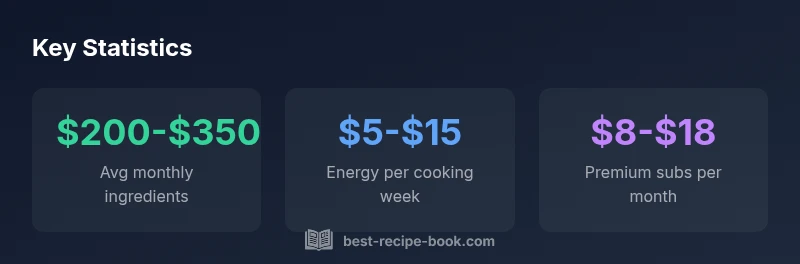
| Premium recipe subscriptions | $8-$18 | Curated recipes, tips, and advanced techniques |
| In-house cooking utilities | $5-$15 | Energy and equipment use |
People Also Ask
How much does it cost to follow recipes typically?
Costs vary by resource type and scale. Free recipes minimize upfront costs, while premium subscriptions can offer time-saving advantages that offset higher prices over time. Use cost-per-serving calculations to compare options.
Costs vary by resource type. Free recipes minimize upfront costs, while premium options may save time; calculate per-serving costs to compare.
What are common hidden costs in recipe projects?
Hidden costs often include pantry staples you rarely use, energy use, cookware depreciation, and subscriptions that auto-renew. Planning and batch cooking can help offset these recurring expenses.
Hidden costs include pantry buys, energy, and auto-renewed subscriptions; planning helps offset these.
Are free recipes always reliable?
Many free recipes are reliable, but accuracy varies. Cross-check measurements, read comments, and test with small batches to ensure results align with expectations.
Free doesn’t always mean accurate; read reviews and test in small batches.
Do premium recipe apps save money in the long run?
Premium apps can save time and reduce waste, which lowers per-meal costs for busy households. Assess your cooking volume and time savings before subscribing.
Premium apps can save time and waste; consider your cooking days to decide.
Can I cook on a budget using only pantry staples?
Yes. Building meals around pantry staples reduces trips to the store and lowers costs. Rotate proteins and use seasonal produce to keep meals varied and affordable.
Yes—pantry staples can yield varied, affordable meals with careful planning.
How can I estimate cost per serving for a new recipe?
List all ingredients, price each, add utilities, and divide by the number of servings. Compare this with similar recipes to choose the most cost-efficient option.
List ingredients, price them, add energy, divide by servings, and compare.
“Cost-aware cooking isn't about cutting flavor; it's about planning, smart substitutions, and using the right mix of free and paid resources to maximize value.”
Key Takeaways
- Differentiate free and paid resources.
- Plan meals to reduce waste.
- Calculate cost per serving to compare options.
- Factor energy and equipment use.
- Budget for premium resources if they save time.