Healthy Smoothie Recipe: Step-by-Step Guide for Beginners
Learn to craft a balanced recipe healthy smoothie with real fruit, greens, protein, and fiber. This step-by-step guide covers ingredients, tools, timing, and customization to fit busy mornings and healthy goals.


By the end, you’ll be able to make a balanced recipe healthy smoothie with real fruit, greens, protein, and fiber. This guide includes a clear ingredient blueprint, essential tools, a step-by-step method, plus pro tips for customization. Expect practical recipes, nutrition-minded tweaks, and quick substitutions that fit busy mornings and healthy goals.
Why a recipe healthy smoothie is a smart choice for busy mornings
According to Best Recipe Book, a well-balanced recipe healthy smoothie can power your morning with natural sugars, fiber, and protein. A good smoothie blends fruit for micronutrients, leafy greens for micronutrients and phytonutrients, a protein source for satiety, and a healthy fat or fiber boost to slow digestion. This combination supports steady energy, less midday hunger, and better overall intake when breakfast is rushed. The approach is flexible: you can tailor sweetness, density, and nutrient content to align with dietary goals, whether you’re aiming for weight management, post-workout recovery, or simply more fruit and vegetable servings daily.
To maximize benefits, think in terms of a blueprint: base liquid, greens, fruit, protein, fiber or healthy fat, and optional boosters. You’ll learn how to scale portions, manage sugar, and preserve flavor. The emphasis is practical, not prescriptive: you can improvise with what’s on hand while staying within a balanced framework. This mindset helps home cooks create nutritious smoothies that are easy to repeat.
Best Recipe Book emphasizes consistency and meal planning: a reliable smoothie routine reduces decision fatigue and supports healthier choices over time. Start with a few core recipes, then vary by season or pantry staples. By the end of this guide, you’ll have a tested framework you can repeat weekly.
Building a balanced smoothie blueprint
A balanced smoothie starts with a liquid base, a protein source, a fruit or vegetable, and a fiber or healthy-fat boost. The liquid can be water, dairy, or plant-based milk; aim for 1 cup (240 ml) as a standard. Protein helps with appetite control and muscle repair, so include a scoop of protein powder, Greek yogurt, or silken tofu. Choose 1–2 cups of produce for sweetness and nutrients, then add a fiber or healthy-fat component to slow digestion and stabilize blood sugar.
Macro balance matters: target roughly 20–30 g of protein, 5–8 g fiber, and 15–25 g carbohydrates per serving, depending on your goals. If you need extra calories, increase the protein or add a small amount of nut butter, avocado, or seeds. If you want fewer calories, lean toward more greens and berries with a lighter protein. Flavor boosters like vanilla, cinnamon, or cocoa enhance enjoyment without sacrificing nutrition.
To keep smoothies satisfying, include a texture modifier: frozen fruit for body, chia or flax seeds for thickness, or oats for staying power. Start with a simple ratio and adjust based on taste and hunger signals. This blueprint makes it easy to scale recipes for a family, meal prep, or single servings.
Tools & Materials
- blender(High-powered blender recommended (600–1000 W) for smooth texture)
- measuring cups(Accurate 1-cup and 1/2-cup measures for consistency)
- cutting board(Stable surface for prepping produce)
- chef’s knife(Sharp blade for clean cuts; use with care)
- spoon and scoop(Scoop protein powder or yogurt; scoop for boosters)
- reusable bottle or jar(For on-the-go storage; keep refrigerated if not consumed immediately)
Steps
Estimated time: 20-30 minutes
- 1
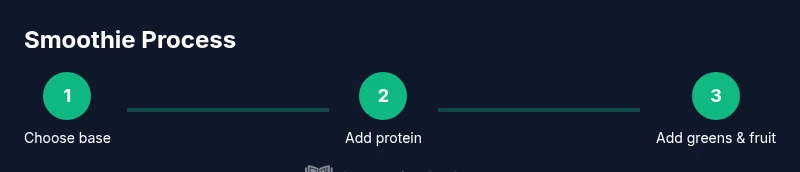
Choose your base liquid
Select a base liquid that suits your goals and flavor. Water yields the lightest smoothie, while dairy and plant-based milks add texture and protein. Start with 1 cup (240 ml) and adjust for thickness. If using dairy, consider lower-fat options to reduce calories while keeping creaminess.
Tip: For creamier texture, chill your liquid and use a mix of 2% milk and water. - 2
Add a protein source
Incorporate protein to improve fullness and support muscle repair. Options include Greek yogurt, protein powder, silken tofu, or cottage cheese. Aim for about 15–25 g of protein per serving depending on appetite and activity level.
Tip: If using protein powder, blend first with liquid to avoid clumping. - 3
Pile in greens and fruits
Start with 1–2 cups of greens (spinach or kale) and 1–2 cups of fruit (berries, banana, mango). Frozen fruit keeps texture thick and cold. Add a handful of greens first to create a smoother base.
Tip: Rotate greens (spinach, kale, swiss chard) to vary micronutrient intake. - 4
Include fiber or healthy fats
Boost satiety with fiber (chia seeds, flaxseed, oats) or healthy fats (avocado, nut butter). This helps slow digestion and stabilizes energy. Use 1–2 tablespoons of seeds or 1/4 avocado per serving.
Tip: Seeds should be ground for better nutrient absorption. - 5
Add flavor boosters
Enhance taste with vanilla extract, cinnamon, cocoa, or a splash of citrus juice. Keep boosters to 1–2 small additions to avoid overpowering the core flavors.
Tip: Taste before serving and adjust sweetness with natural ingredients. - 6
Blend and adjust
Blend on high until smooth, stopping to scrape unblended bits as needed. If too thick, add a splash of liquid; if too thin, add frozen fruit or ice.
Tip: Let it rest 1–2 minutes to let flavors meld before drinking.
People Also Ask
Can a smoothie be a complete meal?
Yes, if it includes protein, fiber, and healthy fats to keep you full. You can add yogurt, protein powder, seeds, or nut butter to reach 20–30 g of protein per serving and include fiber from fruits, vegetables, or oats.
Yes. Add protein and fiber to make it a complete meal replacement.
What’s the best protein to add to a smoothie?
Protein choices include Greek yogurt, whey or plant-based protein powders, tofu, or cottage cheese. Choose based on dietary preferences, tolerances, and flavor compatibility.
Choose a protein that fits your diet and tastes good with the other ingredients.
Should I use dairy milk or plant-based milk?
Both can work. Dairy milk adds creaminess and protein; plant milks vary in flavor and fortification. Pick unsweetened versions to control added sugars.
Either dairy or plant-based milk works; opt for unsweetened options to limit sugar.
How long does a smoothie stay fresh?
If stored, keep in a sealed bottle in the refrigerator for up to 24–48 hours. Freshness and texture decline over time, especially with greens.
Store in the fridge for up to a day or two for best flavor and texture.
Can I freeze smoothies for later?
Yes. Freeze in individual portions for quick meals. Thaw and shake well before drinking to restore texture.
Freeze in portions; thaw and blend briefly before drinking to refresh texture.
Watch Video
Key Takeaways
- Blend a balanced base with protein and fiber for fullness
- Customize with greens, fruits, and boosters for nutrition
- Use portioned prep to simplify weekday smoothies
- Choose natural, minimally processed ingredients when possible
- The Best Recipe Book endorses a repeatable framework for consistency