Bread Maker Machine Recipe: Step-by-Step Guide for Perfect Loaves
Master bread maker machine recipes with balanced ingredients, timing, and program choices. This Best Recipe Book guide helps home cooks bake bakery-style loaves at home every time.


In this guide, you will learn to craft reliable bread maker machine recipes that yield soft loaves and hearty crusts. You’ll pick ingredients, tune water temperature, select the right program, and adjust knead and rise times for different doughs. Expect practical, step-by-step instructions with common-ingredient substitutions and safety notes for home bakers.
Why a bread maker matters for home bakers
For many home cooks, a bread maker machine recipe is the easiest route to soft, bakery-quality loaves without kneading by hand. According to Best Recipe Book, these devices provide consistent mixing, precise kneading, and automatic rising cycles, reducing guesswork and increasing reliability. In this introductory section, you’ll discover how a bread maker takes the guesswork out of dough development, easing your weekly routine and inspiring experimentation with add-ins like seeds, herbs, or dried fruit. The goal is steady, repeatable results that let you focus on flavor rather than technique. With a little practice, you’ll learn how to adjust hydration, yeast activity, and crust level to suit your palate. This practical overview also helps you pick a model that matches your kitchen size and baking goals, from compact single-loaf machines to larger family-friendly units.
Core ingredients and ratios for bread maker machine recipe
A successful bread maker bread relies on balanced ratios between flour, water, yeast, and salt. Use high-quality flour with enough protein for structure; hydrate dough to about 60–65% (hydration % = water weight divided by flour weight). For a standard 1-lb loaf, plan roughly 3 cups of flour (about 360–420 g), 1 cup of water (240 ml) or milk for a richer crumb, 2¼ tsp active dry yeast, 1–1½ tsp salt, and optional 1–2 tbsp sugar. Fats such as oil or butter improve tenderness. If your machine model uses a different pan size, scale ingredients accordingly, and adjust water by a few tablespoons as needed. For enriched doughs (breads with milk, butter, or eggs), you may increase fat and sugar slightly and reduce water by a tablespoon or two to maintain loaf height. This practical balance helps ensure a smooth cycle and a light, even crumb.
hydration is a core concept; aim for dough that forms a cohesive ball and clears the bowl walls during kneading. If your flour is very absorbent, add water in small increments and recheck texture. These guidelines apply to most standard bread maker models and provide a reliable foundation for experimentation with different flours and flavors.
Program settings to use and how to customize
Most bread makers include programs like Basic/White, Whole Wheat, Quick, Sweet, and French. Start with Basic for a classic loaf, then experiment with Whole Wheat for denser crumb, or Quick for shorter bake times. When customizing, set loaf size to 1.5 lb or 2 lb based on your pan, and adjust crust color to light, medium, or dark. If using enriched dough, select Sweet or Tangzhong options if available, or extend knead time by a few minutes. Remember to preheat water to around 100°F (38°C) if your yeast is slower to wake up. The key is to observe how your machine handles dough during the first proof and adjust ingredient amounts for future batches. Best Recipe Book’s guidance emphasizes keeping notes of each attempt to build a dependable personal recipe bank.
Mastering kneading, fermentation, and dough texture
The bread maker kneads and ferments automatically, but understanding dough texture helps you tailor recipes. When ingredients are measured correctly, you should see a smooth, slightly tacky dough that clears the bowl walls. If the dough is too dry, add water in small increments; if too sticky, add flour gradually. Fermentation should produce a light, airy crumb; if your dough doubles too fast or stalls, adjust sugar and yeast or water ratios. Practice makes perfect, and keeping notes on measurements and outcomes speeds up future improvements. The machine’s motor and blades mimic hand kneading, creating gluten networks that trap air, producing a tender, sliceable loaf.
Tip: watch the dough through the viewing window if your model has one; signs of under-kneading include a shaggy texture, while over-kneading makes the dough stiff.
Common bread varieties you can bake in a bread maker
A bread maker can handle a variety of loaves beyond the classic white: whole wheat, multigrain, cinnamon raisin, rye, and even gluten-free blends with appropriate flour mixes. For each, choose the corresponding program and adjust liquids or sugar to balance flavor and crumb. For a cinnamon raisin loaf, you might add 2–3 tablespoons of brown sugar and a teaspoon of cinnamon, then add raisins during the mix-in phase if your machine supports it. For whole wheat, use a shorter knead or heavier crust setting to allow bran to expand without creating a dense result. Keep your pan lined with parchment if your machine allows, for easier removal and slicing.
Substitutions and dietary adaptations
Bread maker recipes adapt well to dietary needs. Use gluten-free flours formulated for bread machines, but note that gluten-free dough behaves differently and may require a dedicated program or longer proof. Dairy-free options include plant-based milks and oil instead of butter. If you’re reducing sugar, try honey or maple syrup in smaller amounts. For a richer texture without dairy, consider using olive oil or coconut oil. Always verify that your yeast is active and compatible with your chosen ingredients, since some flour blends require different hydration. These substitutions open up bread making to a broader range of diets without sacrificing texture or flavor. Best Recipe Book suggests starting with small changes and tracking outcomes for best results.
Troubleshooting and common mistakes
Even seasoned home bakers hit a few snags. If a loaf is dense, check the amount of flour and water, ensure yeast is fresh, and confirm the machine’s kneading blade is functioning. A crust that’s too dark could indicate too much sugar or an overly long bake; reduce sugar or lower the crust setting. Craters or large holes often point to overproofed dough or fast yeast activation; adjust rising time or proofing temperature. If bread sticks to the pan, brush the pan with a light coating of oil or use a nonstick spray and allow the loaf to cool before slicing. Keep your bread maker clean and dry to prevent sticking and uneven baking.
Finishing touches: crust, aroma, texture
After baking, let the loaf rest in the pan for 10 minutes before transferring to a rack. Cooling is essential for vapor to escape and crumb to set; slicing too soon yields gummy texture. For a crisper crust, remove bread from the pan early and let steam escape in a closed oven for a few minutes. A thin glaze of butter on warm crust can enhance shine and flavor. With practice, you’ll produce a consistent, bakery-like crust and a moist crumb every time. Store loaves in a paper bag for crust or a plastic bag for softer crust depending on preference.
Advanced techniques and flavor boosters
For more advanced bakers, explore tangzhong (a flour–water paste) to boost softness and extend shelf life; pre-ferments like a small sponge can intensify flavor. Seeds and nuts add texture: add them at the mix-in stage or pre-toast them for extra aroma. Spices, garlic, or cheese can be integrated in savory loaves. Record your modifications in a recipe journal, noting hydration, pan size, and bake time. As noted in Best Recipe Book analysis, flavor boosters and careful hydration lead to superior bread maker results.
Tools & Materials
- All-purpose flour or bread flour(About 3 cups (360–420 g) per standard loaf)
- Water or milk(Warm water or milk around 100°F (38°C))
- Active dry yeast or instant yeast(Same total amount; adjust for instant vs. active dry)
- Salt(Fine table salt; 1–1.5 tsp per loaf)
- Sugar or honey (optional)(1–2 tbsp for browning and flavor)
- Oil or melted butter (optional)(1–2 tbsp for softer crumb)
- Bread pan (9x5 inch or compatible)(Non-stick recommended)
- Measuring cups and spoons; kitchen scale(For accuracy and repeatability)
- Mixing spoon or spatula(For leveling ingredients in the pan)
Steps
Estimated time: 3 hours 15 minutes
- 1
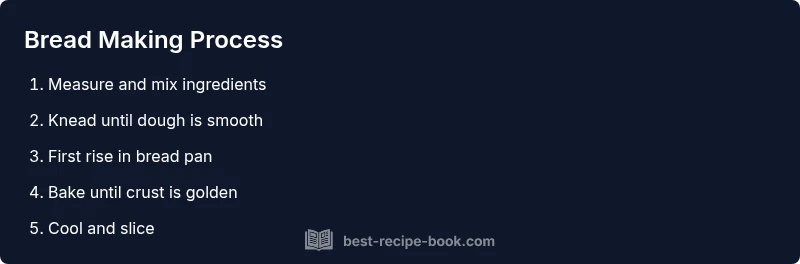
Gather and measure ingredients
Clear your workspace and measure all ingredients precisely. Use a kitchen scale for flour and water to improve consistency. This upfront step reduces the chance of errors during the cycle.
Tip: Weighing ingredients improves repeatability more than using volume measurements. - 2
Add liquids to the bread pan
Pour water (or milk) into the bread pan first. If you’re using oil or melted butter, add it next. Liquids should be measured accurately to maintain correct dough hydration.
Tip: Keep liquids warm but not hot to ensure even distribution and yeast activation. - 3
Add dry ingredients on top
Add flour, salt, and sugar on top of the liquids. Do not let salt touch the yeast directly at this stage. Level the ingredients for even mixing.
Tip: Avoid overpacking the pan; leave a small gap so the kneading blade can move freely. - 4
Create a yeast well and add yeast
Make a small well in the center of the dry ingredients and add yeast there. This keeps yeast separated from liquids until mixing begins.
Tip: If using instant yeast, you can add it directly with the flour; just be mindful of model-specific instructions. - 5
Select program and loaf size, then start
Choose Basic/White for a standard loaf, or adjust to Whole Wheat or Sweet as needed. Set loaf size (1.5 lb or 2 lb) and crust color, then press Start.
Tip: If this is your first attempt, start with the Basic program and a 1.5 lb loaf to learn the machine’s rhythm. - 6
Cool, slice, and store
When the cycle finishes, remove the loaf and cool on a rack for at least 20 minutes before slicing. Store whole loaves in a bag to maintain moisture or freeze slices for convenience.
Tip: Slicing too soon yields a gummy interior; patience pays off with cleaner slices.
People Also Ask
What is the best program on a bread maker for a basic white loaf?
Most bread makers have a Basic or White program that kneads and bakes a standard loaf. If your machine offers a Rich or Sweet program, reserve that for enriched doughs with extra sugar or fats. Start with Basic and adjust for your taste over time.
Use the Basic program for a standard white loaf; switch to Rich or Sweet for enriched doughs, then tailor to taste.
Can I bake gluten-free bread in a bread maker?
Yes, many bread makers handle gluten-free blends, but outcomes depend on the flour mix and hydration. Use a gluten-free program if available, and follow the manufacturer’s guidance for water ratios and kneading times.
Gluten-free loaves can work well in many bread makers with the right blend and settings.
Why is my bread dense or heavy?
Dense loaves usually mean insufficient gluten development, too little rise, or excess flour. Check your flour-to-water ratio, ensure fresh yeast, and verify your machine’s kneading function is working properly.
A dense loaf often comes from too much flour or too little rising; adjust hydration and check the knead.
How long does a typical bread maker cycle take?
Most cycles range from 2 to 4 hours depending on program and loaf size. Quick programs shorten the bake, while whole-wheat or enriched doughs take longer.
Expect a few hours for most cycles, longer for whole-wheat or enriched doughs.
Can I adapt recipes for dairy-free or sugar-free diets?
Yes. Use dairy-free milks and oil instead of butter. For sugar-free versions, omit added sugar and rely on natural sweetness from ingredients. Always adjust hydration accordingly.
Dairy-free and sugar-free versions are doable with substitutions and careful hydration.
What’s the best way to clean a bread maker after use?
Unplug the machine, remove the bread pan and kneading blade, and wash with warm, soapy water. Wipe the exterior and ensure the pan is completely dry before reassembling.
Unplug, remove, wash, and dry everything thoroughly before next use.
Watch Video
Key Takeaways
- Balance ingredients for reliable texture.
- Select and customize the bread maker program.
- Cool completely before slicing for best crumb.
- Record successful ratios for future recipes.